Cooking Guide
How to Cook Spaghetti Squash
Seven methods with real times, the crosswise cut that gives you long strands, and the draining step that stops a watery bowl.
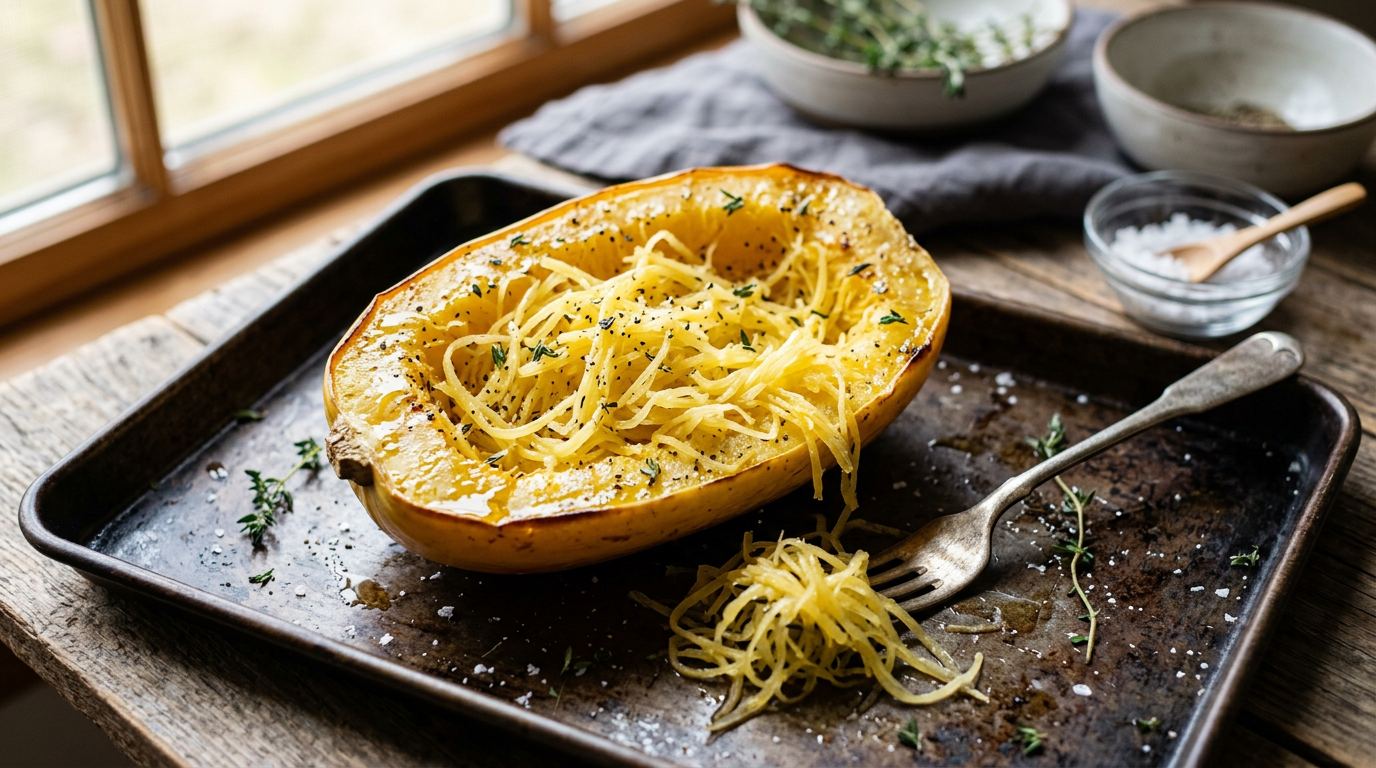
Spaghetti squash is the rare vegetable that does something no other vegetable does. Roast it and the flesh pulls apart into pale golden strands that hold sauce like noodles, for a fraction of the calories and carbohydrate of wheat pasta.
Two habits separate good spaghetti squash from the sad, wet version. The first is pulling it out of the oven while the strands still have a slight bite, because they keep cooking in the hot shell. The second is salting and draining the raked strands before any sauce touches them.
The cut matters more than most guides admit. The strands run around the squash rather than from end to end, so slicing it lengthwise cuts every strand in half. Crosswise rings keep them long. Below are times for every common method, plus the safe way to cut a squash that resists your knife, and what USDA data actually says about the swap from pasta.
Cooking times by method
Times assume a medium squash of about two to three pounds. A larger, denser squash sits at the longer end of every range.
| Method | Prep | Heat | Time | Result |
|---|---|---|---|---|
| Roast (halves, cut side down) | Halved lengthwise, seeded, oiled | 400°F | 40–50 minutes | The default. Firm, separate strands |
| Roast (halves, cut side up) | Halved lengthwise, seeded, oiled | 425°F | 45–55 minutes | Browned, sweeter, slightly drier strands |
| Roast (rings) | 1 inch crosswise rings, seeded | 400°F | 25–35 minutes | Longest strands, fastest oven route |
| Microwave | Halved, cut side down in a dish with water | High | 10–14 minutes | Weeknight speed, softer strands |
| Air fry | Halved or quartered to fit the basket | 375°F | 20–30 minutes | Good browning on the cut face |
| Boil | Whole, pierced, or halved | Simmering salted water | 20–30 minutes | Softest, wettest strands. Least recommended |
| Slow oven (whole) | Whole, pierced several times | 375°F | 60–75 minutes | No knife work up front, scoop after it cools |
The 7-step roasting method
- 1.
Pick a firm squash with a dry stem
Look for pale yellow to deep gold skin with no green patches, and a stem that is dry and still attached. It should feel heavy and hard, with skin you cannot dent with a thumbnail. Soft spots or a wet stem scar mean it is on the way out.
- 2.
Scrub and dry the outside first
Wash the skin under cool running water and dry it before cutting, which follows FDA guidance for produce with inedible skin. The blade drags anything on the surface into the flesh you are about to eat.
- 3.
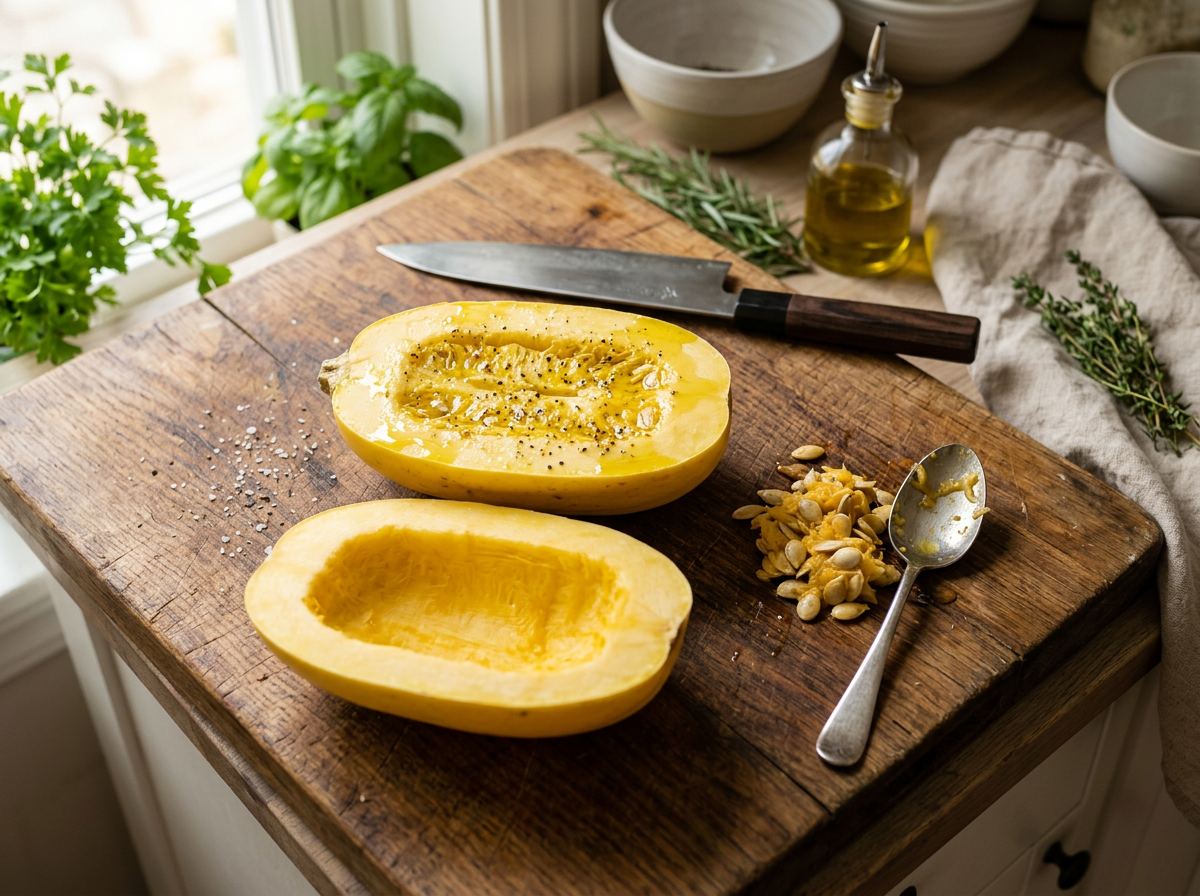
Trim the ends, then halve it lengthwise
Slice a thin piece off the stem end and the base so the squash sits still on the board. Stand it on one flat end or lay it down and cut through the length with your heaviest knife. If the skin fights you, microwave the whole squash for three to four minutes and try again.
- 4.
Scoop the seeds without digging into the strands
Run a sturdy spoon or an ice cream scoop around the seed cavity and lift out the seeds and stringy pulp. Stop as soon as the surface looks like smooth flesh rather than webbing. Dig deeper and you lose the strands you came for.
- 5.
Oil the cut face and season it
Brush both halves with about a teaspoon of olive oil each, then salt and pepper the cut face. Oil is what lets the exposed flesh brown rather than steam, and salt applied now seasons the strands instead of sitting on top of them.
- 6.
Roast cut side down at 400°F for 40 to 50 minutes
Lay the halves cut side down on a lined sheet pan. Trapping steam against the pan cooks the flesh evenly and the contact side takes on color. A medium squash of two to three pounds lands around 45 minutes.
- 7.
Test with a fork, then rake and drain
A fork should slide into the skin easily and pull the flesh apart into strands. Let the halves sit five minutes, rake lengthwise with a fork, then tip out any water in the shell or drain the strands in a colander before saucing.
Times by cut
| Cut | Oven | Other methods | Best for |
|---|---|---|---|
| Halves, cut side down | 40–50 minutes at 400°F | Microwave 10–14 minutes | The all purpose method |
| Halves, cut side up | 45–55 minutes at 425°F | Air fry 20–30 minutes | More browning, drier strands |
| 1 inch rings | 25–35 minutes at 400°F | Not suited to boiling | Longest strands, quickest oven time |
| Quarters | 30–40 minutes at 400°F | Air fry 20–25 minutes | Large squash that will not fit whole |
| Whole, pierced | 60–75 minutes at 375°F | Boil 20–30 minutes | Hands off, halve and seed after cooking |
Five habits that improve every squash
- Cut crosswise into rings if you want long strands. The strands run around the squash, not end to end, so lengthwise halves cut them in half.
- Salt the raked strands and let them sit five minutes, then squeeze or drain. That single step is the difference between sauce that clings and a watery bowl.
- Pull it early rather than late. Strands should have a slight bite, because they keep softening in the shell after the oven.
- Sauce it in a hot skillet for one minute instead of pouring sauce over the bowl. The strands shed a little more water and take on flavor.
- Roast the seeds alongside it. Rinsed, dried, oiled, and salted, they toast in 12 to 15 minutes at 350°F.
Fixing squash that went wrong
Mushy, watery strands
Overcooked or undrained. Roast 40 minutes, test early, then salt and drain before saucing.
Crunchy strands that will not separate
Underdone. Give it 5 to 10 more minutes and check that a fork enters the skin easily.
Short, stubby strands
Cut lengthwise. Slice crosswise rings instead to keep the strands full length.
Sauce sliding off
Water left in the strands. Drain in a colander, then finish in a hot skillet.
Bland flavor
Season the cut face before roasting and salt again after raking. Squash needs salt in two stages.
Impossible to cut safely
Microwave the whole squash three to four minutes to soften the skin, then halve it.
Nutrition per 100 g raw
Values from USDA FoodData Central, squash, winter, spaghetti, raw (FDC ID 169298). Oil, butter, cheese, and sauce added while cooking change the totals.
Calories
31 kcal
Protein
0.6 g
Total fat
0.6 g
Carbohydrate
6.9 g
Fiber
1.5 g
That 31 calories and 6.9 g of carbohydrate per 100 g is why the pasta swap is so popular. The trade off is protein, at 0.6 g per 100 g, so a bowl of plain strands will not keep you full on its own. Build the plate around it instead: strands as the base, then lentils or sliced chicken breast for protein, and a little cheese or olive oil so the 1.5 g of fiber has some staying power. That pattern is how most weekly meal plans handle lighter vegetable bases.
Storing whole, cut, and cooked squash
A whole, uncut squash keeps for weeks in a cool, dry, dark place with air around it, so a pantry shelf beats the refrigerator. Once cut, wrap the halves and refrigerate them, using them within a few days. Cooked strands hold three to four days in a covered container.
Cooked strands freeze better than raw squash. Drain them well, pack them flat in bags, and freeze. Reheat from frozen in a hot dry skillet rather than the microwave, which drives off the water they release instead of pooling it.
What to serve with it
Treat the strands like a light pasta. They work under anything saucy or salty, next to baked chicken thighs, garlic shrimp, or skillet pork chops. For a full vegetable plate, add Brussels sprouts or green beans, and keep roasted butternut squash in the rotation for the sweeter, denser end of the squash season.
Spaghetti squash FAQs
How long does spaghetti squash take to cook?
Halves roast in 40 to 50 minutes at 400°F cut side down. One inch rings take 25 to 35 minutes at 400°F, a microwaved half takes 10 to 14 minutes, air frying takes 20 to 30 minutes at 375°F, and a whole pierced squash takes 60 to 75 minutes at 375°F.
Should you roast spaghetti squash cut side up or down?
Cut side down at 400°F is the reliable default, because the trapped steam cooks the flesh evenly and the contact face still browns. Cut side up at 425°F drives off more moisture and gives sweeter, drier strands, but it takes closer to 55 minutes.
How do you get long strands from spaghetti squash?
Cut the squash crosswise into one inch rings rather than lengthwise halves. The strands run around the circumference, so halving it end to end slices every strand in two. Roast the rings at 400°F for 25 to 35 minutes, then push the flesh out of each ring with a fork.
Why is my spaghetti squash watery?
It was either cooked too long or served straight from the shell. Roast to a slight bite, rake the strands, salt them, let them stand five minutes, then drain in a colander or tip the water out of the shell before adding sauce.
Is spaghetti squash a good pasta substitute nutritionally?
It is far lighter. USDA data for raw spaghetti squash lists 31 calories, 6.9 g carbohydrate, 1.5 g fiber, 0.6 g protein, and 0.6 g fat per 100 g. It has much less protein than wheat pasta, so pair it with beans, chicken, or cheese to make a filling meal.
How do you store cooked spaghetti squash?
Keep the raked strands in a covered container in the refrigerator and use them within three to four days. A whole uncut squash keeps for weeks in a cool, dry, dark spot with air around it, which is better than the refrigerator.
Sources and further reading
Keep cooking
Pair a roasted squash with any of these guides and recipe collections.