Cooking Guide
How to Cook Shrimp
Shrimp cooks in one to three minutes, which is why it is either the fastest protein in your kitchen or the toughest. Here are the times for every method, the sizes they apply to, and the doneness signs that keep shrimp tender.
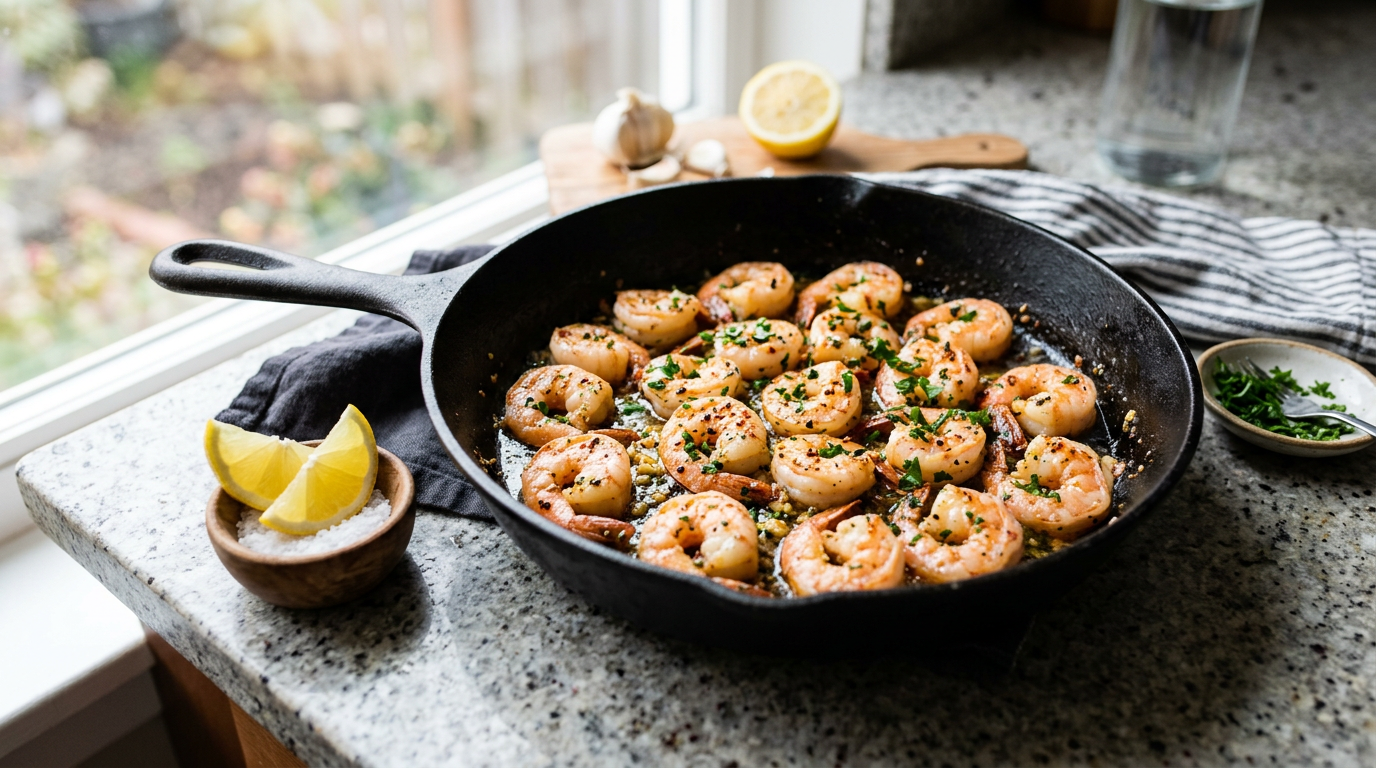
Shrimp is the protein most people overcook, and it happens for a simple reason. The window between tender and rubbery is measured in seconds, not minutes, and it closes while the pan is still on the burner. Once you learn to pull shrimp early, everything else about cooking it gets easy.
Nearly all shrimp sold in supermarkets was frozen at sea, including the shrimp sitting on ice at the counter. That is good news for home cooks, because a bag in the freezer means dinner is fifteen minutes away on any weeknight.
The guide below covers a skillet sear, poaching, roasting, broiling, grilling, and the air fryer. Times are given for large shrimp, with a size chart to adjust up or down, and each method uses the same three habits: thaw properly, dry thoroughly, and stop cooking early.
Cooking times by method
Times are for thawed large shrimp, roughly 31 to 35 per pound. Every method finishes when the flesh is opaque, not by the clock alone.
| Method | Heat | Time | Best for |
|---|---|---|---|
| Sauté or pan sear | Medium-high skillet | 1–2 minutes per side | Best for garlic butter shrimp and pasta |
| Boil or poach | Salted water, off the boil | 2–3 minutes | Best for shrimp cocktail and salads |
| Roast | Oven at 400°F (200°C) | 6–8 minutes | Hands-off for a sheet pan dinner |
| Broil | Top rack under the broiler | 3–4 minutes | Gives colour without flipping |
| Grill | Direct medium-high, skewered | 2 minutes per side | Use larger shrimp so they do not fall through |
| Air fry | 400°F (200°C), single layer | 5–7 minutes | Good for breaded or seasoned shrimp |
Shrimp sizes and what they suit
Shrimp is sold by count per pound, so a lower number means a bigger shrimp and a longer time in the pan.
Medium (41/50 per lb)
Salads, fried rice, pasta sauces
About 1 minute per side
Large (31/35 per lb)
The all-purpose size for skillet dishes
1 to 1.5 minutes per side
Jumbo (21/25 per lb)
Scampi, skewers, shrimp cocktail
About 2 minutes per side
Extra jumbo (16/20 per lb)
Grilling and stuffed shrimp
2 to 2.5 minutes per side
The 8-step skillet method
- 1.
Thaw frozen shrimp in cold water
Almost all shrimp is sold frozen or was previously frozen. Put it in a bowl of cold water for 10 to 15 minutes, or leave it in the fridge overnight. Do not thaw shrimp on the counter or in warm water, since the outside warms into the unsafe range long before the middle thaws.
- 2.
Peel and devein if needed
Pull the shell off from the head end and slip it away from the tail. Run a paring knife a shallow line down the back and lift out the dark vein. Shell-on shrimp has more flavour for boiling and grilling, while peeled shrimp is easier for pasta and tacos.
- 3.
Pat the shrimp completely dry
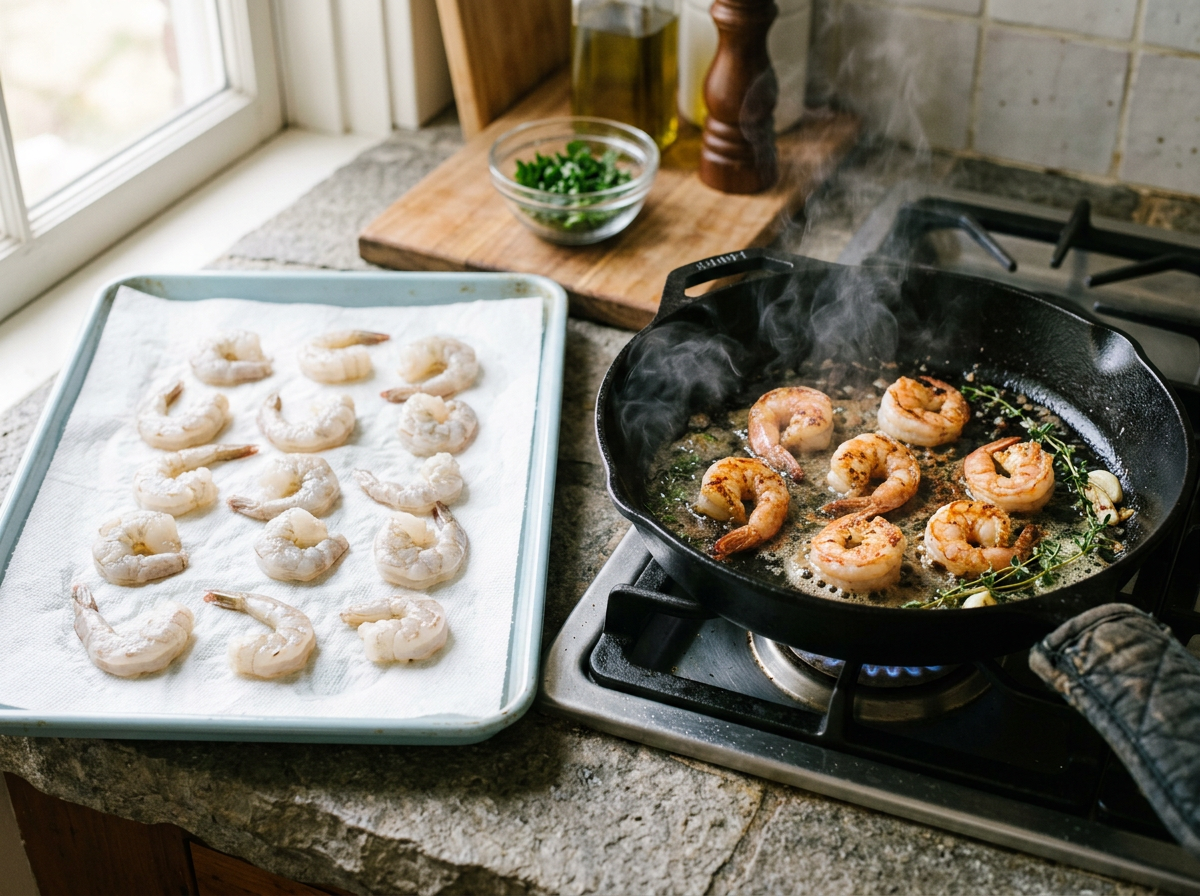
Spread the shrimp on paper towels and blot the tops as well. Wet shrimp steams in the pan and turns grey instead of browning. This one step is the difference between pale shrimp and shrimp with real colour on the outside.
- 4.
Season simply and get the pan hot
Salt, pepper, and a little oil are enough for most dishes. Heat the skillet until a drop of water skates across it before the shrimp go in. A hot pan cooks the outside fast enough that the inside stays tender.
- 5.
Cook in a single layer without crowding
Lay the shrimp flat with space between each one and work in two batches if your pan is small. Crowding drops the pan temperature and releases liquid, which is how a sear turns into a simmer. Leave them alone until the underside turns pink.
- 6.
Flip once and pull them early
Turn each shrimp and give it another minute. Shrimp keeps cooking in its own heat after it leaves the pan, so take it out when the very centre is just barely done. Ten seconds too long is the most common reason shrimp turns rubbery.
- 7.
Check for the pearly, opaque look
FoodSafety.gov's doneness guidance for shrimp, lobster, crab, and scallops is to cook until the flesh is pearly or white and opaque. A properly cooked shrimp curls into a loose C shape; one that has tightened into an O is overdone.
- 8.
Finish off the heat and serve right away
Add butter, garlic, lemon juice, or herbs once the pan is off the burner so nothing scorches. Shrimp is at its best within a few minutes of cooking. Serve it straight from the pan with the juices spooned over.
Five habits that make shrimp better
- Buy frozen rather than the thawed shrimp in the display case when you are not cooking that day. Thaw only what you need and the rest keeps.
- Salt the boiling water for poached shrimp the way you would for pasta. Unsalted water pulls flavour out of the shrimp.
- Save the shells in a bag in the freezer and simmer them with water for a quick shellfish stock.
- Skewer grilled shrimp through both the head end and the tail so they cannot spin when you turn them.
- Cook shrimp last when it goes into pasta or a stir fry, then stir it in at the end so it never sits over heat twice.
Fixing shrimp that went wrong
Rubbery and tough
Cooked too long. Shrimp needs one to three minutes depending on size, and it finishes cooking off the heat.
Grey and pale, no colour
The shrimp was wet or the pan was crowded. Pat it dry and cook in batches in a hot pan.
Watery sauce
Liquid released from thawed shrimp. Drain and dry it well, and add butter or cream only after the shrimp is seared.
Gritty texture
The vein was left in on larger shrimp. Devein anything jumbo or bigger.
Bland
No salt before cooking. Season the raw shrimp, not just the finished dish.
Stuck to the grill
The grates were not hot or oiled. Preheat fully, then oil the grates right before the shrimp go on.
Food safety and thawing
The FDA advises buying frozen seafood only when it is solidly frozen with no signs of freezer burn or ice crystals in the package, and keeping it cold on the way home. Thaw shrimp in the refrigerator overnight, or in a sealed bag under cold running water when you are in a hurry. FoodSafety.gov's doneness guidance for shrimp, lobster, crab, and scallops is to cook until the flesh is pearly or white and opaque, rather than to a single probe temperature, since the pieces are too thin to read reliably.
Nutrition
Per 100 g of raw shrimp, from USDA FoodData Central. Cooking method and any butter or oil you add will change the finished numbers.
Calories
85 kcal
Protein
20.1 g
Total fat
0.51 g
Carbohydrate
0 g
Cholesterol
161 mg
Sodium
119 mg
Storing, freezing, and reheating
Cool cooked shrimp quickly and refrigerate it in a covered container for a few days. Reheat it gently in a warm buttered pan for under a minute, or skip reheating and use it cold in a salad or a roll, which keeps the texture intact. Raw shrimp is best kept frozen in its original bag until the day you cook it, and once thawed it should not be refrozen. If you are planning a few days of meals at once, the same batching approach works with rice and quinoa, and our meal plans pair shrimp with both.
Shrimp Cooking FAQs
How long does shrimp take to cook?
Large shrimp needs about 1 to 2 minutes per side in a hot skillet, 2 to 3 minutes in barely simmering water, or 6 to 8 minutes roasted at 400°F. Smaller shrimp cooks faster and jumbo shrimp needs closer to 2 minutes per side.
How do you know when shrimp is done?
FoodSafety.gov says to cook shrimp until the flesh is pearly or white and opaque. Visually, a cooked shrimp curls into a loose C shape, while a shrimp that has tightened into a closed O has gone past done.
Can you cook shrimp from frozen?
You can roast or boil shrimp from frozen, adding a couple of extra minutes, but it will not sear properly because of the surface moisture. For a pan seared result, thaw it in cold water for 10 to 15 minutes and pat it dry first.
Do you need to devein shrimp?
The dark line along the back is the digestive tract and it is safe to eat, but it can taste gritty in larger shrimp. Devein jumbo and extra jumbo shrimp, and leave smaller sizes as they are if you prefer.
Why is my shrimp rubbery?
It cooked too long. Shrimp goes from tender to tight in well under a minute, so pull it off the heat when the centre is just barely opaque and let carryover heat finish it.
How do you store and reheat cooked shrimp?
Refrigerate cooked shrimp in a covered container and use it within a few days. Reheat gently in a warm pan with a little butter or serve it cold, since a second hard cook is what makes leftover shrimp tough.
Sources and further reading
Keep cooking
Put a batch of shrimp to work in any of these guides and recipe collections.