Cooking Guide
How to Cook Butternut Squash
Seven methods with real times, from 425°F roasted cubes to a hands off half in the oven, plus the safe way to cut and peel it.
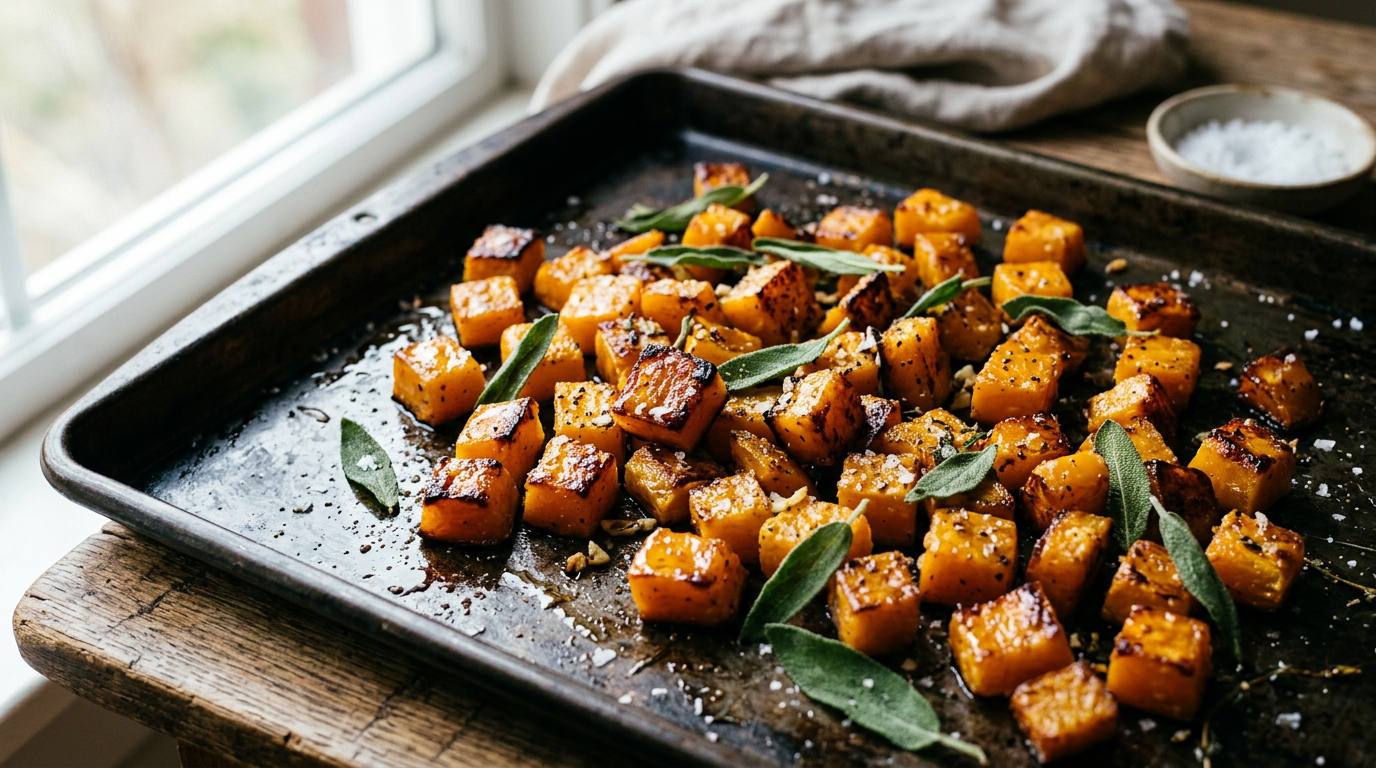
Butternut squash is the one winter squash that rewards almost no skill. The flesh is dense and sweet, it browns hard at high heat, and one squash covers a side dish for four with enough left for soup.
Most disappointing squash comes down to two things. The pan was too crowded, so the cubes steamed in their own moisture, or the peeling stopped at the skin and left the fibrous pale layer underneath. Fix both and roasted squash comes out with jammy centers and edges that taste almost caramelized.
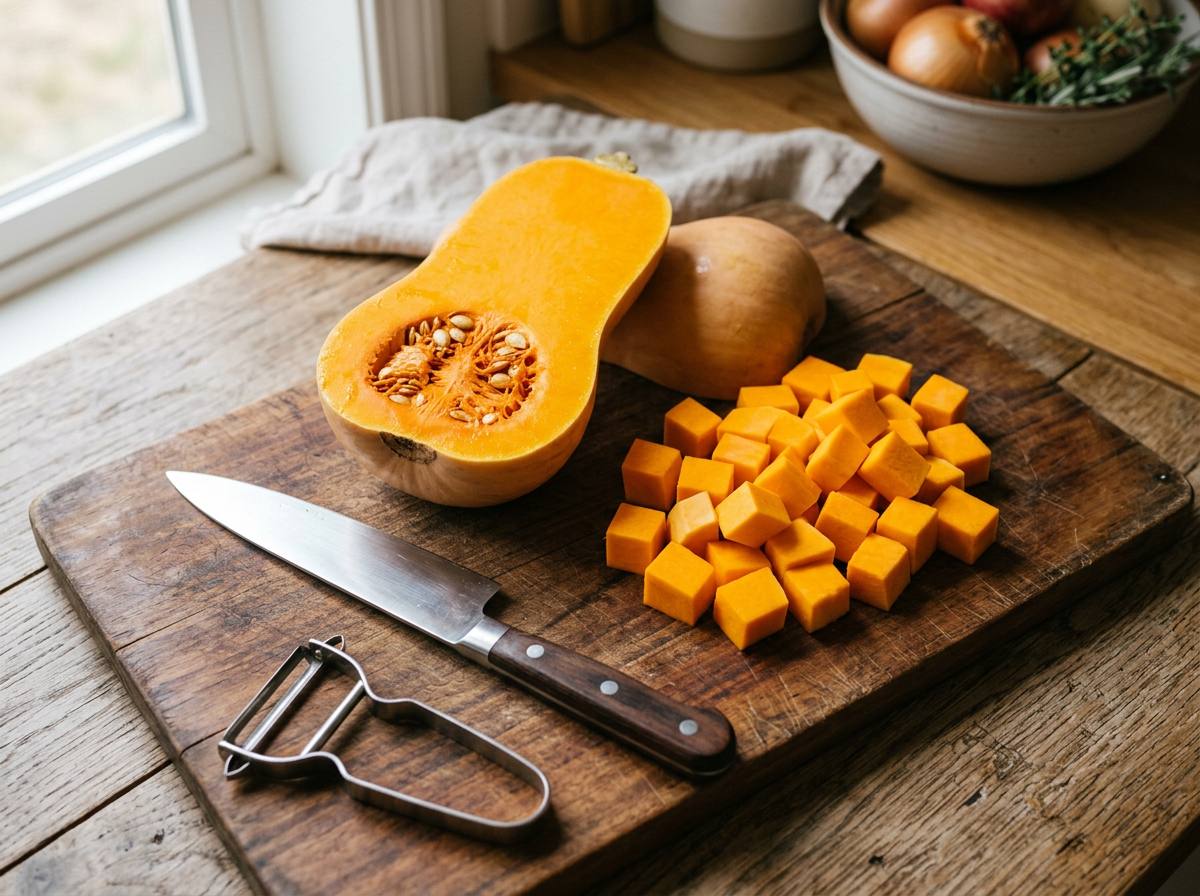
Cutting it is where most people hesitate. Splitting the narrow neck away from the round bulb turns an awkward, rolling vegetable into two flat, stable pieces, and the knife work gets simple from there. The charts below cover every common method with times by cut, along with what the squash is actually giving you nutritionally.
Cooking times by method
Times assume a medium squash of about two to three pounds. A denser, fully ripe squash sits at the longer end of every range.
| Method | Prep | Heat | Time | Result |
|---|---|---|---|---|
| Roast (cubes) | 1 inch cubes, peeled | 425°F | 25–30 minutes | Caramelized edges, creamy centers |
| Roast (halves) | Halved, seeded, cut side down | 400°F | 45–55 minutes | Spoonable flesh for mash, soup, or pie |
| Air fry | 3/4 inch cubes | 380°F | 14–18 minutes | Crisp outside with very little oil |
| Sauté | 1/2 inch cubes | Medium high | 12–15 minutes | Fast side dish, browned on two sides |
| Steam | 1 inch cubes | Simmering water below the basket | 10–14 minutes | Neutral and soft, best for purée |
| Boil | 1 inch cubes | Salted boiling water | 8–12 minutes | Quick base for mash and soup |
| Microwave | Halved, cut side down, covered | High | 10–14 minutes | Softens a whole squash on a weeknight |
The 7-step roasting method
- 1.
Choose a heavy squash with a dry stem
Pick one that feels heavy for its size with matte, hard skin and an intact dry stem. Shiny skin means it was picked early, so the flesh tastes watery rather than sweet. Soft spots near the stem or blossom end are the first sign it is going over.
- 2.
Rinse the skin before you cut
Scrub the outside under cool running water and dry it, which follows FDA guidance for produce with inedible skin. Your knife pulls whatever is on the surface straight through the flesh, so a dry, clean skin matters even though you peel it off.
- 3.
Trim both ends and split the neck from the bulb
Cut off the stem and base so the squash sits flat, then slice across where the narrow neck meets the round bulb. Two stable pieces are far safer to peel and cube than one rocking squash. Use your heaviest knife and keep your fingers behind the blade.
- 4.
Peel deep enough to lose the pale layer
A sharp Y peeler works on the neck, and a knife is easier on the curved bulb. Keep going until the orange flesh is uniform, because the pale green layer just under the skin stays fibrous and chewy after roasting.
- 5.
Scoop the seeds and cut even 1 inch cubes
Stand the bulb up, halve it, and scrape out the seeds and strings with a spoon. Cut everything into cubes about one inch across so they finish together. Save the seeds, rinsed and dried they toast alongside the squash.
- 6.
Oil, salt, and spread on one hot pan
Toss with about a tablespoon of oil per pound plus salt, then spread the cubes in a single layer with gaps between them. Roast at 425°F for 25 to 30 minutes, turning once. Crowding steams the squash and you lose the browned edges that make it sweet.
- 7.
Check for a clean fork slide, then season
It is ready when a fork slides in with no resistance and the undersides are deeply browned. Finish off the heat with brown butter and sage, maple and chili, feta and mint, or lemon and tahini. Salt again at this point, roasted squash absorbs more than you expect.
Times by cut
| Cut | Oven | Other methods | Best for |
|---|---|---|---|
| 1/2 inch cubes | 18–22 minutes at 425°F | Sauté 12–15 minutes | Weeknight side, salads, grain bowls |
| 1 inch cubes | 25–30 minutes at 425°F | Boil 8–12 minutes | The all purpose cut |
| 1 inch thick rings or planks | 30–35 minutes at 425°F | Grill 8–10 minutes | Neck only, good for plating |
| Halves, cut side down | 45–55 minutes at 400°F | Microwave 10–14 minutes | Soup, purée, mash, pie filling |
| Whole, pierced | 60–75 minutes at 400°F | Not recommended boiled | Hands off, then scoop the flesh out |
Five habits that improve every tray
- Preheat the sheet pan with the oven. Squash hitting hot metal browns instead of sweating.
- Add maple syrup, honey, or balsamic in the last ten minutes only. Sugars added early burn before the centers soften.
- Microwave a whole squash for three minutes before peeling if the skin fights your knife. It softens just enough to cut safely.
- Roast the cubes for soup rather than boiling them. The browning is where most of the flavor in a butternut soup comes from.
- Keep the seeds. Rinsed, dried, tossed with oil and salt, they toast in 12 to 15 minutes at 350°F.
Fixing squash that went wrong
Soggy, pale cubes
Crowded pan or oven too low. Use two pans and stay at 425°F.
Chewy fibrous bits
The pale layer under the skin was left on. Peel until the flesh is evenly orange.
Burnt outside, firm inside
Cubes cut unevenly or too large. Aim for one inch and similar sizes.
Watery and bland
An under ripe squash with shiny skin. Roast rather than boil, and salt in two stages.
Impossible to peel
Split the neck from the bulb first, or microwave the whole squash three minutes to soften the skin.
Mash turned gluey
Overworked in a food processor. Mash by hand or push it through a ricer instead.
Nutrition per 100 g raw
Values from USDA FoodData Central, squash, winter, butternut, raw (FDC ID 169295). Oil, butter, and syrup added while cooking change the totals.
Calories
45 kcal
Protein
1 g
Total fat
0.1 g
Carbohydrate
11.7 g
Fiber
2 g
Vitamin A
532 mcg RAE
Vitamin C
21 mg
Potassium
352 mg
The vitamin A figure is the standout. That deep orange flesh is packed with beta carotene, which the body converts to vitamin A, and 100 g of raw squash carries 532 mcg RAE of it. Because the carotenes are fat soluble, roasting with olive oil or finishing with butter helps you absorb more of them than steaming plain cubes does. The 2 g of fiber per 100 g and 352 mg of potassium come along for very few calories, which is why squash works so well as a filling base in weekly meal plans.
Storing whole, cut, and cooked squash
A whole, uncut squash keeps for weeks in a cool, dry, dark spot with some air around it, so the pantry beats the refrigerator. Once you cut it, wrap the pieces or store the cubes in a sealed container in the refrigerator and use them within about four days. Cooked squash holds three to four days covered and chilled.
Raw cubes freeze well, unlike many watery vegetables. Spread them on a tray, freeze until solid, then bag them and roast straight from frozen with an extra five to ten minutes. Purée freezes flat in bags or in portions in an ice cube tray for soups later.
What to serve with it
Roasted squash goes with anything savory and salty. Put it next to baked chicken thighs, skillet pork chops, or a seared steak. For a vegetable heavy plate, add Brussels sprouts or green beans, and stretch the tray into lunch with a pot of quinoa or lentils.
Butternut squash FAQs
How long does butternut squash take to cook?
One inch cubes roast in 25 to 30 minutes at 425°F. Halves take 45 to 55 minutes at 400°F cut side down, air fried cubes take 14 to 18 minutes at 380°F, sautéed half inch cubes take 12 to 15 minutes, steaming takes 10 to 14 minutes, and boiling takes 8 to 12 minutes.
Do you have to peel butternut squash?
The skin is edible once fully roasted, so you can leave it on halves or wedges and scoop or eat around it. Peel it for cubes, soup, and mash, since the skin stays leathery in shorter cooking and the pale layer just beneath it turns fibrous.
How do you cut butternut squash easily?
Trim both ends so it sits flat, then cut across where the narrow neck meets the round bulb. Peel each piece separately, halve the bulb, and scoop the seeds with a spoon before cubing. If the skin resists your knife, microwave the whole squash for three minutes first.
Is it better to roast or boil butternut squash?
Roast when the squash is the point of the dish, because dry heat concentrates its sugars and gives you browned edges. Boil or steam when it is going into purée, soup, or baby food and you want soft, neutral flesh fast.
Is butternut squash good for you?
It is low in calories and a strong source of vitamin A. USDA data for raw butternut squash lists 45 calories, 2 g fiber, 21 mg vitamin C, 352 mg potassium, and 532 mcg RAE of vitamin A per 100 g, most of it as beta carotene from the orange flesh.
How long does cooked butternut squash keep?
Refrigerate it in a covered container and use it within three to four days. Roasted cubes reheat best in a 400°F oven for five to seven minutes so the edges firm up again, while purée warms fine in a pan over low heat with a splash of water.
Sources and further reading
Keep cooking
Pair a tray of squash with any of these guides and recipe collections.