Cooking Guide
How to Cook Green Beans
Six methods with real times, from a six minute skillet sauté to a slow braise, plus how to trim beans quickly and how to keep them bright green instead of dull and limp.
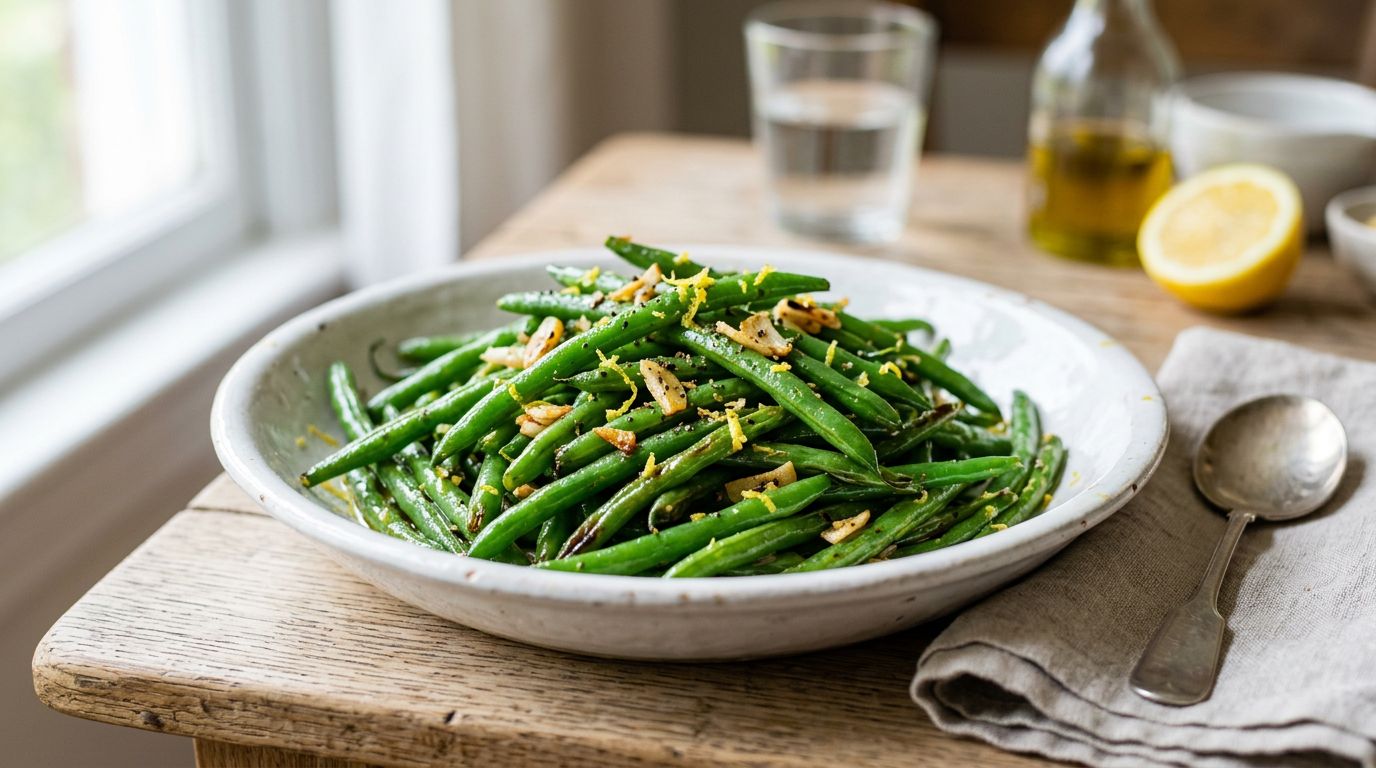
Green beans sit in an awkward spot. Cook them briefly and the middles squeak against your teeth. Cook them a few minutes too long in water and the color slides from bright green to army olive.
The fix is choosing a method that matches the beans you bought. Slim, snappy beans want fast dry heat, a hot skillet or a 425°F oven, where the outside blisters before the inside overcooks. Thick, mature beans from late summer do better in a covered pot with broth, where 30 minutes turns tough pods soft and savory.
Everything below is built around that split. You get times for six methods, adjustments for haricots verts through frozen and canned beans, the trimming shortcut worth learning, and a short list of fixes for the ways green beans usually go wrong.
Cooking times by method
Times assume one pound of standard fresh beans, trimmed and left whole. Adjust with the size chart below.
| Method | Prep | Heat | Time | Result |
|---|---|---|---|---|
| Sauté | Trimmed, patted dry | Medium high skillet | 6–8 minutes | Blistered spots, snappy centers |
| Roast (oven) | Trimmed, tossed with oil | 425°F | 18–22 minutes | Shrunken, sweet, browned edges |
| Air fry | Trimmed, light oil | 375°F | 10–12 minutes | Crisp outside with very little oil |
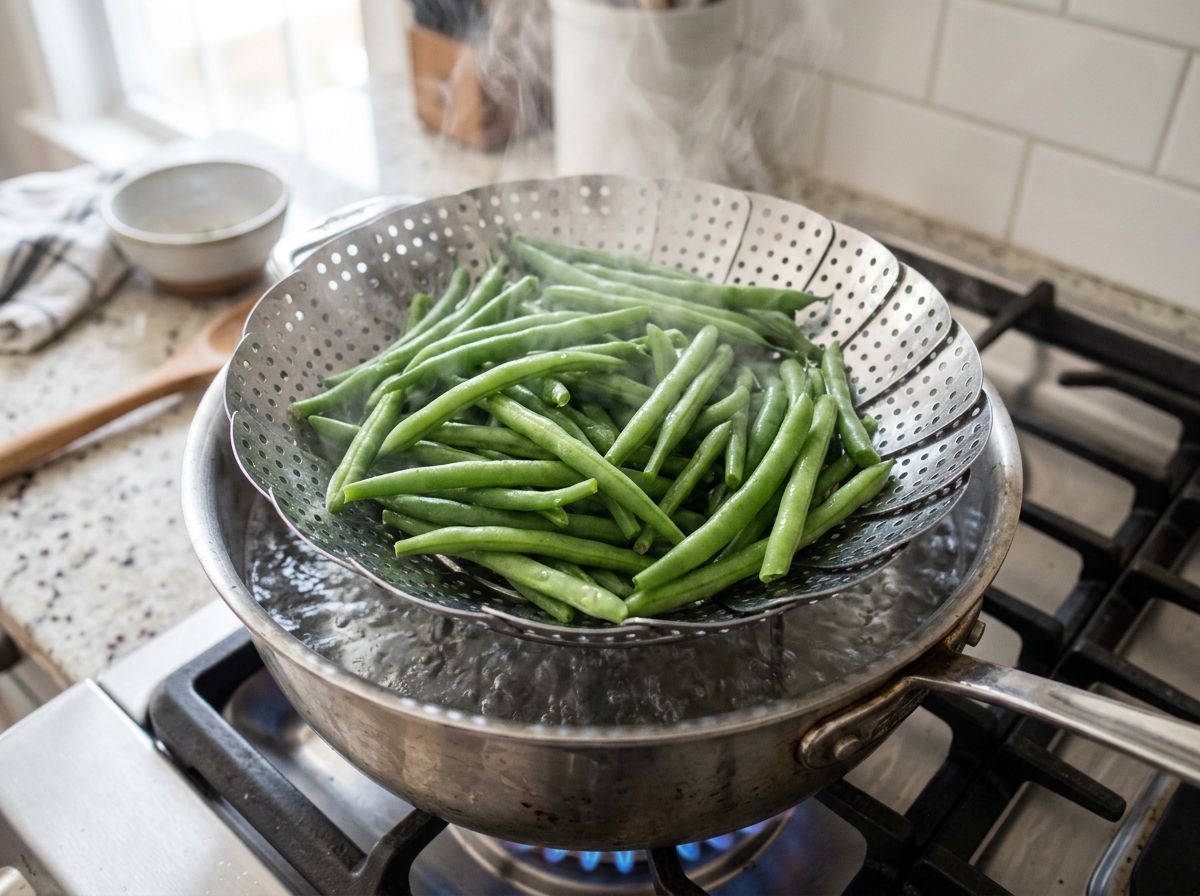
| Steam | Whole beans in a basket | Simmering water below | 5–7 minutes | Bright green and tender crisp |
| Boil | Whole beans | Salted boiling water | 3–5 minutes | Even tenderness, drain right away |
| Braise | Trimmed, in broth or tomato | Low simmer, covered | 25–35 minutes | Soft, silky, deeply savory |
The 6-step skillet method
- 1.
Pick beans that snap
Fresh green beans break cleanly with an audible snap and feel firm from end to end. Limp, rubbery beans have lost water and turn leathery in a hot pan. Slim beans stay sweeter than thick, bulging ones.
- 2.
Rinse under cool running water
Rinse the beans under cool running water and dry them, which follows FDA guidance for fresh produce. Skip soaps and produce washes. Dry beans blister in the skillet instead of steaming.
- 3.
Trim the stem ends
Line up a handful on the board and slice off the tough stem ends in one cut. The tapered tail end is tender and can stay on. Leave beans whole for sautéing and halve them only if they are longer than about five inches.
- 4.
Heat the pan before the beans go in
Set a wide skillet over medium high heat with a tablespoon of oil per pound and wait until the oil moves easily. Beans added to a cool pan release water and simmer instead of browning.
- 5.
Sauté in a single layer, then splash water
Spread the beans in one layer, leave them alone for two minutes to blister, then toss. After four minutes add two tablespoons of water and cover for two more, which cooks the centers through without losing the color.
- 6.
Season off the heat
Add sliced garlic in the last minute so it toasts without burning, then finish away from the burner with salt, lemon juice, and pepper. Toasted almonds, chili flakes, or a little butter work in the same window.
Times by bean type
| Beans | Sauté | Steam | Notes |
|---|---|---|---|
| Thin haricots verts | 4–6 minutes | 3–4 minutes | Watch closely, they go soft fast |
| Standard fresh beans | 6–8 minutes | 5–7 minutes | The times used across this guide |
| Thick, mature beans | 9–11 minutes | 8–10 minutes | Better braised than seared |
| Frozen whole beans | 8–10 minutes | 5–6 minutes | Cook from frozen, do not thaw |
| Canned beans | 3–4 minutes | Not needed | Drain, rinse, and only warm through |
Four habits that improve every batch
- Salt the boiling water generously. Green beans season from the inside only while they are in liquid.
- Drop boiled or steamed beans into ice water when serving them cold, which stops the cooking and keeps them green.
- Cook in two batches rather than crowding one pan. Crowded beans steam and stay pale.
- Blanch beans for two minutes in the morning, then finish them in a skillet at dinner for a fast side.
Fixing green beans that went wrong
Squeaky and raw inside
Pulled too early. Add two tablespoons of water, cover, and give them two more minutes.
Dull olive color
Cooked too long in water. Keep boiling to 3 to 5 minutes and cool them right away.
Pale with no browning
Wet beans or a crowded pan. Dry them well and cook in two batches.
Leathery skins
The beans were old before they hit the heat. Look for beans that snap when bent.
Burnt garlic
Garlic went in too early. Add it in the final minute of cooking.
Watery on the plate
Steamed beans carried liquid over. Let them drain in the basket for a minute.
Nutrition per 100 g raw
Values from USDA FoodData Central, beans, snap, green, raw (FDC ID 169961). Oil, butter, and bacon added during cooking change the totals.
Calories
31 kcal
Protein
1.83 g
Total fat
0.22 g
Carbohydrate
6.97 g
Fiber
2.7 g
Vitamin C
12.2 mg
Vitamin K
43 mcg
Potassium
211 mg
Storing, freezing, and reheating
Keep raw beans unwashed in the refrigerator and rinse them just before cooking, since surface water speeds up spoiling. Cooked beans hold three to four days in a covered container. Reheat them in a hot skillet for two to three minutes so they tighten up again, and use cold leftovers in grain bowls and salads with a sharp dressing.
To freeze, the National Center for Home Food Preservation directs you to blanch snap beans in boiling water for three minutes, cool them promptly in ice water, drain, and pack. Cook them later straight from frozen, since thawing releases the water that keeps them from browning.
What to serve with them
Green beans belong next to almost anything from the oven or skillet. Serve them with pan seared chicken breast, a skillet steak, baked salmon, or pork chops. Round out the plate with boiled potatoes or a pot of rice, and browse weekly meal plans when you want the week mapped out.
Green bean FAQs
How long does it take to cook green beans?
Fresh standard beans sauté in 6 to 8 minutes, roast in 18 to 22 minutes at 425°F, air fry in 10 to 12 minutes at 375°F, steam in 5 to 7 minutes, and boil in 3 to 5 minutes. Braising for softer beans takes 25 to 35 minutes at a low simmer.
Should you boil green beans before sautéing?
Only if you are cooking for a crowd or want to work ahead. Boil for two minutes, cool the beans in ice water, then sear them later in a hot skillet for three to four minutes. Cooking them straight in the skillet works just as well for one or two pounds.
What is the healthiest way to cook green beans?
Short cooking with little water keeps the most vitamin C, since it dissolves into cooking liquid. Steaming for 5 to 7 minutes or a quick sauté are the gentlest options. Raw snap beans, USDA FoodData Central FDC ID 169961, carry 12.2 mg of vitamin C per 100 g.
Do you have to trim green beans?
Trim the woody stem end, which is fibrous and does not soften. The pointed tail is tender and can stay on, so lining up a handful and cutting one end is all the prep most beans need.
How do you cook frozen green beans without them going soggy?
Cook them from frozen in a hot skillet or a 425°F oven, never thawed. Thawed beans release water and steam themselves. Give frozen whole beans 8 to 10 minutes in a skillet, tossing every couple of minutes.
How long do cooked green beans keep?
Refrigerate cooled beans in a covered container and use them within three to four days. Reheat in a hot skillet for two to three minutes rather than the microwave so they firm up again instead of softening further.
Sources and further reading
Keep cooking
Pair a skillet of green beans with any of these guides and recipe collections.