Cooking Guide
How to Bake Chicken Thighs
Oven times for bone-in and boneless thighs, the temperature to cook to, and the handful of habits that give you shatteringly crisp skin over juicy meat.
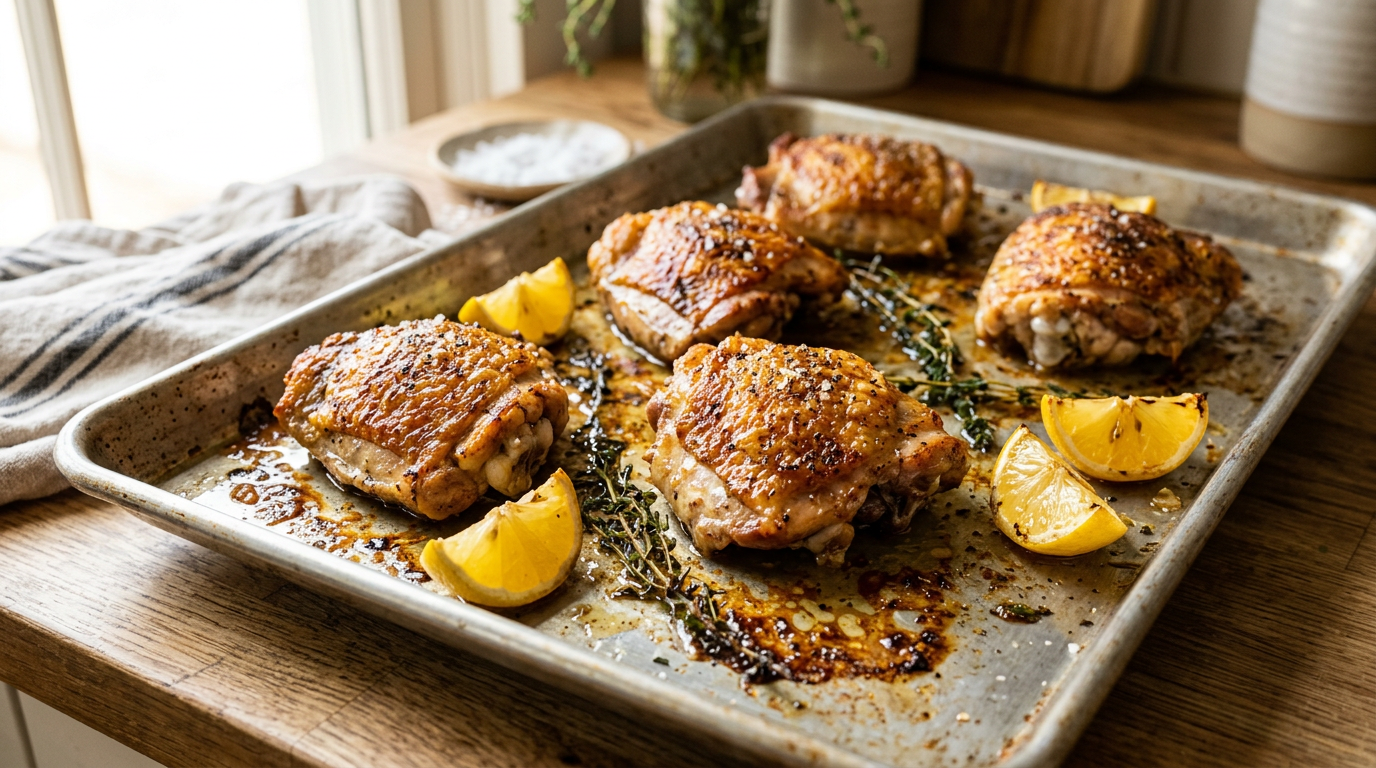
Chicken thighs are the forgiving cut. They carry more fat than breast meat, so a few extra minutes in the oven makes them better rather than drier. The part people struggle with is the skin, which comes out pale and rubbery far more often than it comes out crisp.
Almost every fix comes down to moisture and heat. Dry skin browns, wet skin steams. High heat renders the fat sitting under the skin quickly, and a moderate oven leaves it soft. Space between the pieces lets steam escape instead of settling back onto the surface.
The chart below covers bone-in and boneless thighs at the three oven temperatures most home recipes call for. Use it as a starting point and let a thermometer make the final call, since thigh sizes vary more than most packages suggest.
Baking times by cut and temperature
Times assume a fully preheated oven, a single layer on a rimmed sheet pan, and thighs of an average supermarket size. Start checking at the low end of each range.
| Cut | Oven temperature | Bake time |
|---|---|---|
| Bone-in, skin-on thighs | 425°F / 220°C | 35–45 minutes |
| Bone-in, skin-on thighs | 375°F / 190°C | 45–55 minutes |
| Boneless, skinless thighs | 425°F / 220°C | 20–25 minutes |
| Boneless, skinless thighs | 400°F / 205°C | 25–30 minutes |
| Boneless, skinless thighs | 375°F / 190°C | 30–35 minutes |
The 8-step method
- 1.
Heat the oven properly and pick a shallow pan
Set the oven to 425°F and give it a full 15 minutes to come up to temperature. A rimmed sheet pan or a shallow roasting tray lets hot air reach the skin. A deep dish traps steam, and steamed skin never crisps.
- 2.
Pat the thighs completely dry
Blot both sides with paper towel until the skin feels dry to the touch. Surface moisture has to evaporate before browning starts, so every drop you remove is time saved in the oven.
- 3.
Season under and over the skin
Rub salt and pepper directly onto the meat as well as the skin. Lift the skin at one edge with a finger and season underneath. Add paprika, garlic powder, dried oregano, or lemon zest at the same time.
- 4.
Oil the skin lightly, not the pan
Brush or rub a thin film of oil over the skin. Thighs render plenty of their own fat, so a pool of oil in the pan just fries the underside and softens the base.
- 5.
Arrange skin side up with space between pieces
Set the thighs skin side up in a single layer with at least an inch between them. Crowding traps steam and gives you pale, flabby skin. Use two pans rather than squeezing everything onto one.
- 6.
Bake without turning them
Slide the pan onto the middle rack and leave the thighs alone. Bone-in thighs need roughly 35 to 45 minutes at 425°F, boneless take 20 to 25 minutes. Flipping them halfway undoes the crisping.
- 7.
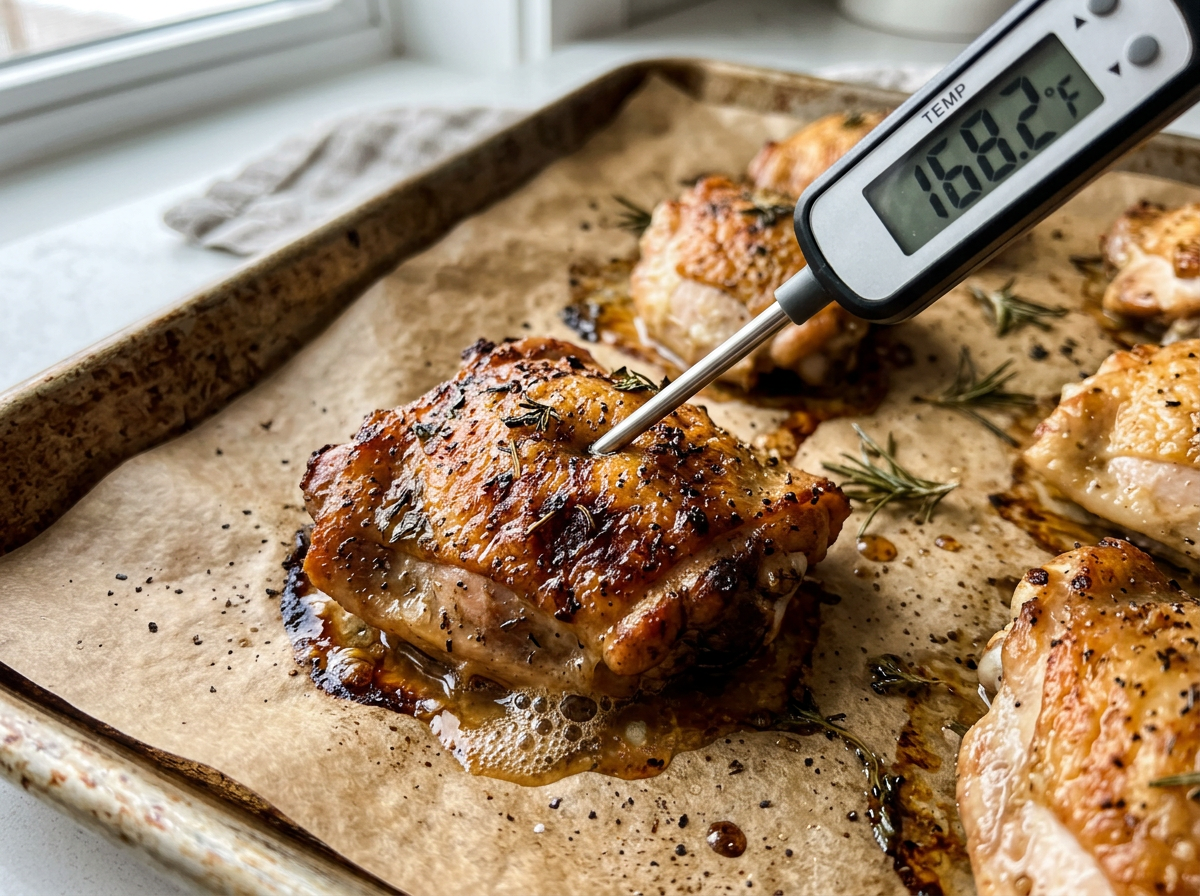
Check the temperature at the thickest point
Slide an instant-read thermometer into the thickest part without touching the bone. Poultry is safe at 165°F, and thighs eat better closer to 175°F to 185°F because the connective tissue softens.
- 8.
Rest five minutes, then spoon the pan juices over
Move the thighs to a board or plate and rest them for five minutes so the juices settle. Tip the pan and spoon the rendered juices over the meat rather than the skin.
Bone-in or boneless
Bone-in, skin-on thighs give you the best of the cut. The bone slows the heat reaching the center, which widens the window before the meat overcooks, and the skin renders into something worth eating. They need 35 to 45 minutes at 425°F, so they suit a relaxed weekend tray bake with vegetables around them.
Boneless, skinless thighs are the weeknight option. They are done in 20 to 25 minutes at the same temperature and slice neatly for bowls, wraps, and salads. Because there is no skin or bone to buffer them, check them early. If you want the same cut over live fire, the grilled chicken thigh guide covers times and two-zone heat, and the chicken breast guide handles the leaner cut.
Five habits that improve every tray
- Salt the thighs and leave them uncovered in the fridge for a few hours. The surface dries out and the skin crisps harder.
- Bake at a high temperature. Anything below 375°F renders the fat too slowly and the skin turns rubbery instead of crisp.
- Line the pan with foil for easy cleanup, but skip parchment if you want the sheet pan to brown the undersides.
- Add halved potatoes or thick-cut carrots to the same pan. They roast in the rendering chicken fat and finish in the same window.
- Do not cook thighs to 165°F and stop. Push them to 175°F or above so the collagen breaks down and the meat turns silky.
Fixing a tray that went wrong
Match the symptom to the cause and the next batch comes out right.
Skin came out soft and pale
The skin was wet, the oven was too cool, or the pieces were crowded. Dry the skin, bake at 425°F, and leave space between thighs.
Meat tastes dry or stringy
Boneless thighs went well past their window. Check them at 20 minutes and pull them by temperature, not time.
Underside is soggy
Too much oil or juice pooled in the pan. Use a rimmed sheet pan, oil the skin instead of the pan, and skip a deep dish.
Outside browned before the inside cooked
The thighs were very thick or still fridge cold. Let them sit at room temperature for 15 minutes before baking.
Seasoning tastes like it sits on the surface
The rub only went on the skin. Season the meat under the skin as well.
Thighs finished at different times
Piece sizes varied a lot. Buy thighs of a similar size, or test each one and pull them as they hit temperature.
Storing, freezing, and reheating
Refrigerate cooked thighs in a covered container within two hours and eat them within three to four days, following the FoodSafety.gov cold storage guidance. For longer keeping, wrap them well and freeze. Thaw in the refrigerator overnight rather than on the counter.
Reheat uncovered in a 375°F oven for 10 to 15 minutes so the skin firms up again. A microwave heats them fast but leaves the skin soft. Shred any leftovers straight into a grain bowl with fluffy rice or quinoa.
Baked Chicken Thigh FAQs
How long do you bake chicken thighs?
Bone-in, skin-on thighs take 35 to 45 minutes at 425°F. Boneless, skinless thighs take 20 to 25 minutes at 425°F, or 30 to 35 minutes at 375°F. Confirm with a thermometer rather than the clock.
What temperature should baked chicken thighs reach?
Chicken is safe once it reaches an internal temperature of 165°F, according to the USDA safe minimum internal temperature chart. Thighs taste better cooked further, to about 175°F to 185°F, because the connective tissue softens.
Do you cover chicken thighs when baking?
No. Covering traps steam and softens the skin. Bake them uncovered, skin side up, in a shallow pan so the surface dries and browns.
How do you get crispy skin on baked chicken thighs?
Pat the skin completely dry, rub a thin film of oil onto it, bake at 425°F on a rimmed sheet pan, and leave an inch of space between pieces. Salting the thighs a few hours ahead and refrigerating them uncovered dries the skin further.
Should you bake chicken thighs at 350°F or 425°F?
425°F gives better results. The higher heat renders the fat under the skin quickly and browns the surface. At 350°F the fat renders slowly and the skin tends to stay soft.
How do you store and reheat baked chicken thighs?
Refrigerate them in a covered container within two hours and use them within three to four days. Reheat uncovered in a 375°F oven for 10 to 15 minutes so the skin firms up again, rather than in the microwave.
Sources and further reading
Keep cooking
Put a tray of thighs to work in any of these guides and recipe collections.