Cooking Guide
How to Cook Cabbage
Six methods with real times, from 425°F roasted wedges to a ten minute skillet of fried cabbage, plus how to cut it so the core cooks with the leaves.
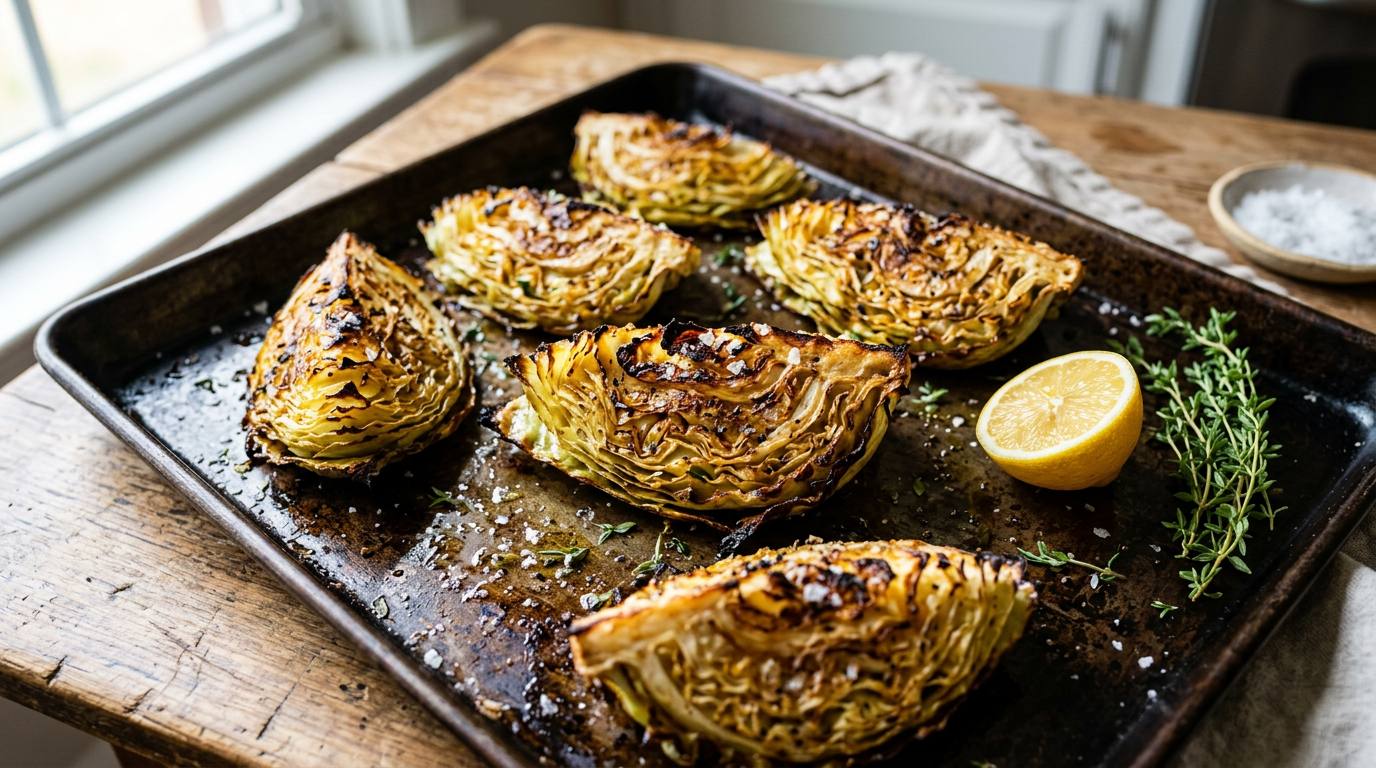
Cabbage has a reputation problem, and boiling is usually the cause. Left in water for fifteen minutes it turns grey, floppy, and smells like a school canteen.
Treated as a vegetable that likes heat and fat, it behaves like a completely different ingredient. Dry heat concentrates its sugars, so roasted wedges come out sweet with frilly browned edges, and a hot skillet of ribbons turns silky in about ten minutes. Wet methods still have their place, they just need to be quick.
One head feeds four to six people, keeps for weeks in the refrigerator, and costs less than almost anything else in the produce aisle. The charts below cover every common method, timed by how you cut it, along with fixes for the usual problems.
Cooking times by method
Times assume green cabbage. Savoy cooks a little faster, and red cabbage a little slower with denser leaves.
| Method | Prep | Heat | Time | Result |
|---|---|---|---|---|
| Roast (oven) | 1 inch wedges, cut sides oiled | 425°F | 25–30 minutes | Sweet centers with browned frilly edges |
| Fry / sauté | Shredded, about 1/4 inch ribbons | Medium high | 8–12 minutes | Silky with golden spots, the classic fried cabbage |
| Air fry | Small wedges or thick ribbons | 375°F | 12–15 minutes | Crisp edges with very little oil |
| Braise | Seared wedges plus 1/2 cup liquid, covered | Low simmer or 350°F oven | 35–45 minutes | Meltingly tender all the way through |
| Steam | Wedges or thick slices | Simmering water below the basket | 8–12 minutes | Mild and tender, holds its shape |
| Boil | Wedges | Salted boiling water | 5–8 minutes | Soft and fast, drain immediately |
The 6-step roasting method
- 1.
Pick a heavy, tight head
A good head feels dense for its size with squeaky, tight outer leaves. Loose or dry outer leaves mean it has been sitting, and those layers taste sharper. Green cabbage roasts and fries best, savoy braises well, and red cabbage keeps its color better with a splash of vinegar.
- 2.
Rinse and pull off the outer leaves
Remove the one or two outermost leaves, then rinse the head under cool running water and pat it dry, which follows FDA guidance for fresh produce. Skip soaps and produce washes. Dry cabbage browns, wet cabbage steams.
- 3.
Cut wedges through the core
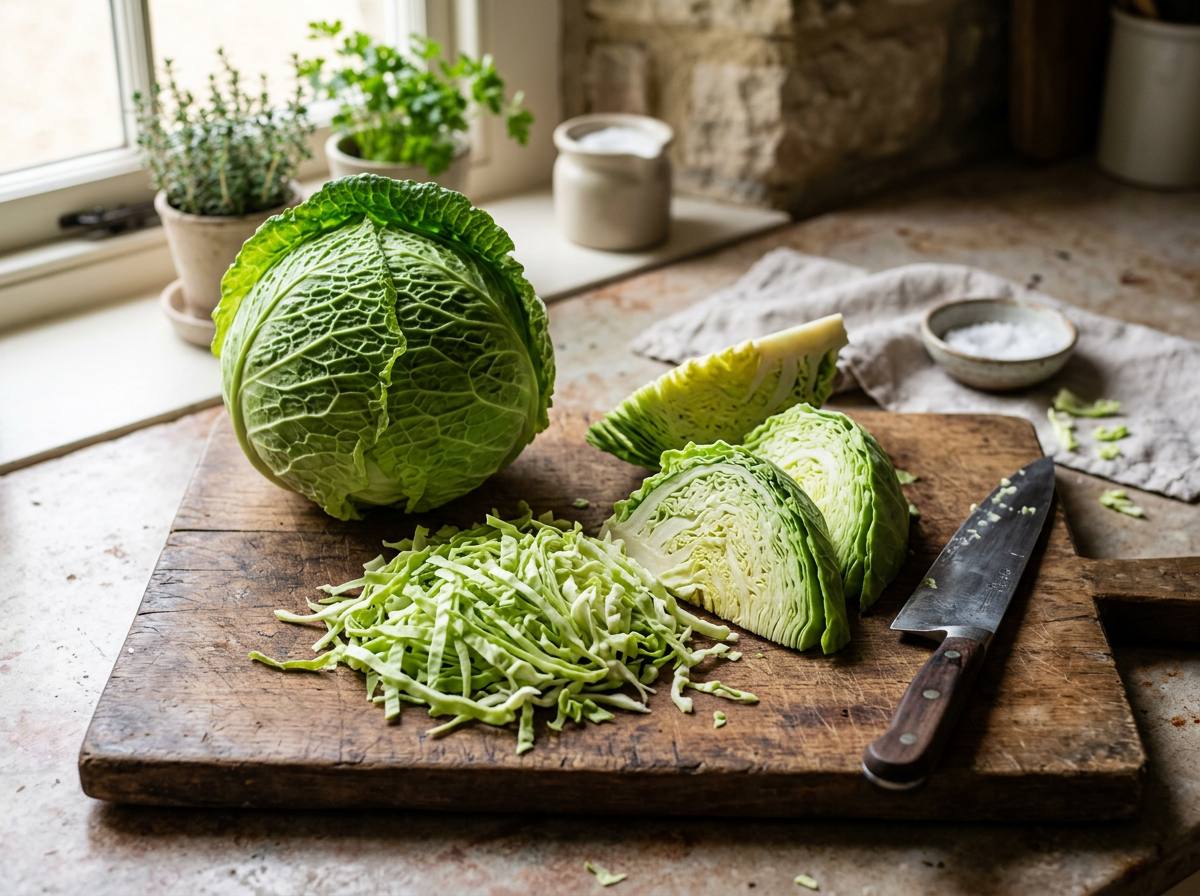
Stand the head on its stem and cut it in half, then into wedges about one inch thick at the outside edge. Leave the core attached in each wedge, it holds the layers together on the pan. For frying, cut the halves into quarter inch ribbons instead and discard the tough core.
- 4.
Oil the cut faces, then salt
Brush or toss with about one tablespoon of oil per pound so every cut face is coated. Salt now rather than at the table, it seasons the inner layers as they soften and pulls out a little water that helps the edges caramelize.
- 5.
Roast at 425°F in a single layer
Lay the wedges flat on a sheet pan with space between them and roast 25 to 30 minutes, flipping once at the halfway mark. Crowding traps steam and gives you pale, floppy cabbage. Two pans are better than one packed pan.
- 6.
Check the core and finish with acid
It is done when a paring knife slides through the core with light resistance and the outer edges are deeply browned. Off the heat, add lemon juice, cider vinegar, butter, or crumbled bacon. Acid is what keeps cooked cabbage tasting fresh instead of heavy.
Times by cut
| Cut | Roast at 425°F | Other method | Notes |
|---|---|---|---|
| Thin ribbons (1/8 inch) | Not ideal, they scorch | Fry 6–8 minutes | Best for slaw, tacos, and noodle dishes |
| Standard shred (1/4 inch) | 15–18 minutes, stir twice | Fry 8–12 minutes | The cut for fried cabbage with onion |
| 1 inch wedges | 25–30 minutes | Steam 8–10 minutes | The all purpose roasting cut |
| Thick 2 inch wedges | 35–40 minutes | Braise 35–45 minutes | Sear first, then braise for melting cabbage |
| Whole quarters | 45–55 minutes | Boil 10–12 minutes | Traditional with corned beef |
Four habits that improve every batch
- Preheat the sheet pan with the oven. Cabbage hitting hot metal starts browning instantly instead of leaking water.
- Keep wet methods short. Long boiling is what creates the sulfur smell people blame on cabbage itself.
- Add a teaspoon of vinegar to red cabbage early. Without acid it turns a dull blue grey as it cooks.
- Leave frying cabbage alone for the first three minutes so one side browns before you start stirring.
Fixing cabbage that went wrong
Pale and floppy from the oven
Crowded pan or wet cut faces. Dry the wedges and spread them over two pans.
Strong sulfur smell
Boiled or steamed too long. Stay near 5 to 8 minutes boiled and 8 to 12 minutes steamed.
Burnt edges, raw core
Wedges cut too thick. One inch is the sweet spot, or cover the pan for the first half of the roast.
Watery in the skillet
Too much cabbage at once on medium heat. Cook in two batches over medium high so the water evaporates.
Tastes bitter
An older head or overcooking. Trim more of the outer leaves and finish with a little sugar, honey, or fat.
Red cabbage turned blue
No acid in the pan. A splash of cider vinegar or lemon juice brings the purple back.
Nutrition per 100 g raw
Values from USDA FoodData Central, cabbage, raw (FDC ID 169975). Oil, butter, and bacon added during cooking change the totals.
Calories
25 kcal
Protein
1.28 g
Total fat
0.1 g
Carbohydrate
5.8 g
Fiber
2.5 g
Vitamin C
36.6 mg
Vitamin K
76 mcg
Potassium
170 mg
Storing raw and cooked cabbage
A whole head keeps for weeks in the refrigerator when you leave it unwashed and uncut. Once you cut into it, wrap the exposed face tightly and use it within about five days, trimming any dry edge before cooking. Cooked cabbage holds three to four days in a covered container.
Cabbage does not freeze well raw, as the leaves collapse and weep once thawed. Blanch shredded cabbage for ninety seconds, cool it in ice water, dry it, and freeze it flat if you plan to use it in soups and braises where texture matters less.
What to serve with it
Roasted or fried cabbage works next to almost anything rich. Serve it with skillet pork chops, baked chicken thighs, or a seared steak. For a plate of vegetables, add boiled potatoes or a pot of lentils, and browse weekly meal plans when you want the week mapped out.
Cabbage FAQs
How long does cabbage take to cook?
One inch wedges roast in 25 to 30 minutes at 425°F, shredded cabbage fries in 8 to 12 minutes, air fried wedges take 12 to 15 minutes at 375°F, steaming takes 8 to 12 minutes, boiling takes 5 to 8 minutes, and braised wedges need 35 to 45 minutes. Thicker cuts always need the longer end of the range.
How do you cook cabbage on the stove?
Cut it into quarter inch ribbons, heat a tablespoon or two of oil or butter in a wide skillet over medium high, then add the cabbage with salt. Leave it undisturbed for three minutes to brown, then stir every couple of minutes for a total of 8 to 12 minutes. Finish with black pepper and a splash of vinegar.
Is it better to boil or roast cabbage?
Roast when you want sweetness and browned edges, since dry heat concentrates the flavor. Boil when you need soft cabbage fast for corned beef, soups, or cabbage rolls. Boiled cabbage should come out of the water at 5 to 8 minutes, before the color and flavor fade.
Do you need to remove the cabbage core?
Leave the core in when you roast, steam, or braise wedges, because it holds the layers together and turns tender along with them. Cut the core out when you shred cabbage for frying or slaw, as it stays firmer than the leaves.
How do you stop cooked cabbage smelling bad?
Keep the cooking time short and the pot uncovered when you boil or steam. The sulfur compounds build up the longer cabbage sits in hot water, so drain it as soon as a knife goes through. Roasting and frying avoid the problem almost entirely.
How long does cooked cabbage keep?
Refrigerate it in a covered container and use it within three to four days. Reheat roasted wedges in a 400°F oven for five minutes so the edges crisp again, and warm fried cabbage in a hot skillet rather than the microwave, which softens it further.
Sources and further reading
Keep cooking
Pair a pan of cabbage with any of these guides and recipe collections.