Cooking Guide
How to Cook Brussels Sprouts
Six methods with real times, from a 425°F sheet pan to a quick steam, plus how to trim sprouts so they hold together and how to keep them sweet instead of bitter.
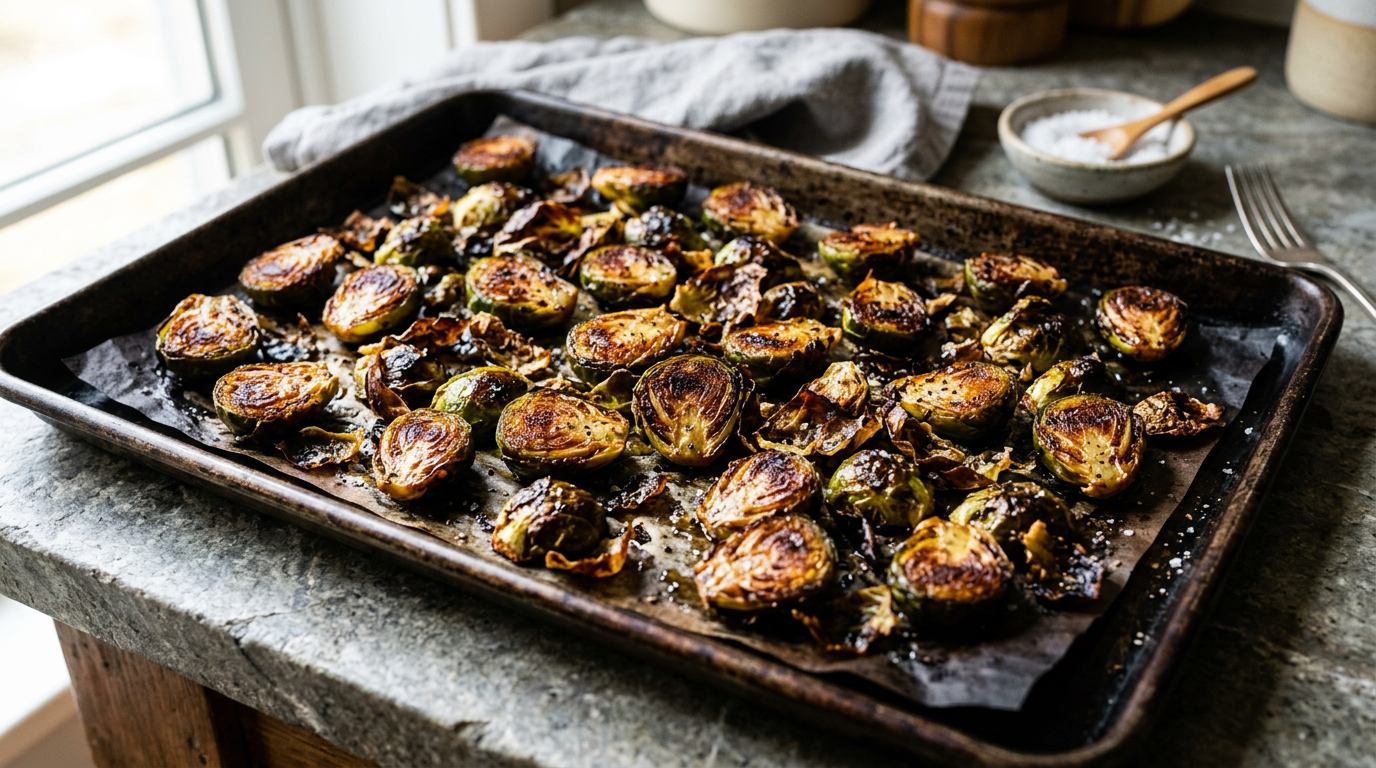
Brussels sprouts have a reputation problem, and boiling is mostly to blame. Held too long in water they go grey, soft, and sulfurous, which is the flavor most people remember from childhood dinners.
Dry heat does the opposite. Halved sprouts pressed cut side down on a hot pan brown into something sweet and nutty, with crisp outer leaves and creamy centers. The whole trick is a thin stem trim, a dry surface, an uncrowded pan, and pulling them off the heat before they overcook.
Cooking times by method
Times assume medium sprouts, roughly one to one and a half inches across. Adjust with the size chart below.
| Method | Prep | Heat | Time | Result |
|---|---|---|---|---|
| Roast (oven) | Halved | 425°F | 20–25 minutes | Crisp caramelized cut sides, tender centers |
| Air fry | Halved | 375°F | 12–15 minutes | Crunchy edges with less oil |
| Sauté / pan sear | Halved or shredded | Medium-high | 8–10 minutes | Browned flat sides, quick side dish |
| Steam | Whole or halved | Simmering water | 6–8 minutes | Bright green, soft, mild flavor |
| Boil | Whole, stem trimmed | Salted boiling water | 5–7 minutes | Tender, best when finished with butter |
| Shred raw | Thinly sliced | None | 0 minutes | Crunchy slaw or salad base |
The 6-step roasting method
- 1.
Pick firm, tight sprouts
Look for compact heads that feel heavy and dense with tightly closed leaves. Loose, yellowing, or soft sprouts taste stronger and turn bitter with heat. Sort by size so everything on the pan finishes at the same time.
- 2.
Trim the stem and pull loose leaves
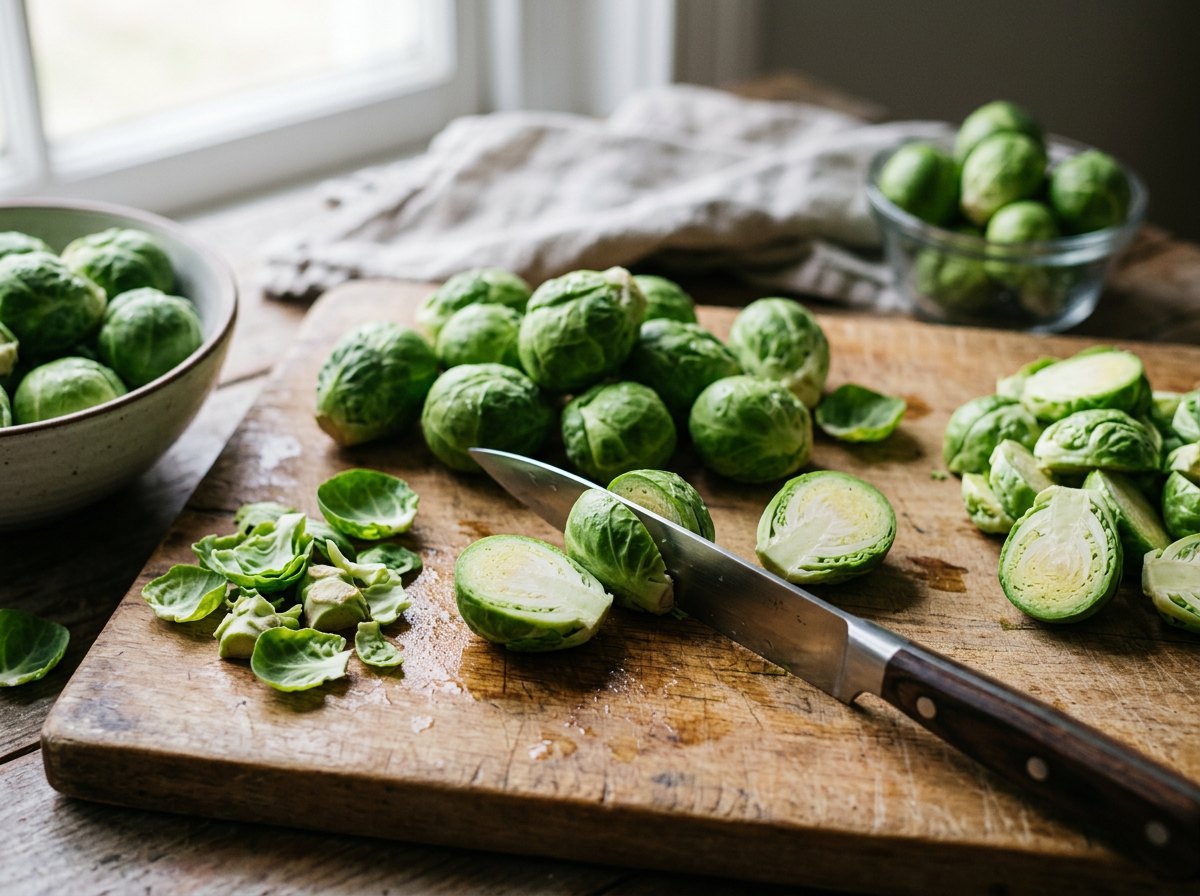
Slice a thin coin off the dry stem end, no more than a couple of millimeters, then peel away any tough or discolored outer leaves. Cutting deep into the stem lets the sprout fall apart during cooking.
- 3.
Halve them through the stem
Cut each sprout in half from top to stem. That flat cut face is what browns, and halves cook through in about half the time whole sprouts need. Quarter anything larger than a golf ball.
- 4.
Dry well, then toss with oil and salt
Pat washed sprouts completely dry so they roast instead of steam. Use enough oil to coat every surface lightly, about one tablespoon per pound, with a generous pinch of salt and pepper.
- 5.
Roast cut side down in a single layer
Heat the oven to 425°F and place the halves cut side down on a sheet pan with space between them. Contact with hot metal builds the browning, and crowding traps steam that keeps them pale and floppy.
- 6.
Check at 20 minutes and finish to taste
The sprouts are done when the cut faces are deep brown and a paring knife slides into the center with no resistance, usually 20 to 25 minutes. Finish with lemon juice, grated parmesan, or a splash of balsamic while they are still hot.
Times by sprout size
| Size | Roast at 425°F | Steam | Notes |
|---|---|---|---|
| Small (under 1 inch) | 16–18 minutes | 5–6 minutes | Keep whole for steaming, halve for roasting |
| Medium (1–1.5 inch) | 20–25 minutes | 6–8 minutes | The standard supermarket size |
| Large (over 1.5 inch) | 25–30 minutes | 9–11 minutes | Quarter them so the centers cook through |
| Shredded | 10–12 minutes | 2–3 minutes | Stir once, watch closely, edges burn fast |
Four habits that improve every batch
- Preheat the sheet pan with the oven for a few minutes before adding the sprouts. Cold metal delays browning on the cut side.
- Leave the loose leaves that fall off on the pan. They crisp into the best part of the batch.
- Add anything sweet, such as honey or maple syrup, only in the last five minutes so it glazes instead of scorching.
- Acid at the end fixes flat flavor faster than more salt. Lemon juice or vinegar sharpens the sweetness roasting creates.
Fixing sprouts that went wrong
Soggy, no browning
Wet sprouts or a crowded pan. Dry them thoroughly and use two sheet pans rather than piling them up.
Bitter and sulfurous
Overcooked or old sprouts. Boiling and steaming past the times above drive off sweetness and bring out sulfur notes.
Burnt outside, raw inside
Oven too hot or sprouts too big. Stay at 425°F and quarter anything larger than a golf ball.
Falling apart into leaves
Too much of the stem was cut off. Take a thin coin only, leaving the core that holds the layers together.
Bland even with salt
No acid and no fat carryover. Finish with lemon, vinegar, butter, or cheese off the heat.
Uneven doneness
Mixed sizes on one pan. Sort by size, or halve the small ones and quarter the large ones.
Nutrition per 100 g raw
Values from USDA FoodData Central, Brussels sprouts, raw (FDC ID 2709772). Oil and butter added during cooking change the totals.
Calories
43 kcal
Protein
3.38 g
Total fat
0.3 g
Carbohydrate
8.95 g
Fiber
3.8 g
Vitamin C
85 mg
Vitamin K
177 mcg
Potassium
389 mg
Storing raw and cooked sprouts
Keep raw sprouts unwashed in the refrigerator and rinse them just before cooking, since surface moisture speeds up spoiling. Cooked sprouts hold for about four days in a covered container. Reheat them in a hot skillet or a 400°F oven so the browned edges crisp again rather than softening in a microwave.
Brussels Sprouts FAQs
How long do Brussels sprouts take to cook?
Halved sprouts roast in 20 to 25 minutes at 425°F, air fry in 12 to 15 minutes at 375°F, sauté in 8 to 10 minutes, steam in 6 to 8 minutes, and boil in 5 to 7 minutes. Large sprouts need the longer end of each range.
Should you cut Brussels sprouts in half before cooking?
Halve them through the stem for roasting, air frying, and sautéing. The flat cut face is what browns and halves cook through in roughly half the time whole sprouts need. Keep small sprouts whole for steaming or boiling.
What temperature is best for roasting Brussels sprouts?
425°F gives deep browning on the cut side before the centers overcook. Lower oven temperatures dry the sprouts out before they caramelize, and much higher heat scorches the outer leaves while the middles stay firm.
Why do my Brussels sprouts taste bitter?
Bitterness usually comes from overcooking or from loose, older sprouts. Cooking past the times listed above releases sulfur compounds, so pull them as soon as a knife slides into the center easily and choose tight, firm heads.
Do you need to soak or wash Brussels sprouts first?
Rinse them under cool running water, as the FDA advises for fresh produce, then dry them completely. Soaking is unnecessary and leftover water on the surface steams the sprouts instead of letting them brown.
How do you store and reheat cooked Brussels sprouts?
Refrigerate cooled sprouts in a covered container for up to four days. Reheat in a hot skillet or a 400°F oven for five to eight minutes so the edges crisp again. A microwave warms them through but leaves them soft.
Sources and further reading
Keep cooking
Pair a tray of sprouts with any of these guides and recipe collections.