Cooking Guide
How to Cook Lentils
Simmer times for every common lentil, the liquid ratio that works across the board, and the habits that decide whether they stay whole or collapse into a puree.
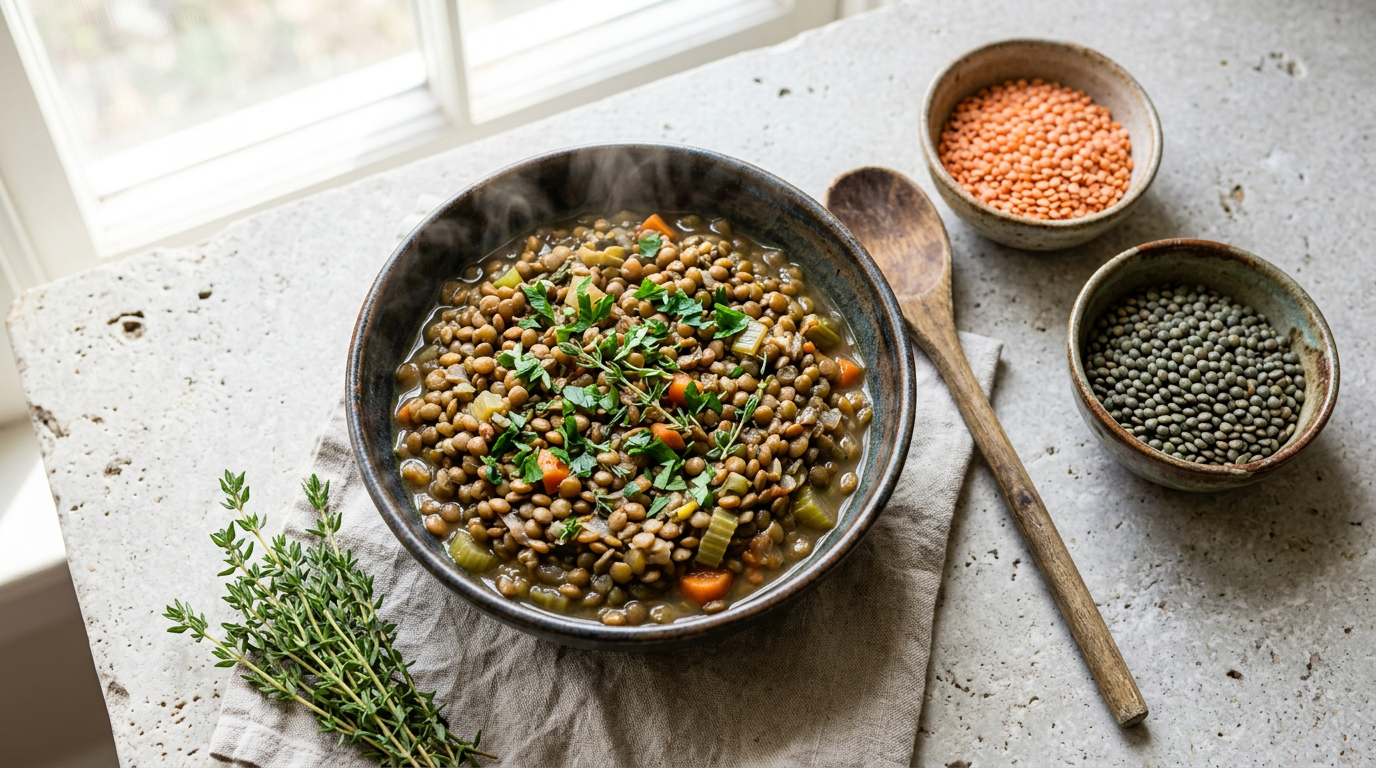
Lentils are the fastest dried pulse in the pantry. They need no soaking, they cook in the time it takes to roast a tray of vegetables, and one pot covers dinner, lunch, and a salad the next day.
Most disappointing pots come down to two things: picking a variety that does not suit the dish, and boiling too hard. Split red lentils will always collapse, which is perfect for dal and wrong for a salad. French green and black beluga lentils will always stay firm, so they are not the ones to reach for when you want a thick, creamy soup.
Get the pairing right and the method is short. Sort, rinse, cover with three times as much liquid, add aromatics, simmer gently, and season at the end. The chart below gives the timing for each type, and the troubleshooting section covers the pots that go sideways.
Lentil cooking times by type
Times are measured from the moment the water reaches a boil, held at a gentle simmer. Taste at the low end of each range, because older lentils can take several minutes longer.
| Lentil | Liquid | Simmer time | Texture |
|---|---|---|---|
| Red or yellow split lentils (masoor dal) | 3 cups per 1 cup lentils | 15–20 minutes | Breaks down into a soft puree |
| Brown lentils | 3 cups per 1 cup lentils | 20–30 minutes | Tender, holds a soft shape |
| Green lentils | 3 cups per 1 cup lentils | 25–30 minutes | Tender with a little bite |
| French green lentils (Puy) | 3 cups per 1 cup lentils | 25–30 minutes | Firm, distinct grains |
| Black beluga lentils | 3 cups per 1 cup lentils | 20–25 minutes | Firm and glossy |
The 7-step method
- 1.
Match the lentil to the dish
Split red and yellow lentils collapse as they cook, which suits dal, soups, and thick purees. Brown and green lentils soften while keeping a loose shape for stews and sides. French green and black beluga lentils stay firm, so they are the ones for salads and grain bowls.
- 2.
Sort and rinse, but skip the soak
Tip the lentils onto a tray and pick out any small stones or shrivelled pieces, then rinse in a fine mesh strainer under cold water. Lentils are small enough that they cook through without soaking, unlike dried beans.
- 3.
Use plenty of liquid
Three cups of water or stock per cup of dry lentils gives them room to move and cook evenly. For salads you can use even more water and drain the excess, and for dal you can start closer to four cups if you want it looser.
- 4.
Add aromatics to the pot
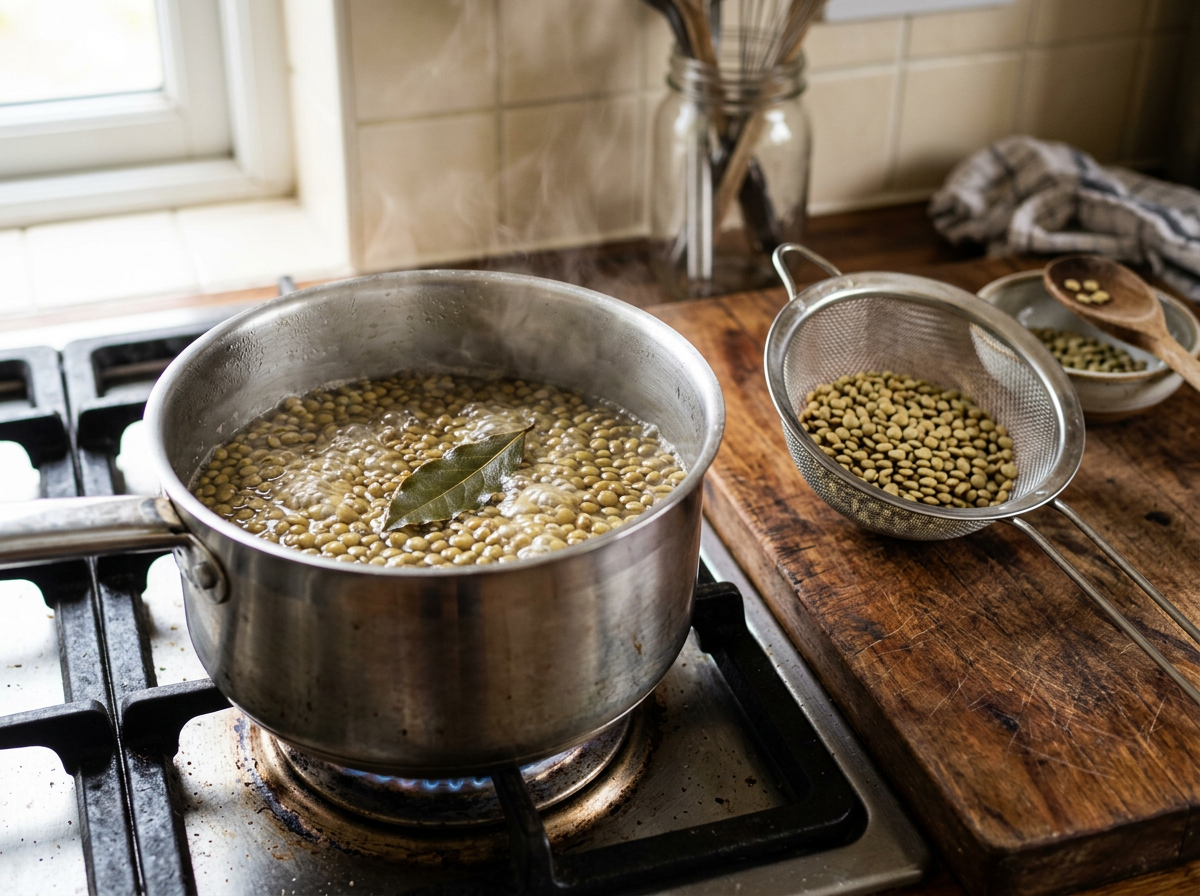
Lentils take on flavour from the cooking liquid, so drop in a bay leaf, a halved onion, a smashed garlic clove, or a few thyme sprigs. Stock in place of water makes a noticeable difference in a side dish.
- 5.
Bring to a boil, then simmer gently
Bring the pot to a boil uncovered, then turn it down until the surface just trembles and cover partially. A hard boil tumbles the lentils against each other and splits their skins, which is how firm varieties turn to mush.
- 6.
Start tasting early
Check a few lentils at the low end of the time range in the chart. Age and variety change the timing, so taste rather than trust the clock. They should be creamy inside with no chalky centre.
- 7.
Salt at the end, then drain or thicken
Season once the lentils are tender so the skins stay soft, and add acid such as lemon juice or vinegar off the heat. Drain firm lentils for salads, or keep simmering softer ones uncovered until the liquid thickens.
Firm, soft, or fully collapsed
Think of lentils on a spectrum. At the firm end sit French green lentils and black beluga lentils, which keep their skins intact and their shape defined. In the middle are everyday brown and green lentils, tender with a hint of structure, ideal for stews and a warm side next to pan-cooked chicken breast or baked salmon. At the soft end are split red and yellow lentils, which dissolve into a thick puree.
Choose from the finished dish backwards. A grain bowl wants firm lentils and a bright dressing, the same way properly fluffed quinoa does. A weeknight soup wants split lentils that thicken the pot on their own.
Four habits that improve every pot
- Cook lentils in stock instead of water when they are the side dish rather than one ingredient in a soup.
- Add tomatoes, vinegar, and lemon juice after the lentils are tender. Acid early in the pot keeps the skins firm and stretches the cooking time.
- Dress warm lentils. They soak up vinaigrette while they cool, and a cold bowl of lentils barely takes any on.
- Cook a double batch and refrigerate half. Cooked lentils turn into a salad, a soup base, or a filling with no extra work.
Fixing a pot that went wrong
Match the symptom to the cause and the next batch comes out right.
Lentils turned to mush
Either the water was at a rolling boil or the variety was wrong. Simmer gently and use French green or beluga lentils when you need them to stay whole.
Still chalky after 40 minutes
The lentils are old, or acid went in too early. Old lentils can take much longer, and tomatoes or vinegar early in the pot slow softening.
Bland and flat
Water with no aromatics and no salt. Use stock, add a bay leaf and onion, and season generously once the lentils are tender.
Watery dal
Keep simmering uncovered and stir. The starch released from split lentils thickens the pot as liquid evaporates.
Uneven texture in one pot
Two varieties were mixed. Cook different lentils separately, then combine them.
Grit in the finished dish
The lentils were not sorted or rinsed. Spread them on a tray and check before they go anywhere near the pot.
Nutrition, briefly
Lentils are a plant protein with a high fibre content, and the USDA publishes full nutrient data for cooked lentils in FoodData Central. Exact figures shift with variety and portion size, so check the entry that matches what you cooked rather than relying on a rounded number. Cooking them in stock, adding fat, or finishing with cheese changes the totals for the finished dish.
Storing, freezing, and reheating
Cool cooked lentils promptly rather than leaving the pot on the counter, then refrigerate them in a covered container. FoodSafety.gov publishes cold storage guidance for cooked foods, and refrigerated lentils are best used within a few days.
Lentils freeze better than most cooked pulses. Freeze them drained in a flat bag, or in their cooking liquid for soups and dal. Reheat gently with a splash of water or stock, since they tighten as they chill and need a little liquid to loosen again. Keep dried lentils in a sealed jar somewhere cool and dark, and use older bags for dal where softness is the goal.
Lentil Cooking FAQs
How long does it take to cook lentils?
Split red and yellow lentils take 15 to 20 minutes, brown lentils 20 to 30 minutes, green and French green lentils 25 to 30 minutes, and black beluga lentils 20 to 25 minutes at a gentle simmer. Taste them at the low end of the range because older lentils cook more slowly.
Do lentils need to be soaked before cooking?
No. Lentils are small and thin-skinned, so they cook through without soaking. Sorting and a quick rinse under cold water is all the preparation they need.
How much water do you use per cup of lentils?
Three cups of water or stock per cup of dry lentils works for every variety. Use more if you want a looser dal and drain any excess when you are cooking lentils for a salad.
When should you salt lentils?
Season near the end of cooking, once the lentils are tender. Salt is fine in moderation early on, but acidic ingredients such as vinegar, lemon juice, and tomatoes keep the skins firm and should go in after the lentils have softened.
Which lentils hold their shape best?
French green lentils, also sold as Puy lentils, and black beluga lentils stay firm and distinct, which makes them the pick for salads and bowls. Split red and yellow lentils break down completely and suit dal and pureed soups.
How do you store cooked lentils?
Cool them promptly, then refrigerate in a covered container. They also freeze well, either drained or in their cooking liquid, and reheat with a splash of water or stock to loosen them.
Sources and further reading
Keep cooking
Put a pot of lentils to work in any of these guides and recipe collections.