Cooking Guide
How to Cook Pork Chops
Times for the skillet, the oven, and the grill, the internal temperature that keeps pork juicy, and the small habits that give you a proper brown crust.
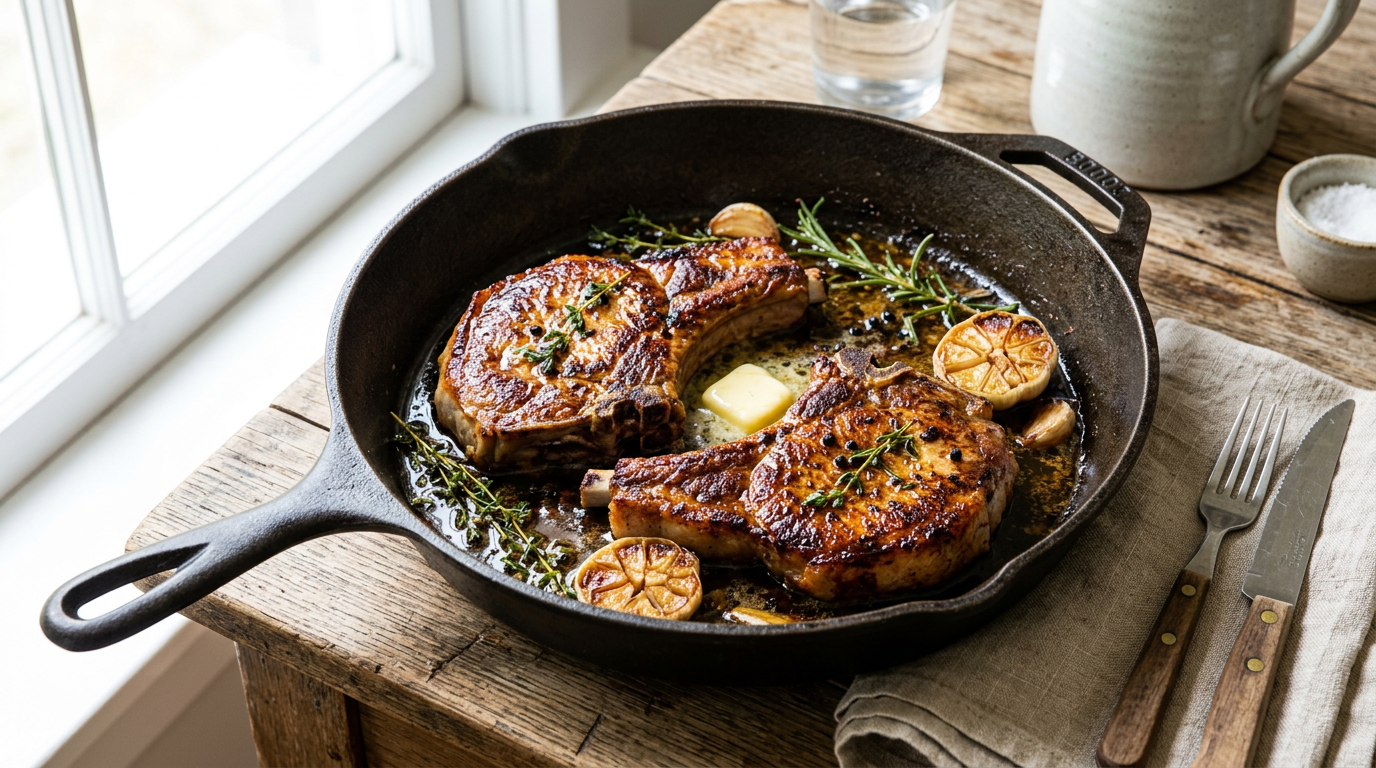
Pork chops have a reputation for turning out dry, and almost all of it comes from two habits. The chops are too thin to survive a hot pan, and they get cooked well past the point where pork is safe to eat. Fix those two things and the cut becomes one of the fastest good dinners you can put on a plate.
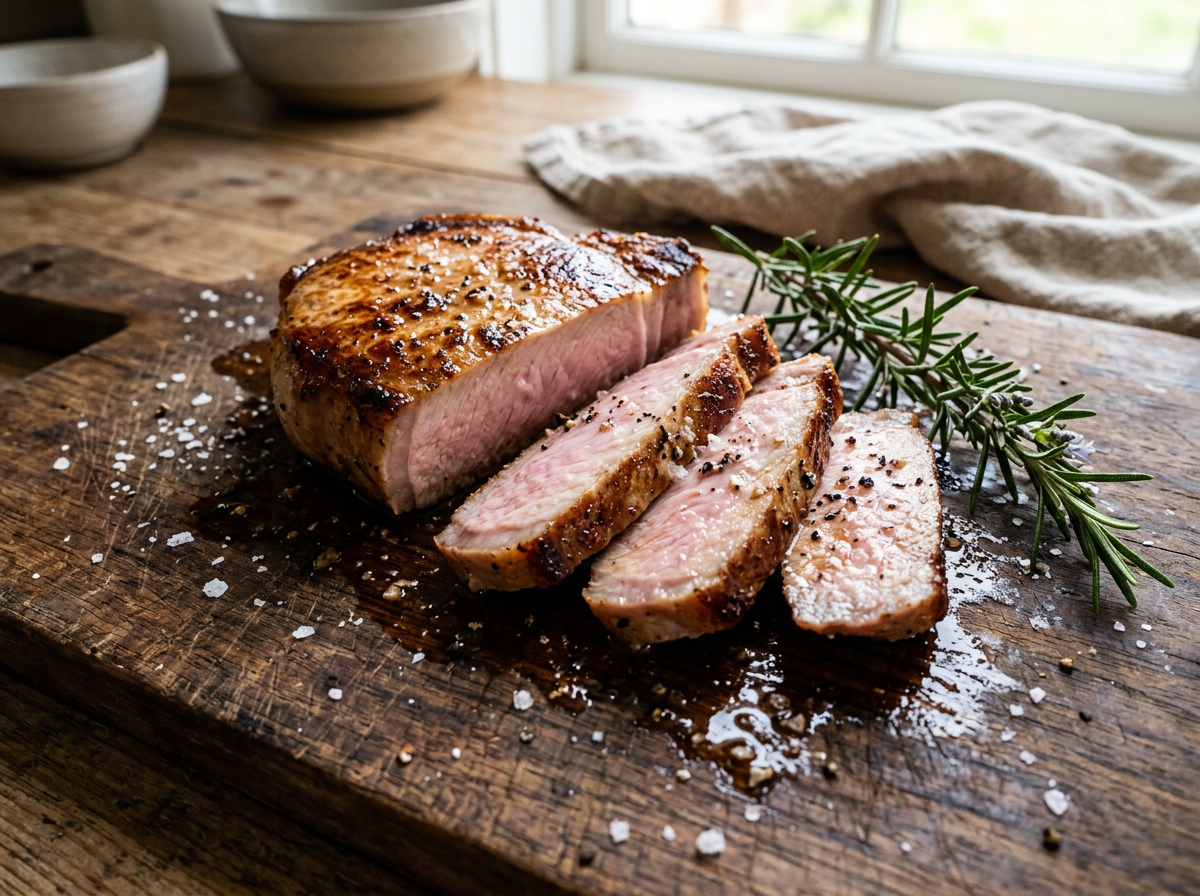
Whole cuts of pork are safe at an internal temperature of 145°F with a three minute rest, which is lower than the temperature many home cooks grew up with. At that point the meat still holds juice and often shows a faint blush in the center.
The rest is browning. A dry surface, a hot heavy pan, and one flip instead of five give you the crust that makes a chop taste like more than plain pork. Thick chops get a sear in the skillet and finish in the oven so the middle catches up gently.
The table below covers the three ways most people cook chops, split by bone-in and boneless. Treat the ranges as a guide and let a thermometer make the final call, because chop thickness varies far more than the label suggests.
Cooking times by method and cut
Times assume chops taken out of the fridge 20 minutes earlier, a fully preheated pan or oven, and space between the pieces. Start checking at the low end of each range.
| Method and cut | Heat | Time |
|---|---|---|
| Skillet, boneless (¾ inch) | Medium-high | 3–4 minutes per side |
| Skillet, boneless (1 inch) | Medium-high, then medium | 4–5 minutes per side |
| Skillet then oven, bone-in (1¼ inch) | Sear, then 400°F / 205°C | Sear 3 minutes per side, 8–12 minutes in the oven |
| Oven only, boneless (1 inch) | 400°F / 205°C | 15–20 minutes |
| Oven only, bone-in (1 inch) | 400°F / 205°C | 20–25 minutes |
| Grill, bone-in (1 inch) | Medium-high direct heat | 4–6 minutes per side |
The 8-step method
- 1.
Buy thicker chops than feel sensible
A one inch chop gives you room to brown the outside before the center passes its window. Thin quarter inch chops cook through the moment they hit the pan, which is why they so often turn out tough.
- 2.
Salt the chops ahead of time
Season both sides with salt and leave the chops on a rack for 40 minutes at room temperature, or salted and uncovered in the fridge for a few hours. The salt seasons the interior and the surface dries so it browns faster.
- 3.
Pat the surface dry before cooking
Blot each chop with paper towel until it stops feeling damp. Wet meat steams in the pan and you lose the brown crust that carries most of the flavour.
- 4.
Get the pan properly hot
Heat a heavy skillet over medium-high with a thin film of a high smoke point oil until it shimmers. A cast iron or carbon steel pan holds its heat when the cold meat lands, so the crust forms instead of grey edges.
- 5.
Sear undisturbed, then flip once
Lay the chops down with space between them and leave them alone for three to four minutes. Flip once when the underside is deep golden. Moving them every few seconds stops the crust setting.
- 6.
Sear the fat cap and baste with butter
Stand bone-in chops on their fat edge for a minute so the fat renders. Then drop in butter, a smashed garlic clove, and thyme, tilt the pan, and spoon the foaming butter over the meat for the last minute.
- 7.
Finish thick chops in the oven
Anything over an inch is easier to finish at 400°F after searing. Slide the whole skillet into the oven for eight to twelve minutes so the center catches up without the crust burning.
- 8.
Pull at 145°F and rest three minutes
USDA guidance for whole cuts of pork is an internal temperature of 145°F followed by a three minute rest. Check the thickest part away from the bone, then let the chops sit before slicing so the juices settle.
Bone-in or boneless
Bone-in chops, sold as rib chops or loin chops, cook a little slower because the bone slows heat reaching the center. That extra time is useful, since it widens the window before the meat tightens, and the fat around the bone bastes the meat as it renders.
Boneless chops are leaner and quicker, which makes them a weeknight cut. They benefit most from a short salt brine and a close eye on the thermometer. Serve either one with boiled potatoes or a tray of grilled vegetables and dinner is done.
Five habits that improve every chop
- Cook by temperature, not by colour. Pork at 145°F holds a faint blush pink in the center and that is done, not underdone.
- Brine lean boneless chops for 30 minutes in water with salt if they tend to dry out on you. Rinse and dry them well before searing.
- Leave the fat cap on. It renders during the sear and bastes the meat, and you can trim it on the plate if you prefer.
- Do not crowd the pan. Two chops at a time in a 10 inch skillet keeps the surface hot enough to brown.
- Deglaze the pan with a splash of stock, cider, or wine after the chops come out, then whisk in a knob of butter for an instant sauce.
Fixing chops that went wrong
Match the symptom to the cause and the next pan comes out right.
Chops came out dry and tight
They went past 145°F, or they were thin. Buy one inch chops and pull them by thermometer rather than by time.
No crust, just grey meat
The pan was not hot enough or the surface was wet. Preheat until the oil shimmers and blot the chops dry first.
Outside burned before the middle cooked
Thick chops need the oven. Sear both sides, then finish at 400°F until the center reaches temperature.
Chops curled up in the pan
The fat cap tightened as it cooked. Cut two shallow slits through the fat edge before searing.
Meat tastes bland inside
Salt only landed at the last second. Season 40 minutes ahead so the salt has time to work in.
Center still looks pink
A faint blush at 145°F is normal for whole pork cuts. Trust the thermometer over the colour.
Storing, freezing, and reheating
Refrigerate cooked chops in a covered container within two hours and eat them within three to four days, following FoodSafety.gov cold storage guidance. For longer keeping, wrap them tightly and freeze, then thaw in the refrigerator rather than on the counter.
Reheat gently. A covered skillet with a spoonful of stock, or a 325°F oven, warms the meat through without squeezing it dry. Slice leftovers thin for sandwiches, or fold them through rice with pan juices for a quick second dinner.
Pork Chop FAQs
How long do you cook pork chops?
A one inch boneless chop needs about 4 to 5 minutes per side in a hot skillet. Bone-in chops of the same thickness take 20 to 25 minutes in a 400°F oven, or 4 to 6 minutes per side over medium-high direct heat on a grill. Confirm doneness with a thermometer rather than the clock.
What temperature should pork chops be cooked to?
Cook whole cuts of pork, including chops, to an internal temperature of 145°F and let them rest for three minutes before slicing. That is the safe minimum internal temperature published by FoodSafety.gov and USDA FSIS.
Can pork chops be a little pink in the middle?
Yes. A chop cooked to 145°F with a three minute rest often keeps a faint blush pink center and is safe to eat. Judge doneness with a thermometer instead of colour.
How do you keep pork chops from drying out?
Choose chops at least one inch thick, salt them 40 minutes ahead, sear over high heat, and stop at 145°F. A short salt brine helps very lean boneless chops, and resting the meat keeps the juices in place.
Is it better to cook pork chops in the oven or on the stove?
Both work. Thin and medium chops finish neatly in a skillet, while chops over an inch thick do best seared in a skillet then moved to a 400°F oven so the center cooks without the crust burning.
How do you store and reheat cooked pork chops?
Refrigerate them in a covered container within two hours and eat them within three to four days. Reheat gently in a covered skillet with a splash of stock, or in a 325°F oven, so they warm through without tightening.
Sources and further reading
Keep cooking
Pair a pan of chops with any of these guides and recipe collections.