Cooking Guide
How to Bake Salmon
Oven times and temperatures for salmon fillets, the internal temperature to cook to, and the small habits that keep the fish moist instead of dry and chalky.
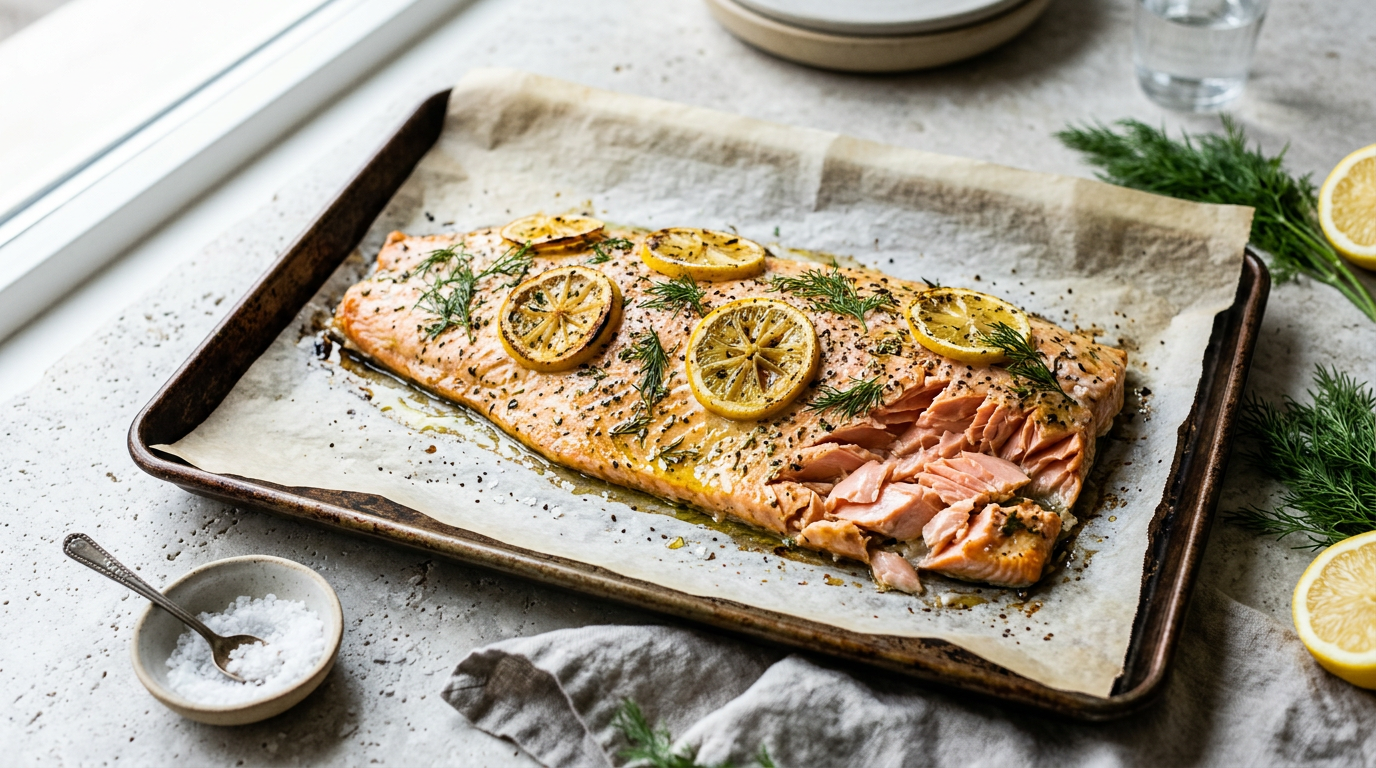
Salmon is one of the easiest proteins to cook and one of the easiest to ruin. The window between silky and chalky is about three minutes wide, and once it closes there is no getting the moisture back. Most dry salmon is not a recipe problem, it is a timing problem.
Baking gives you the best odds because the heat is steady and comes from all sides. There is no flipping, no splattering pan, and no guessing whether the underside has caught. You put a fillet on a lined sheet pan, choose an oven temperature, and check the centre with a thermometer.
The method below works for skin-on or skinless fillets, whole sides, and portioned pieces. Everything hinges on two numbers: the oven setting you choose and the internal temperature you pull at. Get those right and the seasoning is just decoration.
Oven temperatures and baking times
Times are for a fillet about 1 inch thick at its thickest point. Thinner tail pieces cook faster, thick centre cuts slower, so treat these as a starting range and confirm with a thermometer.
| Oven | Time | What you get |
|---|---|---|
| 275°F / 135°C | 20 to 30 minutes | Slow and gentle. The most forgiving setting and the hardest to overcook. |
| 350°F / 175°C | 15 to 20 minutes | Even cooking with a soft surface. Good for saucy or glazed fillets. |
| 400°F / 200°C | 10 to 14 minutes | The weeknight default. Quick, with a lightly firmed top. |
| 425°F / 220°C | 8 to 12 minutes | Fast, with a little colour on the edges. Watch it closely. |
FoodSafety.gov lists 145°F as the safe minimum internal temperature for fish, measured at the thickest part of the fillet.
The 6-step oven method
- 1.
Take the salmon out of the fridge and dry it
Let the fillet sit on the counter while the oven heats, then blot both sides with paper towel. A dry surface seasons better and stops the fish from steaming in its own moisture. Pull out any pin bones you can feel by running a finger along the centre line.
- 2.
Heat the oven and line a sheet pan
Pick a temperature from the chart above and give the oven a full 15 minutes to come up to it. Line a rimmed sheet pan with parchment so the skin does not weld to the metal, and so cleanup is a matter of folding the paper.
- 3.
Oil and season the fillet
Brush the salmon with olive oil, then season with salt and pepper right before it goes in the oven. Salting early draws out moisture and firms the surface, which is fine for a cure but not what you want here.
- 4.
Bake skin side down
Place the fillet skin side down in the centre of the pan and slide it onto the middle rack. The skin acts as a buffer between the flesh and the hot pan, keeping the underside from tightening and drying while the top cooks.
- 5.
Check the temperature at the thickest point
Start checking a few minutes before the earliest time in the chart. Slide an instant-read thermometer horizontally into the thickest part of the fillet. FoodSafety.gov gives 145°F as the safe minimum internal temperature for fish, so cook to that if you are serving children, older adults, or anyone pregnant.
- 6.
Rest for five minutes, then serve
Move the pan to the counter and leave the salmon alone for five minutes. Carryover heat finishes the centre and the juices settle instead of running out on the plate. Squeeze lemon over it at the very end.
Choosing and prepping the fillet
A centre-cut piece of even thickness is worth paying a little more for, because it cooks at one rate from end to end. If you only have a tapered side of salmon, fold the thin tail under itself before baking so the whole fillet is roughly the same depth. Frozen salmon works fine as long as you thaw it in the fridge overnight and blot the surface dry, since surface water cools the fish and leaves a pale, poached-looking top.
Skin-on is the more forgiving buy. It holds the fillet together on the pan and lifts off in one sheet after baking if you would rather not eat it. Farmed salmon carries more fat and is harder to dry out than lean wild fillets, which usually want the lower end of the oven range.
Four habits that make every fillet better
- Buy one large centre-cut fillet rather than several thin tail pieces. Even thickness is the single biggest factor in even cooking.
- A thermometer beats a timer every time. Fillet thickness varies far more than oven temperature does.
- Leave the skin on while baking even if you do not plan to eat it. It lifts away cleanly once the fish is cooked.
- Give each piece breathing room on the pan. Crowded fillets trap steam and end up pale and soft on the sides.
Fixing salmon that went wrong
Match the symptom to the cause and the next fillet comes out right.
Dry and chalky
It went past temperature. Drop to a lower oven setting and start checking earlier with a thermometer.
White paste on the surface
That is albumin, squeezed out by fast, high heat. Bake lower and slower and it mostly disappears.
Raw in the middle, done at the edges
The fillet was uneven. Tuck the thin tail end under itself so the whole piece is roughly one thickness.
Skin stuck to the pan
No parchment, or the fish was moved too soon. Line the pan and let the fillet rest before lifting.
Bland
Seasoned too lightly for the thickness. Salt both sides just before baking and finish with lemon and flaky salt.
Watery pan
Wet fillet or frozen salmon that was not fully thawed and blotted. Dry the surface properly first.
What to serve with baked salmon
Salmon is rich, so it pairs best with something acidic, something fresh, or a plain grain that soaks up the pan oil.
- Lemon and dill, spooned over with the warm pan oil
- A garlic yoghurt sauce with cucumber and mint
- Roasted vegetables cooked on a second sheet pan
- A cold grain bowl base of quinoa or rice
- Honey mustard glaze brushed on for the last five minutes
- Flaked into a salad with capers and red onion the next day
A tray of grilled vegetables or a pot of plain rice turns one fillet into dinner for four, and our high protein meal plans lean on baked fish more than once a week.
Storing, freezing, and reheating
Cool leftover salmon quickly, then refrigerate it in a shallow covered container and eat it within a couple of days. Reheating is where most leftovers die, so use a low oven, around 275°F, with a splash of water and a loose foil cover until it is just warmed through. Cold flaked salmon is often the better option: fold it into a salad, a quinoa bowl, or one of our quick lunch ideas. Raw fillets freeze well wrapped tightly for a few months, and should be thawed in the fridge rather than on the counter.
Baked Salmon FAQs
How long do you bake salmon at 400°F?
A 1 inch thick fillet takes roughly 10 to 14 minutes at 400°F. Thickness matters more than weight, so start checking at 10 minutes and go by an instant-read thermometer rather than the clock.
What temperature should baked salmon be inside?
FoodSafety.gov lists 145°F as the safe minimum internal temperature for fish, measured at the thickest part. Many cooks prefer to pull salmon a little below that for a softer centre, which is a personal risk decision rather than the official guidance.
Should you bake salmon covered or uncovered?
Uncovered for a normal fillet, so the surface firms up and any moisture escapes. Cover with foil only when you are baking with a sauce or want a very soft, steamed texture.
Do you bake salmon skin side up or down?
Skin side down. The skin insulates the flesh from the hot pan, keeps the underside moist, and peels away easily once the fish is cooked.
How do you know when baked salmon is done without a thermometer?
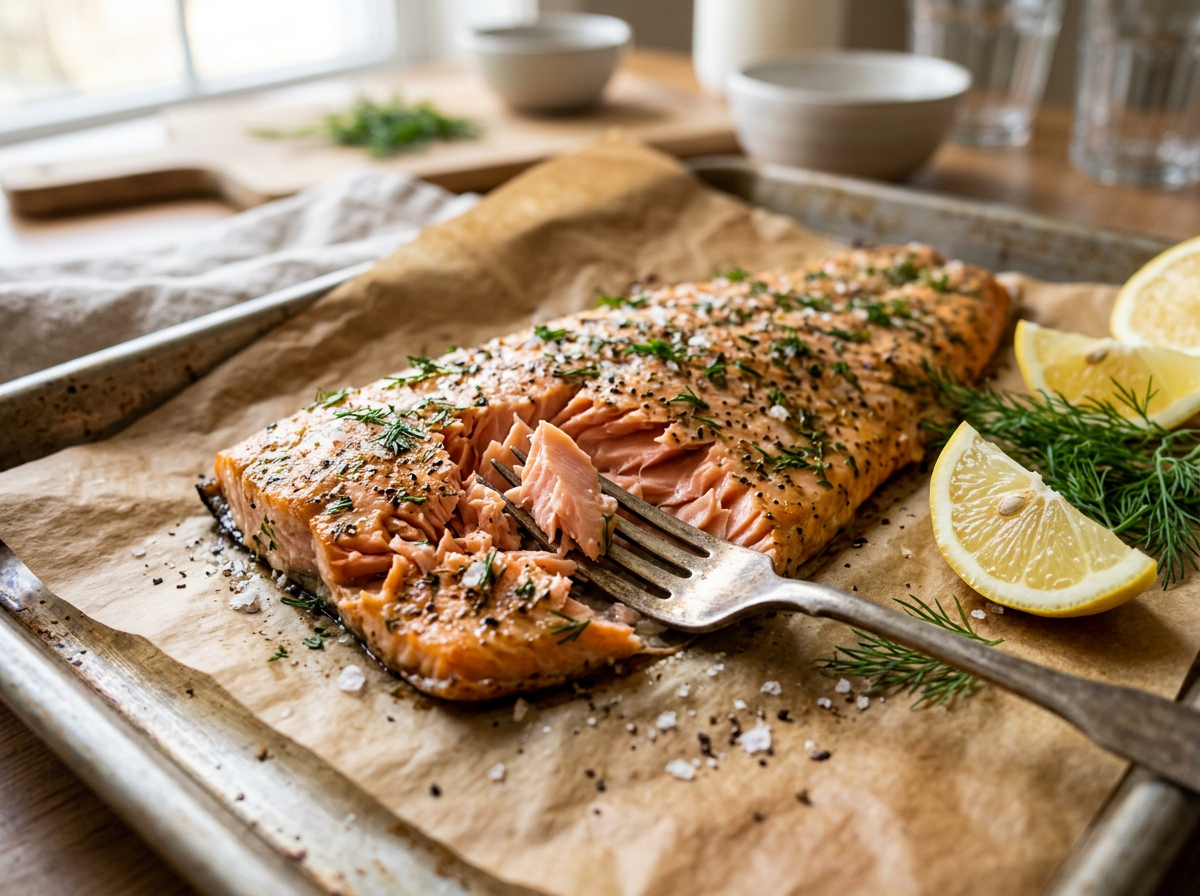
Press a fork into the thickest part and twist gently. Cooked salmon flakes into moist layers and the flesh turns from translucent to opaque. If it resists and still looks glassy in the centre, give it two more minutes.
Can you bake salmon from frozen?
Yes. Rinse off any ice, pat the fillet dry, and bake it at 400°F for roughly half again as long as thawed salmon, checking the internal temperature at the thickest point. Season after the first few minutes once the surface is no longer wet.
Sources and further reading
Keep cooking
Build a full meal around the fillet with these guides and recipe collections.