Cooking Guide
How to Cook Rice
One stovetop method that works for white, basmati, jasmine, and brown rice. Exact water ratios, simmer times, and the small habits that separate fluffy grains from a sticky, scorched pot.
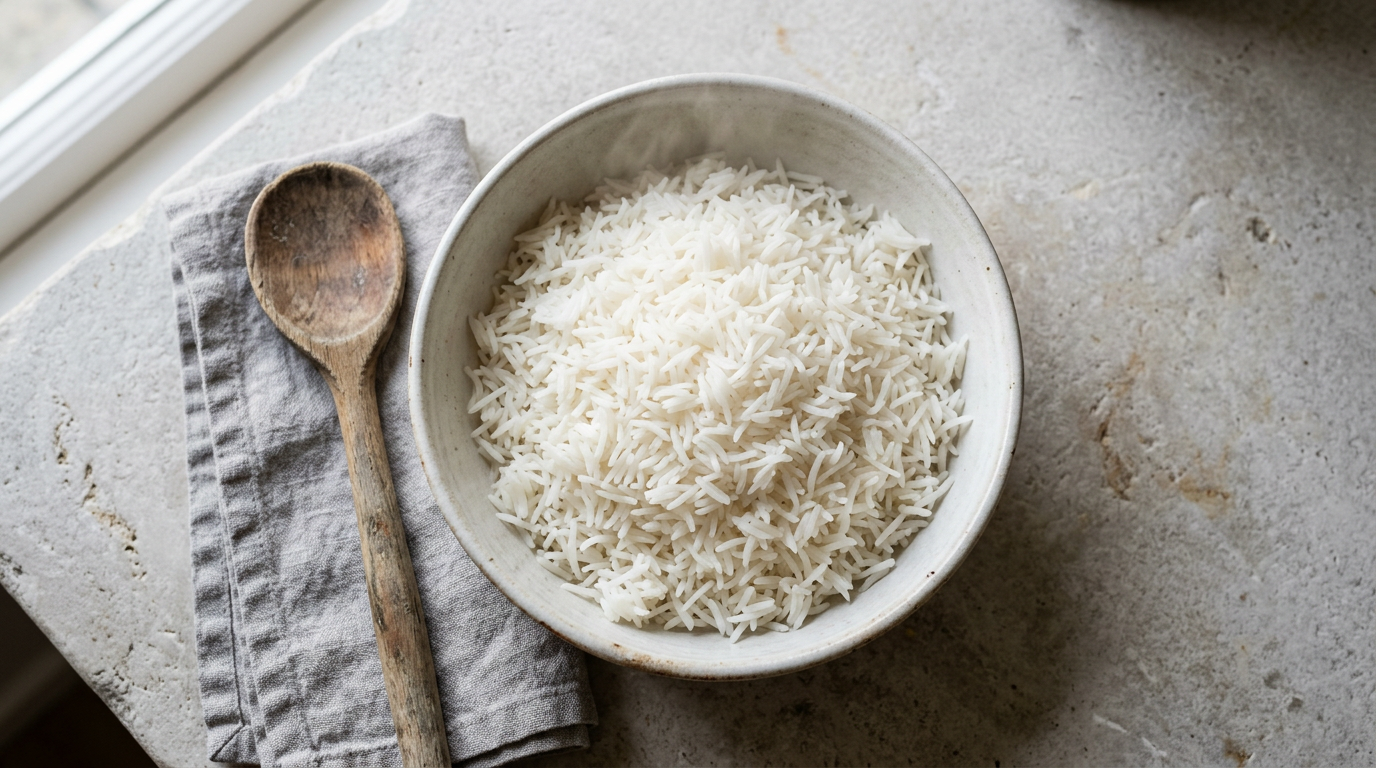
Rice is the cheapest thing in the kitchen and the easiest to get wrong. A pot can turn out gluey, crunchy in the middle, or welded to the bottom of the pan, and all three failures come from the same three variables: how much water, how much heat, and whether the lid stayed on.
Get those right and rice becomes reliable. The method below uses the absorption technique, where the grains soak up a measured amount of water instead of boiling in an open pot. It scales from one cup to five, works on gas or electric, and needs nothing more than a saucepan with a lid that fits.
Water ratios and times by rice type
Ratios are by volume, measured after rinsing. Every variety gets the same 10 minute covered rest off the heat.
| Rice | Rice : water | Simmer | Rest |
|---|---|---|---|
| Long-grain white | 1 : 1.5 | 15 minutes | 10 minutes |
| Basmati | 1 : 1.5 | 12 minutes | 10 minutes |
| Jasmine | 1 : 1.25 | 12 minutes | 10 minutes |
| Medium-grain white | 1 : 1.25 | 15 minutes | 10 minutes |
| Brown rice | 1 : 2 | 40–45 minutes | 10 minutes |
The 6-step stovetop method
- 1.
Measure the rice and rinse it
Measure rice by volume so the water ratio stays predictable. Put it in a fine mesh sieve and rinse under cool running water until the water runs mostly clear, about 30 seconds. Rinsing washes off loose surface starch, which is what makes a finished pot gummy.
- 2.
Combine rice, water, and salt in a heavy pan
Use a saucepan with a tight lid and a thick base. Add the rice, the water amount for your variety from the chart above, and a generous pinch of salt. A heavy base spreads heat evenly and keeps the bottom layer from scorching.
- 3.
Bring it to a boil, then drop the heat
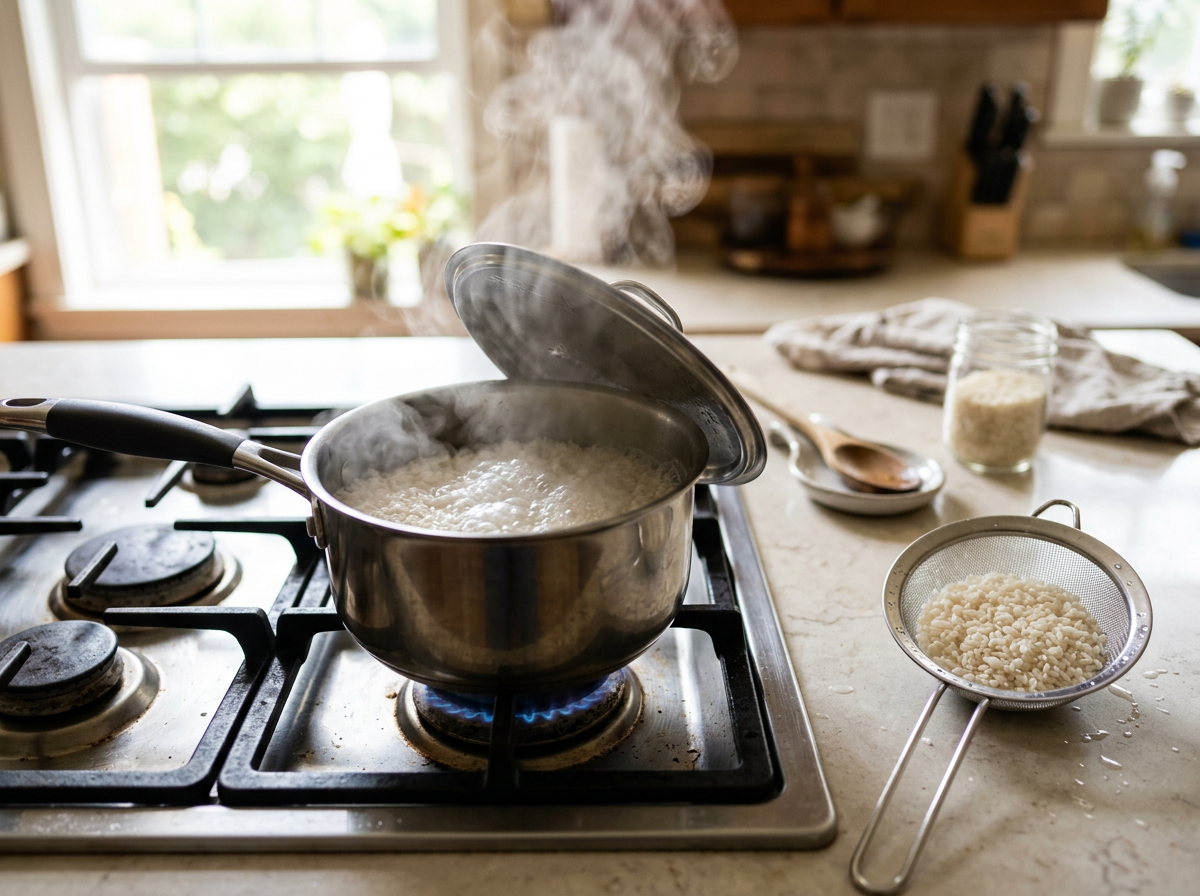
Bring the uncovered pan to a full boil over high heat. As soon as it boils, turn the heat to the lowest setting that keeps a bare simmer and cover the pan. From here the rice cooks in trapped steam, not rolling water.
- 4.
Simmer covered without lifting the lid
Set a timer for the simmer time listed for your rice. Leave the lid on the whole time. Every peek releases steam that the grains need, and stirring at this stage breaks grains apart and releases starch.
- 5.
Rest off the heat for 10 minutes
Slide the pan off the burner and let it sit, still covered, for 10 minutes. The resting period lets moisture even out from the wet bottom layer to the drier top so every grain finishes at the same texture.
- 6.
Fluff with a fork and serve
Lift the lid and run a fork through the rice in light strokes, lifting rather than stirring. A spoon compacts the grains, a fork separates them. Serve right away or keep it covered off the heat for up to 20 minutes.
Four habits that make every pot better
- Use the smallest burner and the lowest flame your stove has. Most sticky, scorched rice is a heat problem, not a ratio problem.
- Salt the water, not the finished rice. Grains absorb seasoning while they cook and stay bland if you salt at the end.
- Swap water for stock, or add a bay leaf and a strip of lemon peel, when the rice is a side rather than a base for a sauce.
- Cooking more than two cups of dry rice? Move to a wider pan so the layer stays shallow and steams evenly.
Fixing a pot that went wrong
Match the symptom to the cause and the next batch comes out right.
Rice came out mushy
Too much water or too long a simmer. Cut the water by a quarter cup and check at the shorter end of the range.
Grains still hard in the middle
Heat was too high and the water boiled off early. Add two tablespoons of water, cover, and give it five more minutes on low.
Sticky, clumped grains
Skipped the rinse. Rinsing until the water runs clear removes the surface starch that glues grains together.
Scorched bottom layer
The pan base is too thin or the flame too high. Move to a heavier pan and use the lowest simmer setting.
Watery pool at the bottom
It did not rest. Ten covered minutes off the heat lets that liquid absorb into the grains.
Rice tastes flat
No salt in the cooking water. A generous pinch per cup of dry rice makes a real difference.
Storing and reheating cooked rice
Cool cooked rice quickly and refrigerate it in a shallow covered container rather than leaving it out on the counter. Reheat it with a splash of water, covered, until it is steaming hot all the way through. Rice also freezes well in flat portioned bags, which thaw and reheat faster than a solid block. If you cook rice daily, the FDA guidance on arsenic in rice is worth reading, and rinsing plus cooking in extra water are both mentioned there.
Rice Cooking FAQs
What is the correct water to rice ratio?
For long-grain white rice and basmati, use 1.5 cups of water per cup of dry rice. Jasmine and medium-grain white need about 1.25 cups, and brown rice needs 2 cups. Rinsing first keeps these ratios accurate.
How long does rice take to cook?
White rice simmers for 12 to 15 minutes depending on the variety, then rests off the heat for 10 minutes. Brown rice needs 40 to 45 minutes of simmering plus the same 10 minute rest.
Do you have to rinse rice before cooking?
Rinse white rice until the water runs mostly clear if you want separate, fluffy grains. Rinsing removes loose surface starch. Skip it only when you want a stickier result, such as for a creamy rice pudding.
Why is my rice sticky or mushy?
The usual causes are skipping the rinse, using too much water, or stirring during the simmer. Rinse first, measure the water for your specific variety, and leave the lid on until the timer goes off.
Should you stir rice while it cooks?
No. Stirring releases starch and breaks grains, which makes the pot gluey. Once the lid goes on, leave the rice alone until the simmer time and the 10 minute rest are both finished.
How do you reheat leftover rice?
Add a splash of water, cover, and warm it gently on the stove or in the microwave until steaming hot throughout. Refrigerate cooked rice promptly in a shallow covered container rather than leaving it at room temperature.
Sources and further reading
Keep cooking
Put a fresh pot of rice to work in any of these guides and recipe collections.