Cooking Guide
How to Cook Steak
One skillet method that works for ribeye, strip, sirloin, and filet, with pull temperatures for every level of doneness and the small habits that build a deep brown crust instead of a grey band.
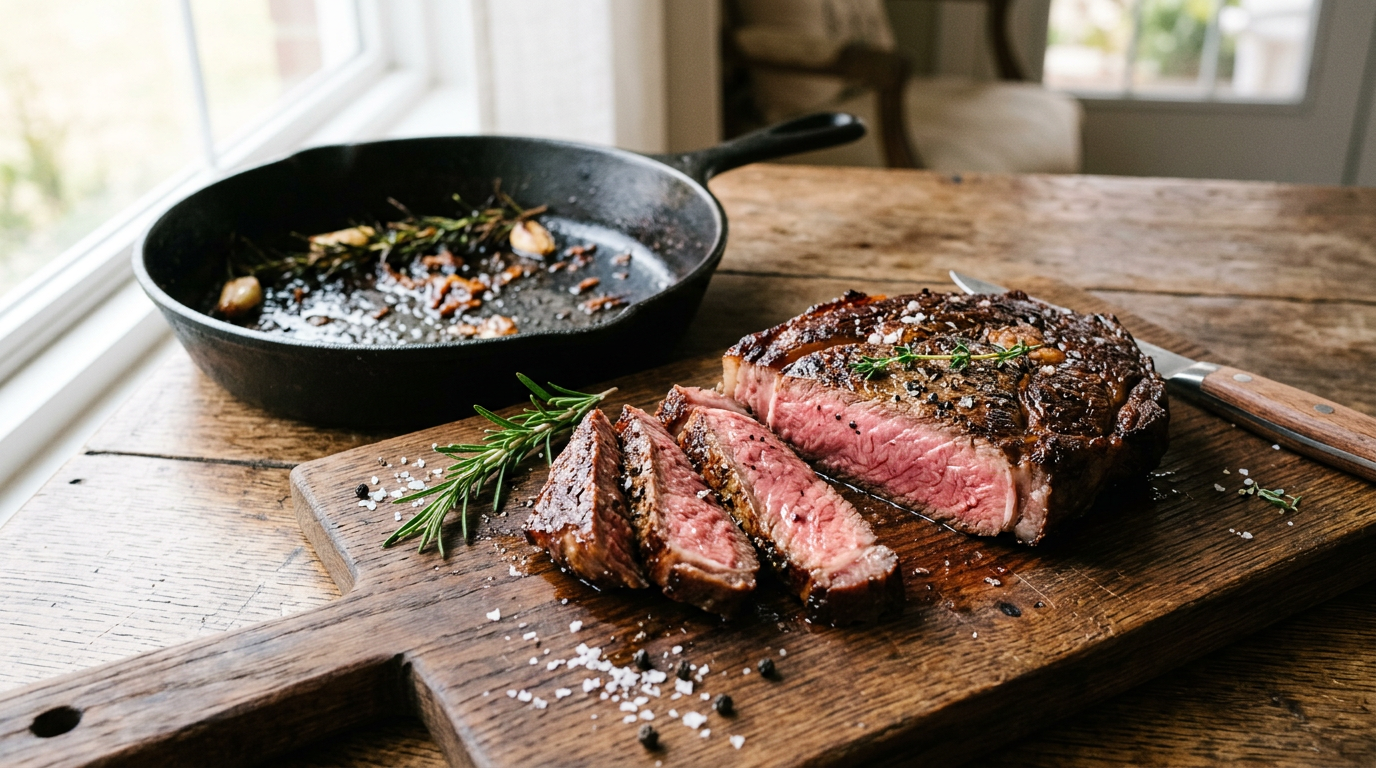
A good steak at home comes down to three things: a dry surface, a pan that is genuinely hot, and a thermometer you actually use. Everything else, from the cut you buy to the herbs in the butter, is preference.
The method below sears in a heavy skillet, finishes with a short butter baste, and rests the meat before slicing. It handles a one inch sirloin on a weeknight and a two inch ribeye on a Saturday, with the same steps and different pull temperatures.
Doneness temperatures
Pull the steak at the first number; carryover heat during the rest brings it to the second. USDA guidance for beef steaks is 145°F with a three minute rest, so rare and medium rare fall below that recommendation.
| Doneness | Pull at | After rest | What it looks like |
|---|---|---|---|
| Rare | 120°F | 125°F | Deep red center, very soft |
| Medium rare | 125°F | 130–135°F | Warm red center, springy |
| Medium | 135°F | 140°F | Pink center, firmer bite |
| Medium well | 140°F | 145°F | Faint pink, firm |
| Well done | 150°F | 155°F+ | No pink, very firm |
Matching the cut to the method
Thickness decides whether a steak can finish in the pan alone or needs the oven to catch up.
| Cut | Buy it | Best method | Note |
|---|---|---|---|
| Ribeye | 1 to 1.5 in | Skillet sear, butter baste | Heavy marbling keeps it forgiving. |
| New York strip | 1 to 1.5 in | Skillet or grill | Trim the fat cap edge so it lies flat. |
| Filet mignon | 1.5 to 2 in | Sear then finish in the oven | Lean, so pull it early. |
| Sirloin | 1 in | Hot skillet or grill | Best cooked no further than medium. |
| Flank or skirt | 0.5 to 0.75 in | Very hot grill or skillet | Slice thin against the grain. |
| Cube steak | 0.5 in | Quick pan fry | Two to three minutes per side is plenty. |
The 6-step skillet method
- 1.
Take the steak out of the fridge and dry it
Pull the steak 30 to 45 minutes before cooking so the center is not ice cold. Blot both faces and the edges with paper towels. A dry surface browns; a wet one steams and stays grey.
- 2.
Salt generously, right before or well ahead
Season all sides with coarse salt and cracked pepper. Salt either immediately before searing or at least 40 minutes ahead so the surface has time to dry again. The awkward window in between leaves beads of moisture on the crust.
- 3.
Get the pan properly hot
Heat a cast iron or heavy stainless skillet over medium high until a drop of water skitters and evaporates on contact. Add a thin film of a high smoke point oil such as canola or refined avocado. Butter goes in later, not now.
- 4.
Sear undisturbed, then flip
Lay the steak down away from you and leave it alone for two to three minutes until a brown crust releases from the pan. Flip once and repeat. Stand thick steaks on their fat edge for 30 seconds to render it.
- 5.
Baste with butter, garlic, and thyme
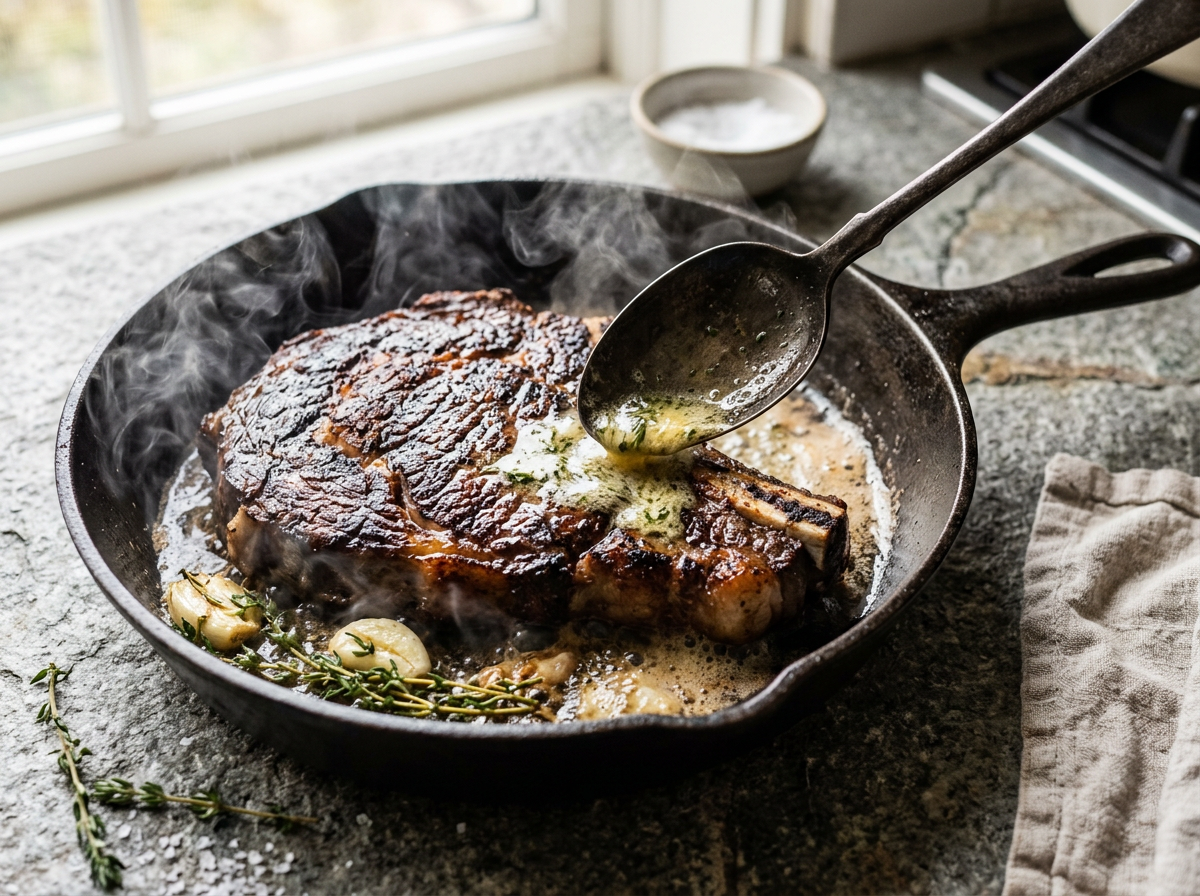
Drop in a tablespoon of butter with a smashed garlic clove and a sprig of thyme. Tilt the pan and spoon the foaming butter over the steak for about a minute. Thick cuts can finish in a 400°F oven instead.
- 6.
Check the temperature, then rest
Slide an instant read thermometer into the side, into the thickest part, and pull at the temperature in the chart above. Rest on a warm plate or board for 5 to 10 minutes, then slice against the grain.
Four habits that improve every steak
- Buy thickness before you buy grade. A 1.5 inch steak gives you time to build a crust before the center overcooks; a half inch steak does not.
- One steak at a time in a 10 inch skillet. Crowding drops the pan temperature and the meat starts to simmer in its own juices.
- Trust the thermometer, not the clock. Stove output, pan mass, and starting temperature all shift timing by minutes.
- Save the browned bits. A splash of stock or red wine in the hot pan after resting becomes a two minute sauce.
Fixing a steak that went wrong
Match the symptom to the cause and the next one comes out right.
Grey band, no crust
Surface was wet or the pan was not hot enough. Dry the steak well and preheat until the oil just shimmers.
Burnt outside, raw center
The steak was thick and the heat too high. Sear first, then finish thick cuts in a 400°F oven.
Tough and chewy
Either overcooked past medium or sliced with the grain. Pull earlier and cut across the muscle fibers.
Juices flood the board
It was sliced too soon. Give it 5 to 10 minutes of rest before the knife goes in.
Kitchen full of smoke
Butter or olive oil added at the start. Sear in a refined high smoke point oil and add butter in the last minute.
Tastes bland inside
Only the crust was seasoned. Salt all faces, including the edges, and salt at least 40 minutes ahead for thick cuts.
Storing and reheating cooked steak
Refrigerate leftover steak within two hours in a covered container. Reheat it gently in a low oven, around 250°F, until just warm, then flash it in a hot pan for a few seconds a side if you want the crust back. Cold sliced steak is also excellent over a salad or folded into a sandwich, and thin slices of leftover flank work well in a quick stir fry with whatever vegetables are in the drawer.
Steak Cooking FAQs
What temperature should steak be cooked to?
USDA guidance for beef steaks is a minimum internal temperature of 145°F followed by a three minute rest. Cooks who prefer medium rare pull the steak at about 125°F and let carryover heat carry it to 130 to 135°F, which is below that guidance.
How long do you cook a steak on the stove?
A 1 inch steak takes roughly two to three minutes per side over medium high heat for medium rare, plus about a minute of butter basting. Thickness matters more than weight, so check with an instant read thermometer rather than the clock.
Should you sear steak in butter or oil?
Sear in a refined high smoke point oil such as canola or avocado, then add butter in the last minute for flavor. Butter added at the start burns and smokes long before the crust forms.
Do you have to rest steak after cooking?
Yes. Five to ten minutes of rest lets the juices redistribute so they stay in the meat instead of running out onto the board. Loosely tent it if the kitchen is cold.
Why is my steak tough?
The two usual causes are cooking past medium and slicing in the same direction as the muscle fibers. Pull the steak earlier and cut thin slices across the grain.
Can you cook steak straight from the fridge?
You can, but the edges will be further along by the time the center catches up. Letting it sit at room temperature for 30 to 45 minutes gives a more even result and a drier surface for browning.
Sources and further reading
Keep cooking
Build a full plate around your steak with these guides and recipe collections.