Cooking Guide
How to Grill Vegetables
The right heat, the right cut, the right timing. A tested guide to grilling vegetables with real char on the outside and tender, savory centers — every summer, every cookout.
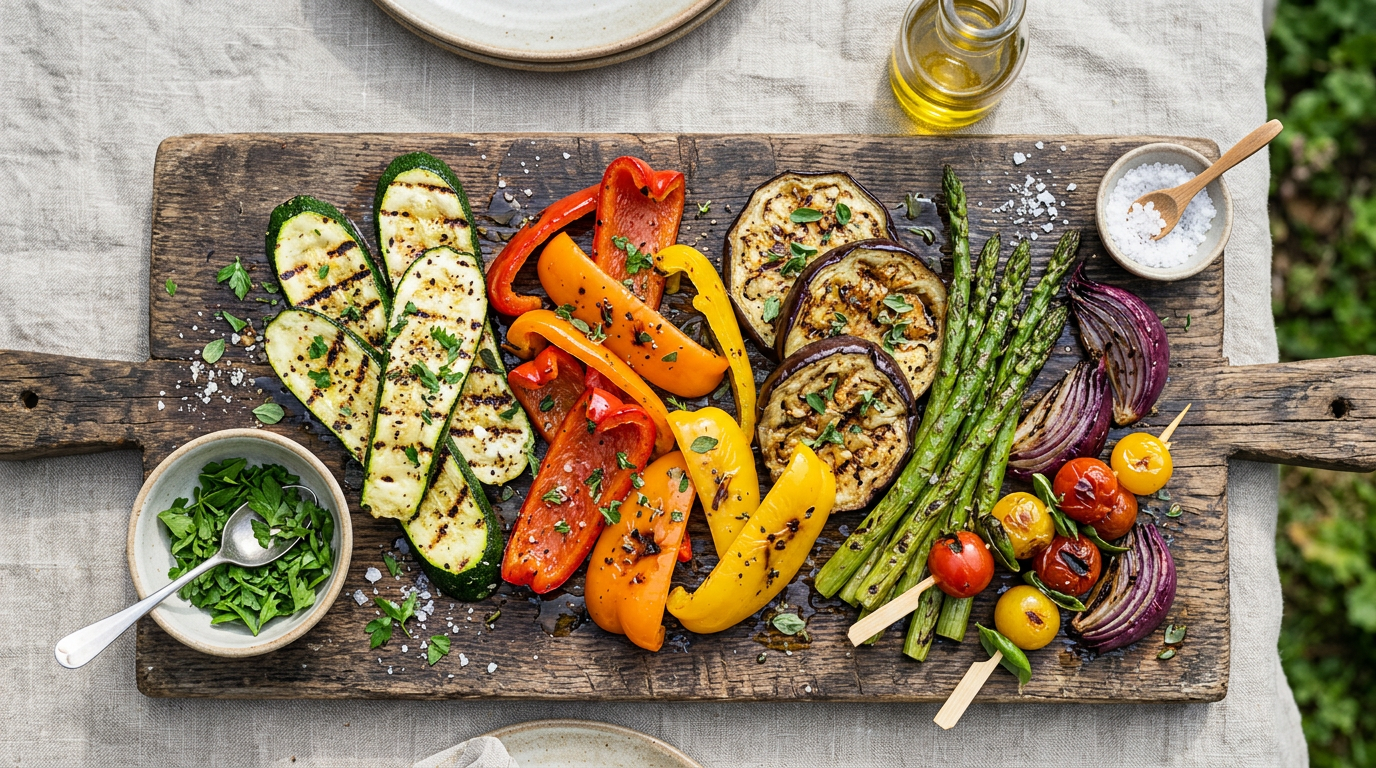
Grilled vegetables sit somewhere between a side and the reason to fire up the grill in the first place. Done right, they get deep color, a smoky edge, and a tender bite that no oven can match. Done wrong, they turn into limp, ashy strips that nobody reaches for.
The difference is almost never the vegetable. It is the prep, the heat, and the timing. This guide covers exactly how to cut, oil, season, and cook the most common summer vegetables, plus the small habits that make each batch better than the last. Everything here works on a gas grill, a charcoal grill, or a hot cast-iron grill pan indoors.
The 5-step method
- 1.
Preheat and clean the grill
Fire up the grill to medium-high, around 400 to 450 F. A clean, hot grate is what gives you clean release and crisp grill marks. Scrape it well before the vegetables ever hit the metal.
- 2.
Cut everything to even, thick pieces
Thin slices fall apart and slip through the grates. Aim for at least a half inch thick. Match sizes across a batch so nothing burns while other pieces are still raw.
- 3.
Oil the vegetables, not the grill
Toss cut vegetables in a bowl with olive oil, kosher salt, and pepper right before they go on the fire. The oil coats every surface, keeps them from sticking, and carries seasoning into the char.
- 4.
Use direct and indirect zones
Start dense vegetables like peppers and eggplant over direct heat for color, then slide them to a cooler zone to finish. Delicate pieces such as asparagus and cherry tomatoes stay over direct heat the whole time because they cook fast.
- 5.
Rest, then finish bright
Pull vegetables when a knife slides in with almost no resistance. Rest them for 2 minutes so the juices settle, then finish with lemon juice, torn herbs, flaky salt, or a drizzle of good olive oil.
Vegetable-by-vegetable timing chart
Use these as a starting point. Age, moisture, and grill hot spots change everything by a minute or two, so trust a knife tip more than a clock.
| Vegetable | Cut | Time | Heat |
|---|---|---|---|
| Zucchini & summer squash | ½-inch planks | 3–4 min per side | Direct medium-high |
| Bell peppers | Quartered, seeds removed | 4–5 min per side | Direct medium-high |
| Red onion | ½-inch rounds, skewered | 5–6 min per side | Direct medium |
| Eggplant | ½-inch rounds | 4–5 min per side | Direct medium-high |
| Asparagus | Whole spears | 2–3 min per side | Direct medium-high |
| Corn on the cob | Husked | 8–10 min, rotating | Direct medium |
| Portobello mushrooms | Whole, stemmed | 4–5 min per side | Direct medium |
| Cherry tomatoes | On skewers | 3–4 min total | Direct medium-high |
| Broccoli & cauliflower | Large florets, par-boiled | 3–4 min per side | Direct medium |
Four habits that upgrade every batch
- Par-boil dense vegetables like broccoli or cauliflower for 2 minutes before grilling so they char without staying raw inside.
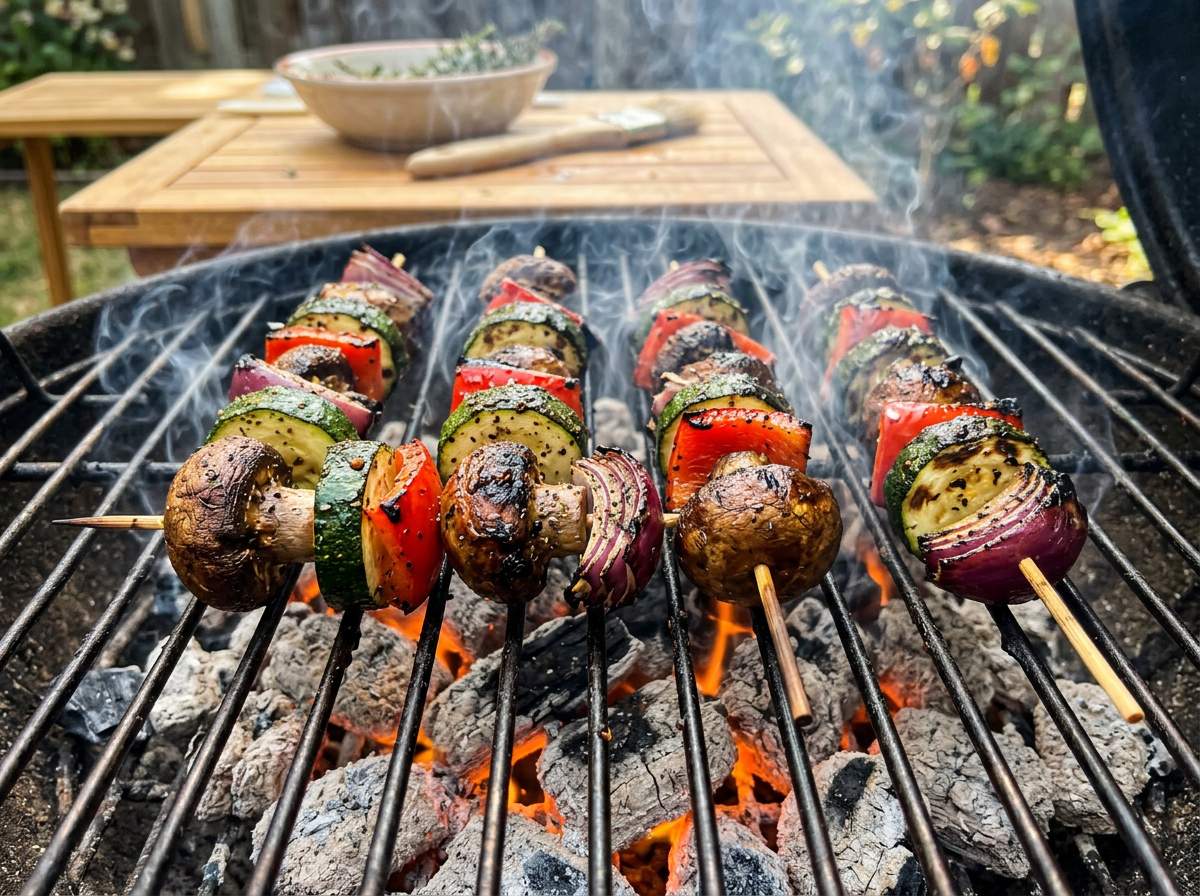
- Skewer small items — cherry tomatoes, mushrooms, onion wedges — so you can flip a whole row at once.
- Marinate for flavor, not tenderness. 20 to 30 minutes in olive oil, garlic, and vinegar is plenty.
- Salt vegetables right before grilling, not an hour ahead. Early salting pulls out water and makes them steam instead of char.
Storing and reusing leftovers
Cool grilled vegetables to room temperature, then refrigerate in a sealed container for up to 4 days. To reheat, use a hot skillet or a 400 F oven for a few minutes rather than the microwave, which turns them soft. Leftovers are also excellent cold — chopped into grain bowls, folded into pasta with ricotta, or piled onto toast with a smear of hummus.
Grilled Vegetable FAQs
What temperature should I grill vegetables at?
Medium-high, roughly 400 to 450 F. Hot enough for char and grill marks, cool enough that the interior cooks before the outside burns.
Should I oil the vegetables or the grill?
Oil the vegetables. A light coat of olive oil on the food gives even coverage, prevents sticking, and helps seasoning cling.
Do I need to soak wooden skewers?
Yes. Soak wooden skewers in water for at least 30 minutes so they do not burn through over direct heat.
Can I grill vegetables in foil?
Yes, foil packets work well for delicate or small vegetables like mushrooms, green beans, and cherry tomatoes. You trade grill marks for tender, steamed results.
How do I keep vegetables from falling through the grates?
Cut pieces larger than the grate gaps, thread small pieces on skewers, or use a grill basket for cut vegetables and greens.
How long do grilled vegetables keep?
Refrigerate cooked vegetables in a sealed container for up to 4 days. Reheat quickly in a hot skillet to keep the texture from turning soft.
Keep cooking
Take what you learned to the rest of the kitchen — recipes, categories, and meal plans that build on the same ideas.