Cooking Guide
How to Cook Asparagus
Six methods, one rule: cook to the thickness of the spear, not to the clock. Times for roasting, sautéing, steaming, blanching, grilling, and air frying, plus how far up to trim the stems.
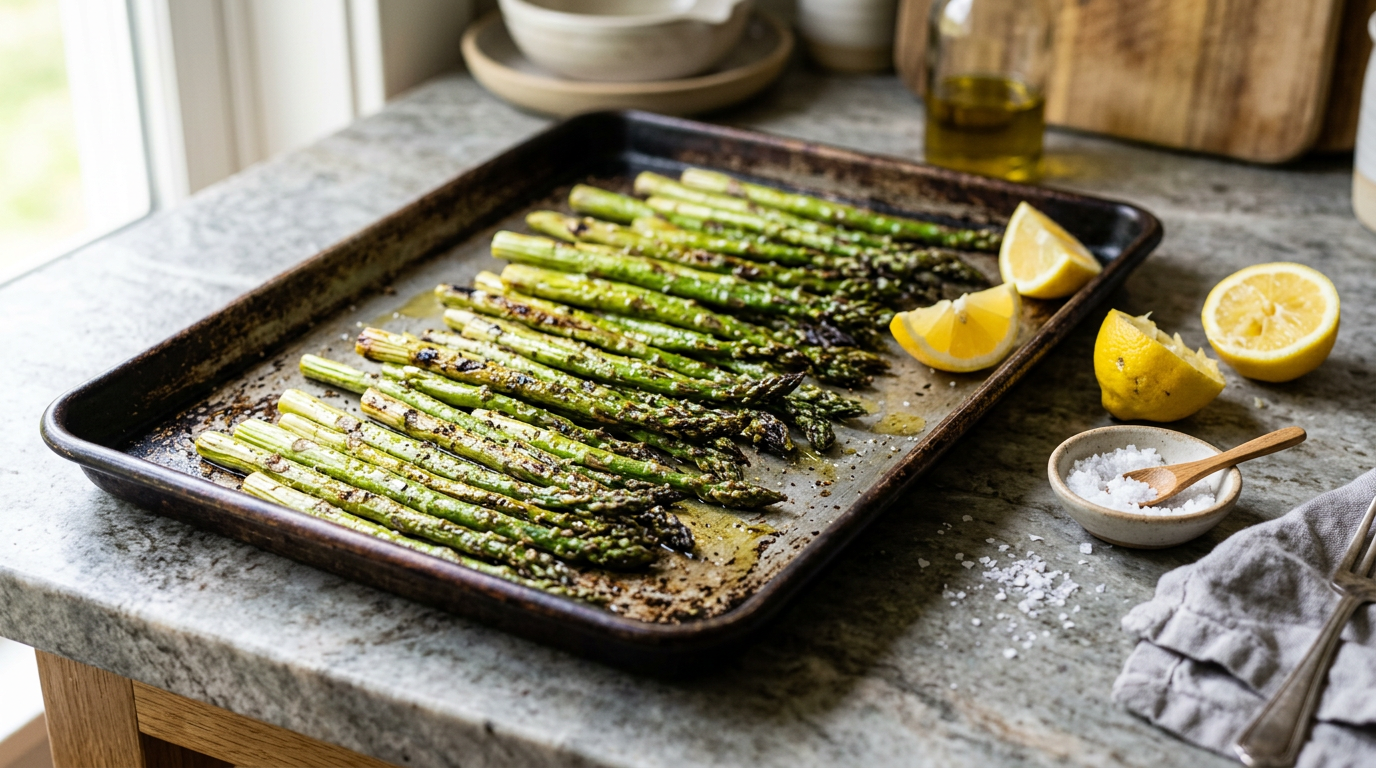
Asparagus goes from sweet and crisp to limp and stringy in about two minutes, which is why the same bunch can taste great one night and sad the next. The variable that matters is spear thickness. Pencil-thin stalks cook through almost instantly, while thumb-thick ones need real time to soften.
Everything else is simple. Trim the woody bottoms, dry the spears, season before they hit the heat, and keep them in a single layer so moisture escapes. Pull them when a knife slides into the base with slight resistance, then finish with acid, fat, or salt while they are still hot.
Cooking times by method and spear thickness
Thin means roughly pencil width, thick means closer to a finger. Start checking at the low end of each range.
| Method | Setup | Thin spears | Thick spears |
|---|---|---|---|
| Roast | 425°F oven, single layer | 8–10 minutes | 12–18 minutes |
| Sauté | Medium-high skillet, 1 tbsp fat | 3–4 minutes | 5–7 minutes |
| Steam | Covered, 1 inch simmering water | 2–3 minutes | 4–6 minutes |
| Blanch | Salted boiling water, then ice bath | 1–2 minutes | 3–4 minutes |
| Grill | Direct medium-high heat, oiled | 3–5 minutes | 6–9 minutes |
| Air fry | 400°F, shake once | 5–6 minutes | 7–9 minutes |
The 6-step method
- 1.
Pick firm spears and keep them cold
Look for tight, dry tips and stalks that feel stiff rather than rubbery. Asparagus loses sweetness fast after harvest, so cook it within a day or two. Store it upright in an inch of water in the fridge, or wrap the cut ends in a damp paper towel.
- 2.
Rinse well and dry the spears
Grit hides in the tips. Rinse under cool running water and swish the tips gently, then pat the spears completely dry. Wet asparagus steams instead of browning, so drying matters most for roasting, grilling, and sautéing.
- 3.
Trim the woody ends
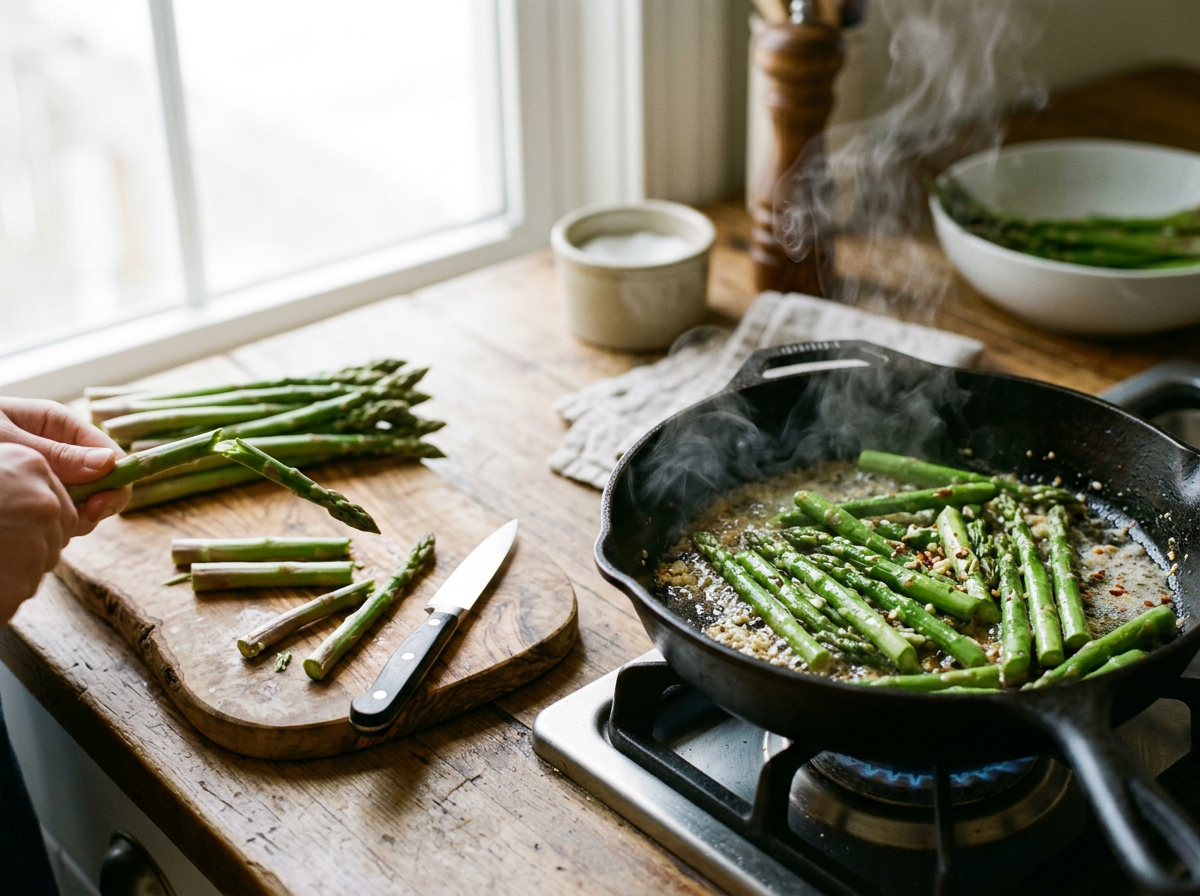
Line the spears up and cut off the pale, fibrous bottom inch or two with a knife. Snapping one spear by hand shows you where it naturally breaks, then use that as your cutting line for the bunch. Thick spears can also be peeled from the midpoint down.
- 4.
Season before the heat, not after
Toss the spears with a thin coat of olive oil, salt, and pepper for dry-heat methods. For steaming or blanching, salt the water instead. Oil helps the outside brown and keeps the tips from drying out in a hot oven.
- 5.
Cook in a single layer by thickness
Give the spears room on the pan or grate so moisture escapes and the outsides caramelize. Use the times in the chart above, matched to spear thickness rather than a fixed number. Sort a mixed bunch so thin and thick spears cook separately.
- 6.
Test for crisp-tender and finish bright
Pierce a stalk near the base with a paring knife. It should slide in with slight resistance and the spear should bend without flopping. Finish with lemon juice, grated parmesan, toasted nuts, or a spoon of vinaigrette while the asparagus is still hot.
Four habits that make every bunch better
- Thickness sets the timing, not the recipe. Pencil-thin spears can overcook in the time thick ones need to soften.
- Preheat the sheet pan for roasting. Spears hitting hot metal brown on contact instead of sweating.
- Skip the foil tent. Trapped steam turns asparagus limp and grey-green.
- Cool blanched spears in ice water right away when you want them for salads or make-ahead platters.
Fixing asparagus that went wrong
Match the symptom to the cause and the next bunch comes out right.
Limp and stringy
Overcooked, or crowded on the pan so it steamed. Pull it at crisp-tender and keep the spears in one layer.
Woody, chewy bottoms
Not enough trimmed. Cut higher up, or peel the lower half of thick spears with a vegetable peeler.
Dull olive color
Too long over heat. Shorter cooking, and an ice bath after blanching, keep the green bright.
Burnt tips, raw stalks
Heat too high for the spear thickness. Drop the oven to 400°F or move grilled spears to indirect heat.
Bland even with salt
Salt went on after cooking. Season before dry heat, or salt the cooking water generously.
Gritty texture
Sand left in the tips. Swish the tips in a bowl of water, then lift the spears out rather than pouring.
What is in a serving
Per 100 g of raw green asparagus, from USDA FoodData Central. Cooking with oil or butter adds fat and calories on top of these figures.
- Calories
- 23 kcal
- Protein
- 1.4 g
- Total fat
- 0.2 g
- Carbohydrate
- 5.1 g
- Dietary fiber
- 1.9 g
- Potassium
- 278 mg
- Vitamin C
- 9.2 mg
- Folate
- 183 µg
Storing raw and cooked asparagus
Keep raw spears in the fridge standing in an inch of water, or with the cut ends wrapped in a damp paper towel inside a loose bag. Use them within two or three days, since the sugars turn starchy fast. Wash produce under running water just before cooking rather than in advance, as the FDA advises for fresh vegetables. Cooked asparagus keeps three days covered in the fridge and reheats best in a hot skillet. Blanched spears cooled in ice water freeze well in flat portioned bags.
Asparagus Cooking FAQs
How long does asparagus take to cook?
Thin spears need 2 to 3 minutes steamed, 3 to 4 minutes sautéed, or 8 to 10 minutes roasted at 425°F. Thick spears need roughly double that, up to 18 minutes in the oven.
What is the best way to cook asparagus?
Roasting at 425°F gives the deepest flavor and crisp tips with almost no effort. Steaming keeps the spears sweet and bright green, which suits salads and side dishes better.
How much of the asparagus stem do you cut off?
Remove the pale, fibrous bottom inch or two. Snap one spear by hand to see where it breaks naturally, then cut the rest of the bunch at that height.
Should you peel asparagus?
Thin and medium spears do not need peeling. Peel the lower half of very thick spears with a vegetable peeler if the skin still feels tough after trimming.
How do you know when asparagus is done?
A paring knife should slide into the base with slight resistance and the spear should bend without folding over. That crisp-tender stage arrives before the color dulls.
How do you store and reheat cooked asparagus?
Refrigerate cooked spears in a covered container for up to three days. Reheat briefly in a hot skillet or a 400°F oven rather than the microwave, which softens them further.
Sources and further reading
Keep cooking
Pair a tray of asparagus with any of these guides and recipe collections.