Cooking Guide
How to Boil Potatoes
Times for cubes, halves, quarters, and whole potatoes, which varieties hold their shape, and the small habits that keep the edges from turning to mush before the centers cook.
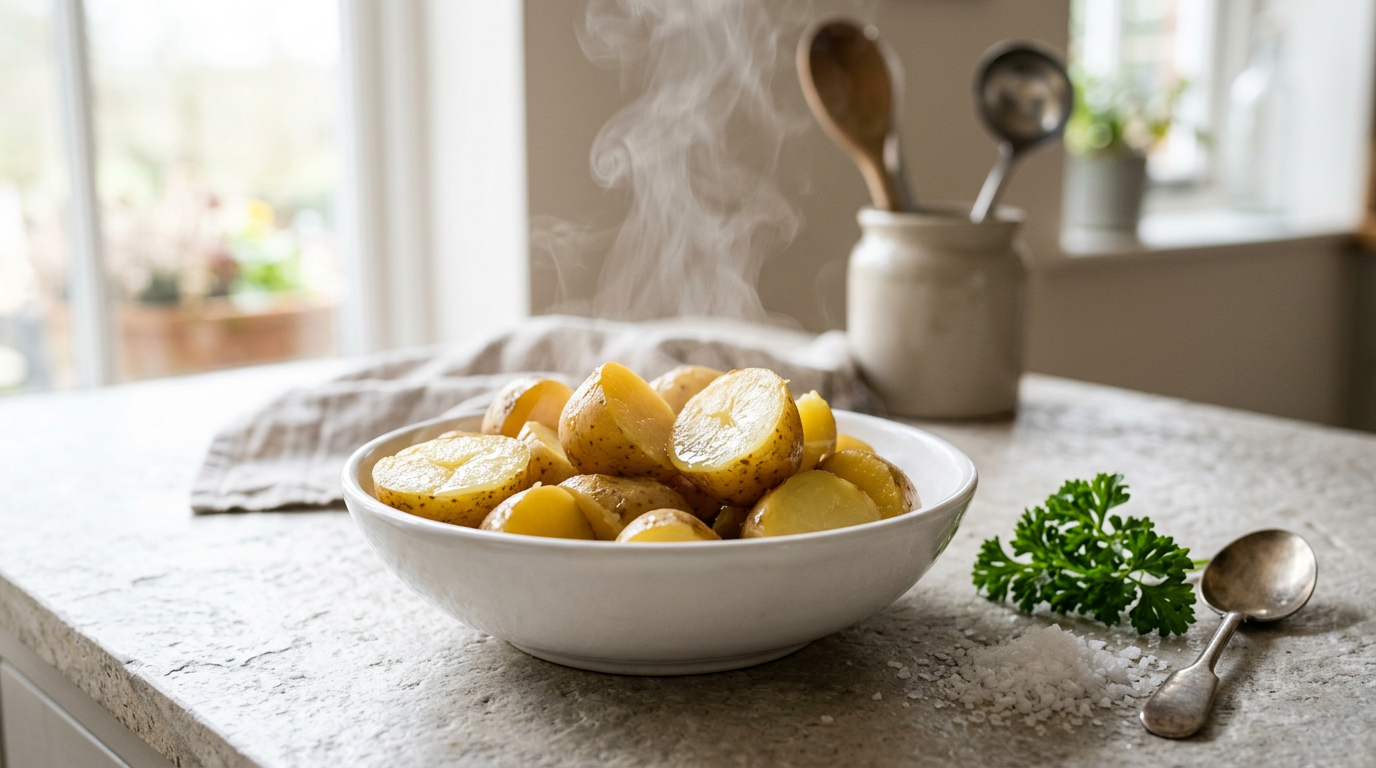
Boiled potatoes look like the simplest thing on the stove, and they still go wrong more often than they should. The usual result is a pot where the outsides have collapsed into starch and the middles are still firm, or a bland batch that no amount of butter can rescue.
Three choices decide the outcome: which potato you use, how evenly you cut it, and how hard the water is moving. Waxy potatoes stay intact, starchy ones break down, even pieces finish together, and a gentle simmer keeps the edges whole. Salt in the water handles the seasoning.
The method below covers every cut, from whole new potatoes for a summer salad to cubed russets headed for mash. Times are a starting point and a paring knife is the real test.
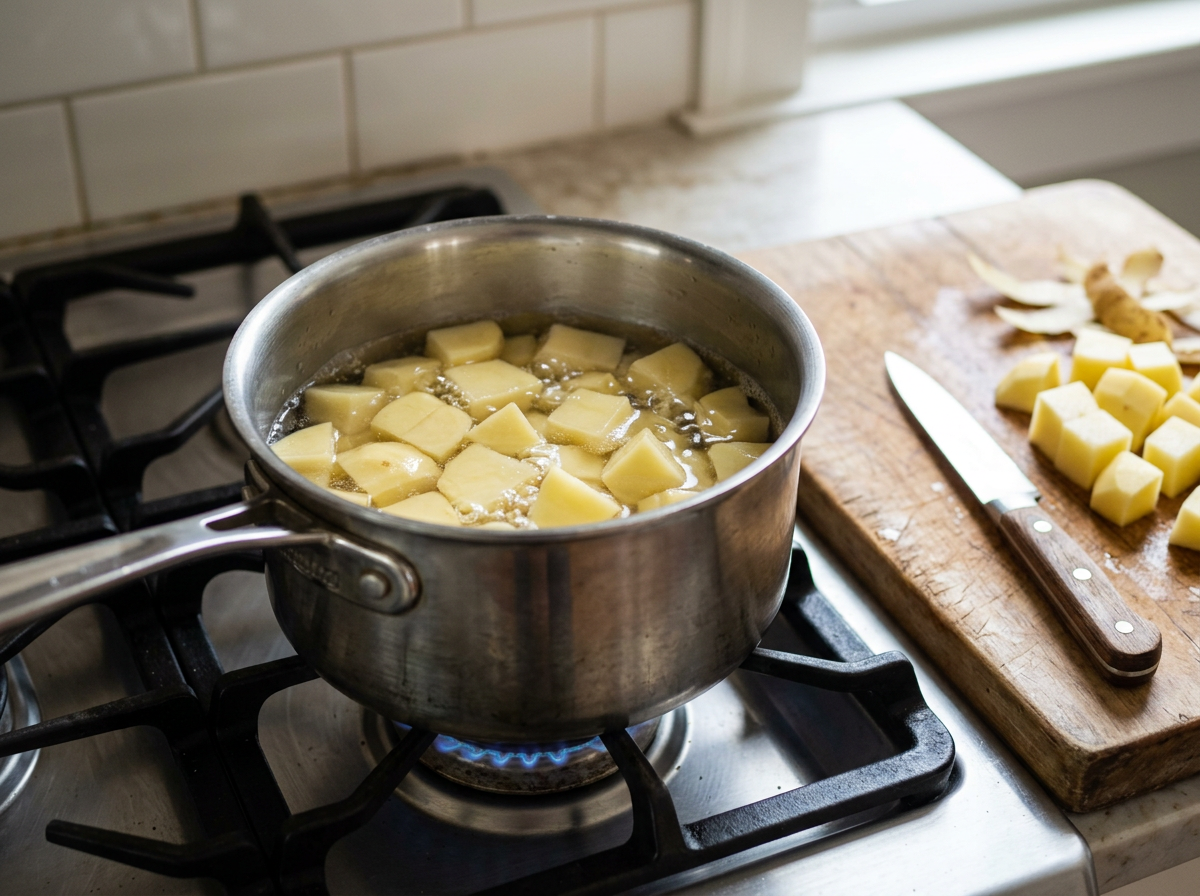
Boiling times by cut
Times are measured from the moment the water reaches a boil, held at a gentle simmer. Check the largest piece with a knife at the low end of each range.
| Cut | Size | Simmer time |
|---|---|---|
| Baby or new potatoes, whole | 1 to 1.5 in | 12–15 minutes |
| Small potatoes, halved | about 1 in pieces | 10–12 minutes |
| Medium potatoes, quartered | 1.5 in chunks | 15–18 minutes |
| Cut into 1 in cubes | 1 in cubes | 10–12 minutes |
| Large potatoes, whole and unpeeled | 8–10 oz each | 25–35 minutes |
The 7-step method
- 1.
Pick the right potato for the job
Waxy potatoes such as red, fingerling, and new potatoes hold their shape, so they suit salads and side dishes. Starchy russets fall apart more easily, which is what you want for mash. Yukon Gold sits in the middle and works for both.
- 2.
Scrub, then peel only if you need to
Rinse and scrub the skins under cool water. Leave the skin on for potato salad and boiled sides, and peel for smooth mash. Cut away any green patches and sprouts before cooking.
- 3.
Cut everything to one even size
Uniform pieces finish at the same moment. One inch cubes are the reliable default. Whole small potatoes work too, but do not mix whole potatoes and cut chunks in the same pot.
- 4.
Start them in cold salted water
Put the potatoes in a pot, cover with cold water by about an inch, and add a generous amount of salt. A cold start lets the outside and the center heat at a similar rate, so you avoid a blown-out surface and a raw middle.
- 5.
Boil, then hold a steady simmer
Bring the pot to a boil over high heat, then lower it until the water bubbles gently. A hard rolling boil knocks the edges off the pieces and turns the water cloudy with starch.
- 6.
Test with a paring knife, not the clock
Start checking at the low end of the time range in the chart. Slide a thin knife into the thickest piece. It should go in with almost no resistance and slip back out cleanly.
- 7.
Drain well and let the steam escape
Drain in a colander and leave the potatoes for a minute so surface moisture evaporates. Dry potatoes take on butter and dressing far better than wet ones, and mash comes out fluffier.
Waxy, all-purpose, or starchy
Potatoes USA groups varieties by how they behave in the pot. Waxy reds, fingerlings, and new potatoes hold together, which makes them the pick for potato salad, warm sides, and anything you want in neat pieces. Yukon Gold and other yellow potatoes are the all-purpose middle ground, tender enough to mash and firm enough to slice. Russets are starchy and will fray at the edges, which is exactly what gives mash its fluffy texture.
If a dish needs the pieces to stay recognizable, reach for waxy. If it needs them to break down, reach for starchy. Serve boiled potatoes alongside anything from pan-cooked chicken breast to baked salmon.
Four habits that improve every pot
- Salt the water heavily. Potatoes only season from the outside in while they cook, and salting afterwards never reaches the middle.
- Cover the pot to reach a boil faster, then uncover once it simmers so the water does not foam over.
- For potato salad, dress the potatoes while they are still warm so they absorb the vinaigrette instead of sitting in it.
- Return drained potatoes to the dry hot pot for 30 seconds before mashing. The extra moisture cooks off and the mash tightens up.
Fixing a pot that went wrong
Match the symptom to the cause and the next batch comes out right.
Outsides mushy, centers hard
The water was boiling too hard, or the potatoes went into already boiling water. Start cold and hold a gentle simmer.
Pieces fell apart
Starchy russets cooked a few minutes too long. Switch to a waxy potato or pull them at the first tender knife test.
Tastes flat
Not enough salt in the water. Season the water generously before the potatoes go in.
Watery mash
The potatoes were not drained and dried. Let them steam dry in the pot before mashing.
Gray or dark spots after cooking
Cut potatoes oxidized while sitting out. Keep cut pieces submerged in cold water until they go on the heat.
Cooking took much longer than expected
Pieces were larger than they looked, or the pot was crowded. Use a wider pot and cut to an even size.
Storing, freezing, and reheating
Cool boiled potatoes quickly rather than leaving them out on the counter, then refrigerate them in a covered container. Plain boiled potatoes freeze poorly because the cells release water and turn grainy on thawing, so freeze them mashed with butter or milk instead. To reheat, add a splash of water or milk, cover, and warm them gently, or crisp cold boiled potatoes in a skillet with a little butter until the edges brown.
Store raw potatoes somewhere cool, dark, and dry with air circulation, not in the refrigerator. Cut away sprouts and green patches before cooking.
Boiled Potato FAQs
How long do you boil potatoes?
One inch cubes take 10 to 12 minutes at a gentle simmer, quartered medium potatoes take 15 to 18 minutes, and large whole unpeeled potatoes take 25 to 35 minutes. Always confirm with a paring knife rather than the clock.
Do you boil potatoes in cold or hot water?
Start them in cold water. A cold start heats the outside and the center at a closer rate, so the edges do not turn to mush before the middle is tender.
Should you salt the water when boiling potatoes?
Yes. Potatoes take on salt only while they are cooking, so a generous amount of salt in the water seasons them through. Salting after draining sits on the surface.
Do you peel potatoes before boiling?
For mash, peel them first so the texture stays smooth. For potato salad and boiled side dishes, leave the skins on. Skins also help whole potatoes hold their shape.
Which potatoes are best for boiling?
Waxy varieties such as red, fingerling, and new potatoes keep their shape best. Yukon Gold is a good all-rounder, and starchy russets are better reserved for mash because they break down.
How do you store boiled potatoes?
Cool them promptly and refrigerate in a covered container. Reheat gently with a splash of water or milk, or warm them in a skillet with a little butter until hot through.
Sources and further reading
Keep cooking
Put a fresh pot of potatoes to work in any of these guides and recipe collections.