Cooking Guide
How to Cook Quinoa
One stovetop method for white, red, black, and tri-colour quinoa. Exact liquid ratios, simmer times, and the two habits that keep the grains fluffy instead of bitter or gluey.
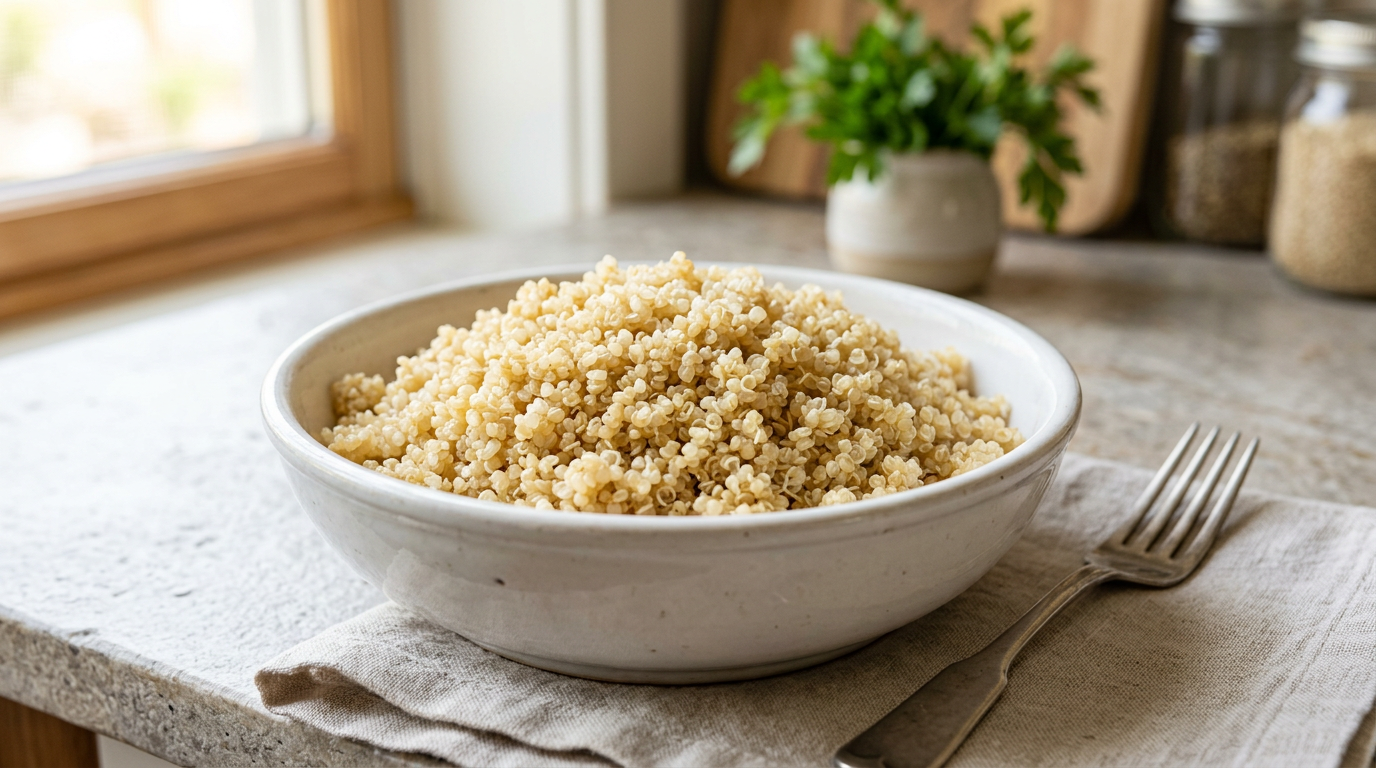
Quinoa has a reputation for being fussy, and it is not deserved. Most of the complaints come down to two fixable things: a bitter coating that was never rinsed off, and too much liquid in the pan. Sort those out and quinoa cooks faster than rice and holds up better in leftovers.
The method below is the absorption technique. The grains soak up a measured amount of liquid rather than boiling loose in an open pot, which is what gives you separate grains with a light pop instead of a wet, porridge-like mass. It scales from half a cup to four, works on gas or electric, and needs only a saucepan, a lid, and a fine mesh sieve.
Quinoa is treated as a whole grain in the kitchen even though it is botanically a seed, and it cooks like one. It is naturally gluten free, which is why it turns up so often as a rice or couscous swap. Once you have a batch in the fridge, it becomes the fastest base you own for bowls, salads, and packed lunches.
Liquid ratios and times by quinoa type
Ratios are by volume, measured after rinsing and draining well. Every variety gets the same five minute covered rest off the heat.
| Quinoa | Quinoa : liquid | Simmer | Rest |
|---|---|---|---|
| White quinoa | 1 : 1.75 | 15 minutes | 5 minutes |
| Red quinoa | 1 : 2 | 18 minutes | 5 minutes |
| Black quinoa | 1 : 2 | 18 minutes | 5 minutes |
| Tri-colour blend | 1 : 2 | 18 minutes | 5 minutes |
One cup of dry quinoa yields roughly three cups cooked, enough for four side servings or two generous grain bowls.
The 6-step stovetop method
- 1.
Rinse the quinoa in a fine mesh sieve
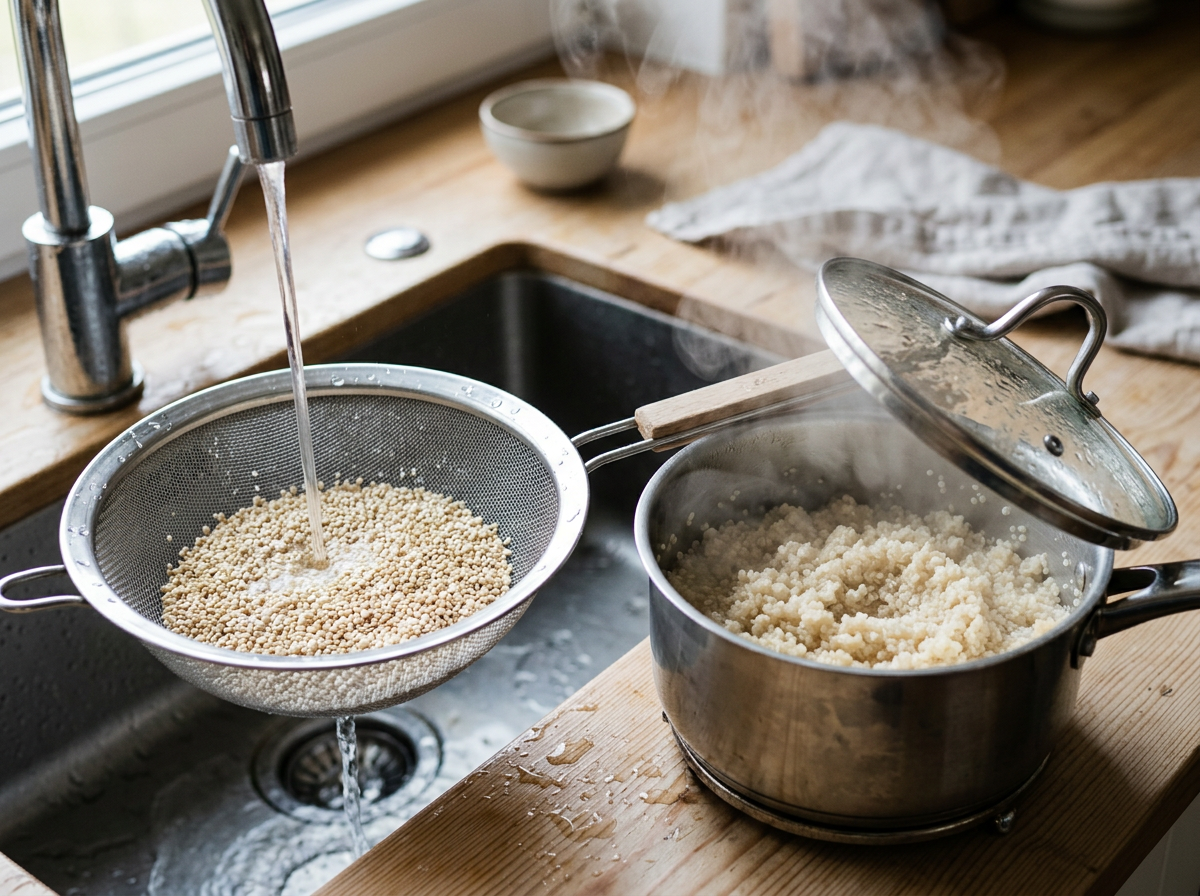
Measure the dry quinoa and tip it into a fine mesh sieve. Rinse under cool running water for about 30 seconds, rubbing the grains with your fingers. This washes away saponin, the natural coating that tastes bitter or soapy if it stays on. Skip the rinse only when the bag says the quinoa is pre-rinsed.
- 2.
Toast the grains for extra flavour
Shake the sieve dry, then add the quinoa to a dry saucepan over medium heat. Stir for two to three minutes until it smells nutty and the grains stop steaming. Toasting is optional, but it gives the finished pot a deeper, warmer flavour and helps the grains stay separate.
- 3.
Add the liquid and a pinch of salt
Pour in the water or stock using the ratio for your variety from the chart above, and add a good pinch of salt per cup of dry quinoa. Seasoning the cooking liquid matters, because quinoa absorbs it as it cooks and tastes flat if you only salt at the end.
- 4.
Boil, then drop to a bare simmer
Bring the uncovered pan to a full boil over high heat. As soon as it boils, lower the heat until the surface barely moves and put the lid on. From this point the quinoa cooks in trapped steam rather than churning water, which keeps the grains intact.
- 5.
Simmer covered until the liquid is gone
Set a timer for the simmer time listed for your variety and leave the lid alone. The quinoa is done when the liquid has been absorbed and each grain has uncurled its little white germ ring. If liquid is still pooling, cover and give it two more minutes.
- 6.
Rest off the heat, then fluff with a fork
Pull the pan off the burner and let it sit covered for five minutes so the moisture evens out. Take the lid off, run a fork through in light lifting strokes, and serve. A spoon compacts the grains, a fork separates them.
Four habits that make every batch better
- Rinse even if the bag says pre-rinsed when you are sensitive to bitterness. Thirty seconds of cold water costs nothing and fixes the most common complaint about quinoa.
- Swap water for chicken or vegetable stock when the quinoa is a side dish. Use plain salted water when it goes into a salad with a strong dressing.
- Cook a double batch and keep half in the fridge. Cold quinoa is the fastest base there is for a grain bowl or a packed lunch.
- Add a bay leaf, a strip of lemon peel, or a smashed garlic clove to the pan and fish it out before fluffing.
Fixing a pot that went wrong
Match the symptom to the cause and the next batch comes out right.
Tastes bitter or soapy
The saponin coating was not rinsed off. Rinse under cool water for 30 seconds in a fine mesh sieve before cooking.
Mushy and clumped
Too much liquid or too long a simmer. Drop to 1.75 parts liquid for white quinoa and check at the shorter end of the time.
Crunchy in the middle
The heat was too high and the liquid boiled off early. Add two tablespoons of water, cover, and cook two more minutes on low.
Watery at the bottom
It went straight from pan to plate. Five covered minutes off the heat lets the last of the liquid absorb.
Grains stuck to the pan
The simmer was too aggressive or the base too thin. Use a heavy pan and the lowest setting that keeps a bare simmer.
Bland
No salt in the cooking liquid. Season the water, not the finished bowl.
What to do with a batch of cooked quinoa
Cooked quinoa keeps its texture cold, which makes it more useful in leftovers than most grains.
- Grain bowls with roasted vegetables and a lemon tahini dressing
- Stuffing for bell peppers, courgettes, or portobello mushrooms
- A cold salad with cucumber, herbs, feta, and olive oil
- A swap for rice under a stew or a stir fry
- Breakfast porridge simmered with milk, cinnamon, and fruit
- A binder in veggie burgers and meatballs
For more ideas, our high protein meal plans lean on quinoa often, and the quick lunch ideas guide has several bowls that start with a cold batch.
Storing, freezing, and reheating
Spread cooked quinoa out to cool quickly rather than leaving the covered pan on the counter, then refrigerate it in a shallow sealed container and use it within a few days. Reheat with a splash of water, covered, until it is steaming hot all the way through. For longer storage, freeze it flat in portioned bags, which thaw far faster than a solid block. If you are batch cooking grains for the week, the same approach works for rice.
Quinoa Cooking FAQs
What is the water to quinoa ratio?
Use 1.75 cups of liquid per cup of white quinoa, and 2 cups per cup of red, black, or tri-colour quinoa. Measure after rinsing and shake the sieve well so extra water does not throw the ratio off.
How long does quinoa take to cook?
White quinoa simmers for about 15 minutes, and red, black, or tri-colour blends need about 18 minutes. Every variety then rests off the heat, covered, for five minutes before you fluff it.
Do you have to rinse quinoa before cooking?
Rinse it unless the package says it is pre-rinsed. Quinoa carries a natural coating called saponin that tastes bitter or soapy, and 30 seconds under cool running water in a fine mesh sieve removes it.
How do you know when quinoa is done?
The liquid is fully absorbed and each grain has uncurled a small white spiral, which is the germ separating from the seed. The texture should be tender with a slight pop, not crunchy or paste-like.
Why is my quinoa mushy?
Usually too much liquid, a simmer that ran long, or stirring during cooking. Measure the liquid for your variety, keep the lid on, and check at the earlier end of the time range.
How do you store and reheat cooked quinoa?
Cool it quickly, then refrigerate in a shallow covered container and use it within a few days. Reheat with a splash of water, covered, until steaming hot throughout. It also freezes well in flat portioned bags.
Sources and further reading
Keep cooking
Put a fresh batch of quinoa to work in any of these guides and recipe collections.