Cooking Guide
How to Cook Beets
Roasting, boiling, steaming, and air frying with times by size, the peeling trick that saves your hands, and how to use the greens instead of throwing them away.
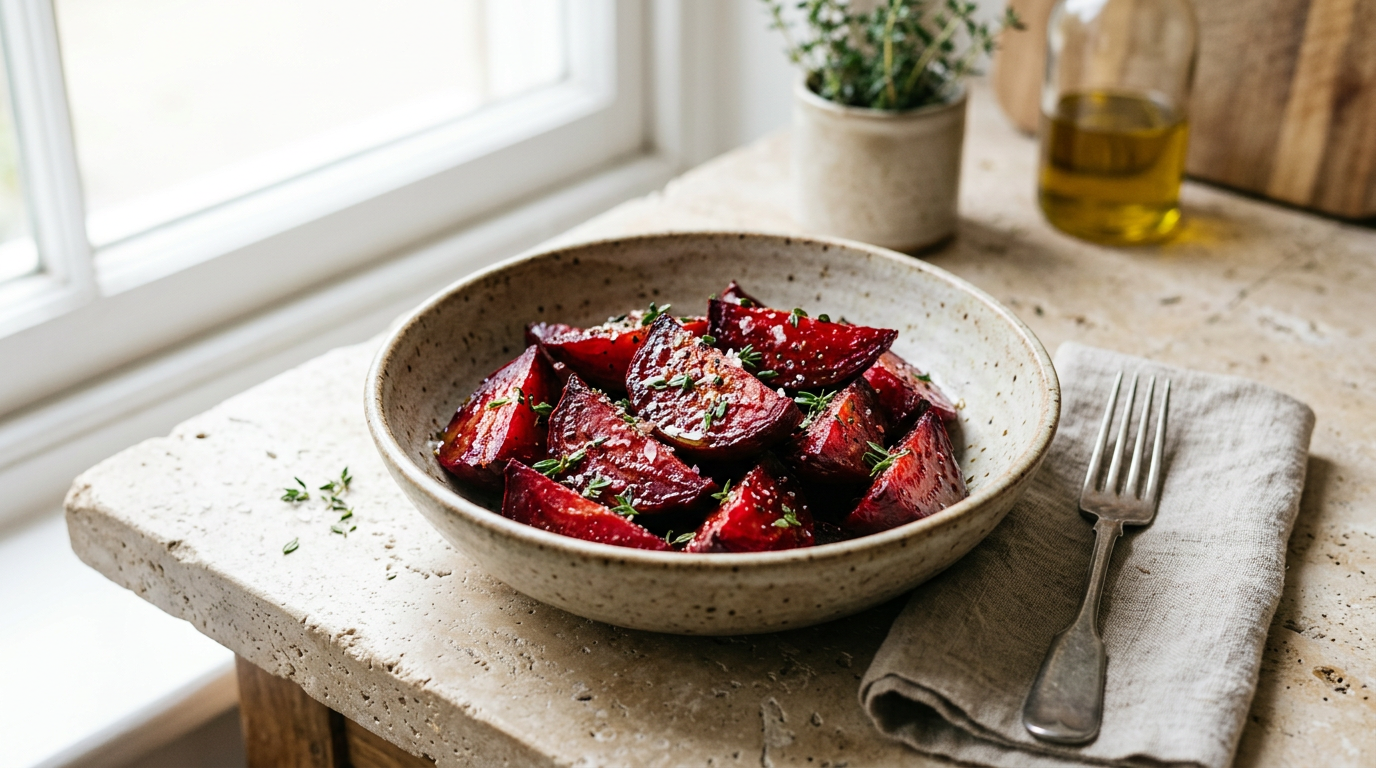
Beets get skipped because of two things: the long cooking time and the pink hands. Both are easy to work around once you know that time depends almost entirely on size, and that the skins come off by themselves after cooking.
Roasting is the method worth learning first. Wrapped in foil with a splash of water, beets steam and roast at the same time, so the centers turn silky while the sugars concentrate. That is the difference between the sweet, dense beets in a good restaurant salad and the flat, watery ones from a can.
Everything below is grouped by method and size so you can match the technique to what you are making, whether that is wedges for a grain bowl, plain boiled beets for borscht, or cubes in the air fryer for a weeknight side.
Six ways to cook beets
Pick by how much time you have and what the beets are going into.
Roasting, whole in foil
425F oven, wrapped with a splash of water
45–70 minutes by size
Deepest, sweetest flavor and skins that slip off
Roasting, cut into wedges
425F oven, tossed with oil on a sheet pan
25–35 minutes
Caramelized edges for salads and grain bowls
Boiling, whole
Salted water at a gentle simmer
30–50 minutes by size
Even, tender beets for pickling and borscht
Steaming, halved or quartered
Steamer basket over simmering water
20–30 minutes
Keeps color bright with no roasting time
Air frying, 3/4 inch cubes
375F, shaken once halfway
18–25 minutes
Small batches with crisp edges
Sautéing the greens
Skillet with oil and garlic over medium heat
3–5 minutes
Using the whole bunch instead of half of it
Roasting times by size
Times are for a 425F oven, measured from the moment the pan goes in. Check the largest beet with a skewer at the low end of each range.
| Cut | Size | Time |
|---|---|---|
| Baby beets, whole | 1 to 1.5 in | 25–35 minutes roasted |
| Small beets, whole | about 2 in | 40–50 minutes roasted |
| Medium beets, whole | 2.5 to 3 in | 50–60 minutes roasted |
| Large beets, whole | 3.5 in and up | 60–75 minutes roasted |
| Wedges | 1 in thick | 25–35 minutes at 425F |
| Cubes | 3/4 in | 20–30 minutes at 425F |
The 7-step method
- 1.
Trim the beets and keep the greens
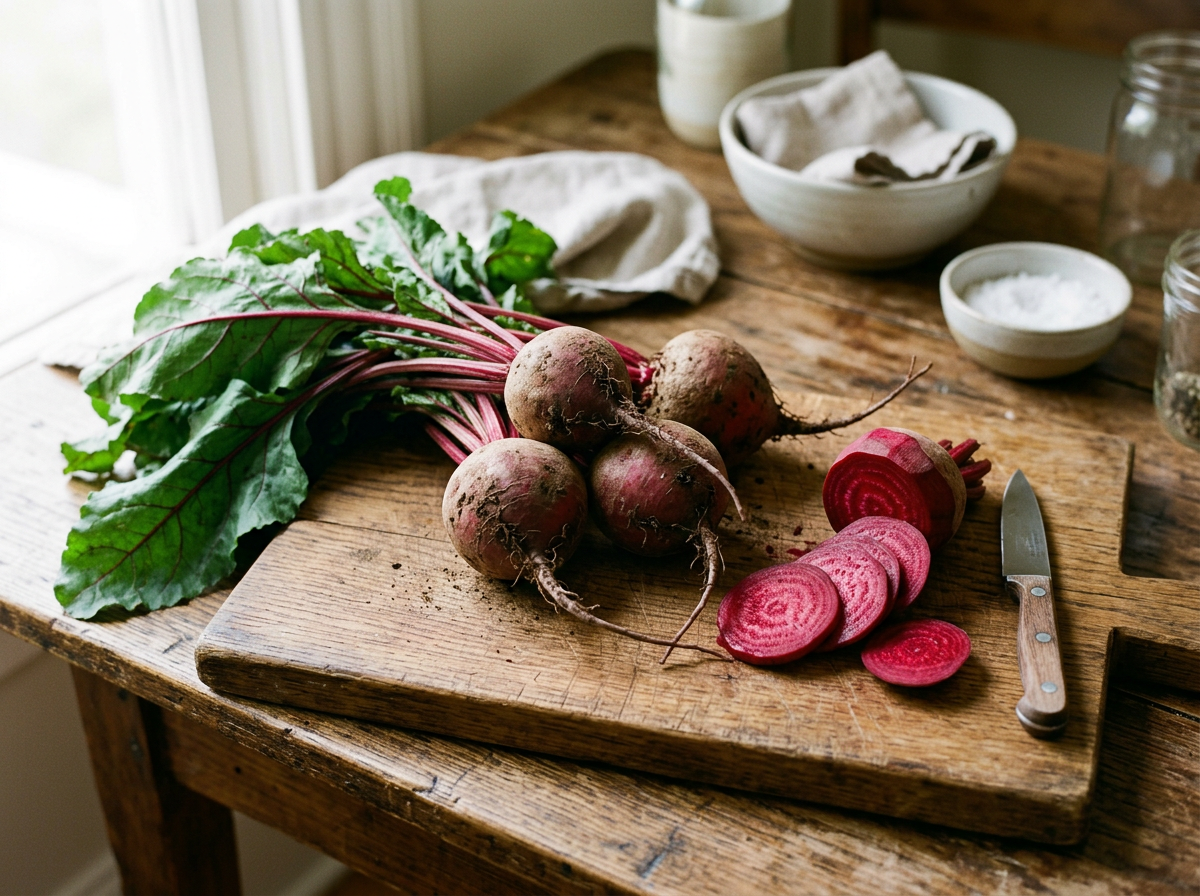
Cut the leafy tops off about an inch above the bulb and set them aside. Leave the tail and that inch of stem attached so less color bleeds out during cooking. The greens cook like chard, so wash them well and save them for a skillet.
- 2.
Scrub, but hold off on peeling
Beets grow underground, so scrub the skins under cool running water until no grit is left. Skins come off far more easily after cooking, when they slip away under a paper towel. Peel raw only when you are cutting beets into cubes or wedges.
- 3.
Sort by size, not by count
Group beets so everything in the pan finishes together. A large beet can take twice as long as a small one, so either cook them in separate batches or halve the big ones to match the small.
- 4.
Wrap whole beets with a splash of water
Set whole beets on foil, add a teaspoon of water and a drizzle of oil, then seal the packet loosely. The trapped steam keeps them from drying out while the oven concentrates their sugars. Cut beets go straight onto a sheet pan with oil and salt, spread in one layer.
- 5.
Roast at 425F and test with a skewer
Start checking at the low end of the range for the size you have. A thin skewer or paring knife should slide into the center with no resistance. Underdone beets taste chalky, so give them another 10 minutes and test again rather than guessing.
- 6.
Rub the skins off while warm
Let whole beets cool until you can handle them, then rub the skins away with a paper towel or the back of a knife. Wearing gloves keeps your hands from staining. Cut them after peeling so you keep the juice off the board.
- 7.
Season while they are still hot
Hot beets take on dressing the way hot potatoes do. Toss them with olive oil, vinegar or lemon, and salt right out of the oven, then add cheese, herbs, or nuts once they cool a little.
Red, golden, or chioggia
Red beets are the standard: deep color, strong earthy flavor, and the ones that stain. Golden beets are milder and gentler on cutting boards, so they suit salads where you do not want everything turning pink. Chioggia beets have candy-striped rings that look striking raw and shaved thin, though the stripes fade once cooked. All three cook in the same times at the same temperatures.
Roasted beets sit well next to almost anything. Pair them with baked salmon, spoon them over cooked quinoa, or serve them with pan-cooked chicken breast.
Four habits that make beets easier
- Acid keeps the color vivid. A splash of vinegar or lemon juice in the cooking water for boiled beets helps them stay deep red instead of turning dull.
- Cook the whole bunch at once. Roasted beets keep for days in the fridge, so one session covers salads, bowls, and sandwiches through the week.
- Use a plastic or glass board for cutting. Wood soaks up beet juice and holds the stain.
- Golden beets taste nearly the same and do not stain, which makes them the easy pick when beets go into something pale like a grain salad.
Fixing a batch that went wrong
Match the symptom to the cause and the next tray comes out right.
Still firm in the middle
The beets were larger than they looked. Rewrap and give them another 10 to 15 minutes, then test the center with a skewer.
Dry and wrinkled
The foil packet leaked or had no water in it. Seal it loosely with a teaspoon of water so steam stays inside.
Dull, brownish color
Long boiling washes the pigment out. Roast instead, or add a splash of vinegar to the cooking water.
Earthy taste is too strong
Balance it with acid and fat. Vinegar, citrus, goat cheese, or yogurt all cut through it.
Nothing browns on the sheet pan
The pan was crowded, so the beets steamed. Use two pans and leave space between the pieces.
Greens taste bitter
The stems went in with the leaves. Cook the chopped stems a couple of minutes first, then add the leaves at the end.
Nutrition and what beets bring to a plate
Beets are a root vegetable eaten for their bulb and their leafy tops, and both parts are edible. For the exact nutrient values of raw or cooked beets and beet greens, look the entry up in USDA FoodData Central, which publishes the measured figures per serving. Values shift depending on whether beets are raw, boiled, or canned, so use the entry that matches how you cooked them.
Cooking whole beets in their skins keeps more of the juice inside the vegetable than boiling peeled, cut pieces, which is another reason the foil-wrapped method is worth the extra time.
Storing, freezing, and reheating
Store raw beets loose in the refrigerator with the greens removed, since the leaves pull moisture from the bulb. Cooked beets go into a covered container in the fridge; the FDA advises keeping cut produce refrigerated at 40F or below rather than out on the counter. Cook the greens within a day or two, as they wilt faster than the roots.
Beets freeze best already cooked, peeled, and cut, then packed in an airtight container. Raw beets turn grainy after thawing. Reheat them gently in a covered dish, or warm them in a skillet with a little oil until the edges catch color again. Cold roasted beets need no reheating at all in salads.
Beet Cooking FAQs
How long does it take to cook beets?
Whole medium beets roast in 50 to 60 minutes at 425F, small ones in 40 to 50, and large ones can take 75. Cut into 3/4 inch cubes they roast in 20 to 30 minutes, and halved beets steam in 20 to 30. Always confirm with a skewer rather than the clock.
Is it better to boil or roast beets?
Roasting gives sweeter, more concentrated flavor because moisture cooks off and the sugars caramelize. Boiling is faster to set up and better when you want plain, evenly tender beets for pickling or soup, though some color leaches into the water.
Do you peel beets before or after cooking?
After, whenever you cook them whole. The skins loosen during cooking and rub off with a paper towel. Peel before cooking only when you need cubes or wedges.
Can you eat beet greens?
Yes. Beet greens cook like chard, so wash them well, chop the stems, and sauté the stems for a couple of minutes before adding the leaves until they wilt.
How do you keep beets from staining everything?
Wear gloves while peeling, cut them on a plastic or glass board, and rinse tools right away before the juice dries. Golden beets avoid the problem entirely.
How long do cooked beets keep?
Refrigerate cooked beets promptly in a covered container and keep them cold. The FDA advises refrigerating cut produce at 40F or below rather than leaving it at room temperature.
Sources and further reading
Keep cooking
Put a tray of roasted beets to work in any of these guides and recipe collections.