Cooking Guide
How to Cook Spinach
Six methods with real times, from a two minute garlic saute to creamed spinach that is not watery, plus washing, draining and seasoning.
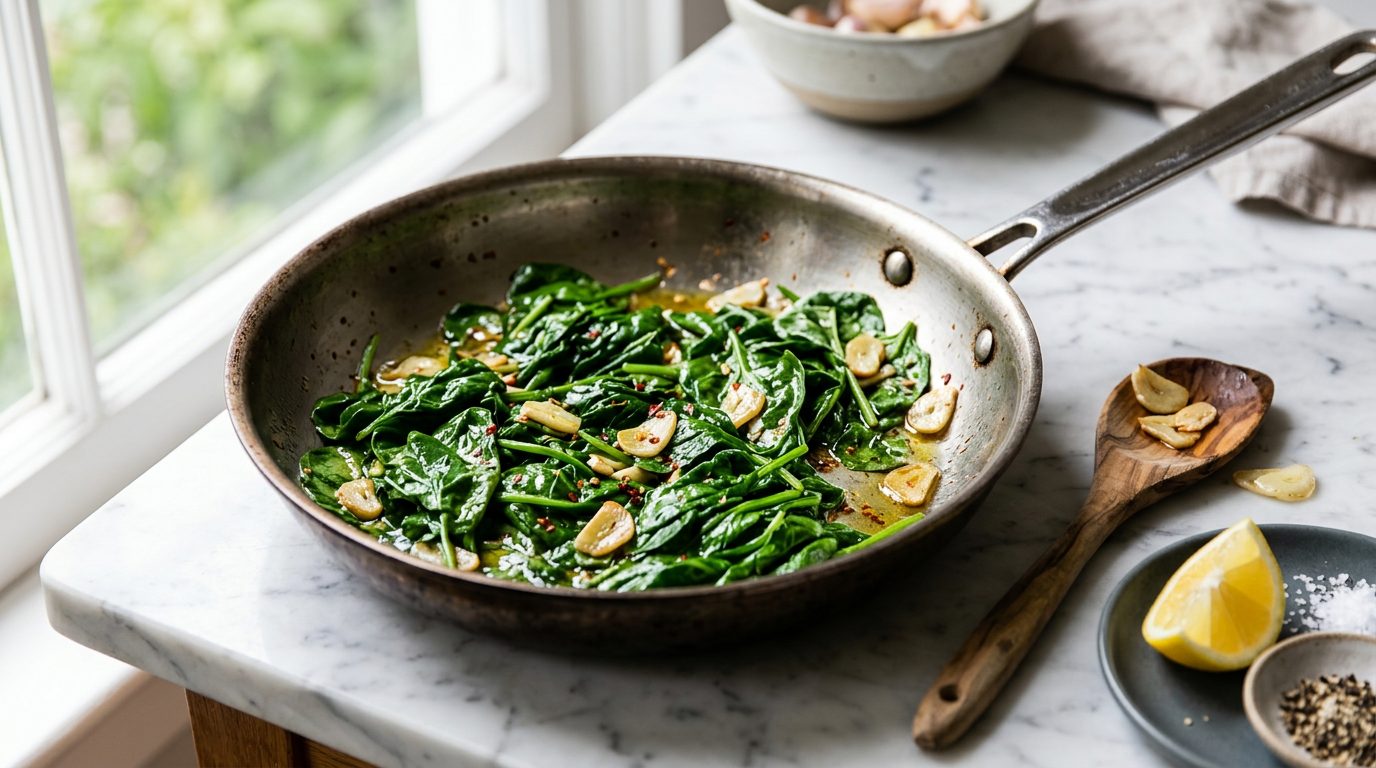
Spinach is the fastest green in the kitchen and the easiest one to ruin. A pan of leaves goes from bright and glossy to grey and slippery in about ninety seconds of extra heat.
Most of the trouble is water. Spinach carries a lot of it, so wet leaves in a crowded pan boil rather than sear, and you end up spooning a green puddle onto the plate. Dry leaves, a wide pan and batches of two or three handfuls fix that in one go.
The charts below cover every method with real times, plus what to do with frozen spinach, how to get it dry enough for dips and fillings, and quick fixes for the usual failures.
Cooking times by method
Times assume dry leaves cooked in batches. Mature bunched spinach sits at the top of each range, baby spinach at the bottom.
| Method | Prep | Heat | Time | Result |
|---|---|---|---|---|
| Saute | Dry leaves, sliced garlic | Medium high | 2–3 minutes | The everyday method, glossy and garlicky |
| Steam | Leaves in a steamer basket | Simmering water below | 2–3 minutes | Plain and clean, good for folding into eggs |
| Wilt in liquid | Stir into soup, curry or pasta | Simmering | 1–2 minutes | Silky leaves that carry the sauce |
| Blanch | Whole leaves, boiling salted water | Rolling boil | 30–60 seconds | Bright green, then squeeze dry for dips |
| Creamed | Blanched, squeezed, chopped | Medium, with cream | 8–10 minutes | Thick side dish, no watery pool |
| Frozen, from the bag | Thaw and squeeze hard | Medium | 4–5 minutes | Best for fillings, dips and stuffed pasta |
The 6-step method
- 1.
Buy leaves that stand up
Good spinach has deep green leaves with no yellow patches, slime or bruised dark spots. Baby spinach is tender and mild, so it wilts in seconds and needs no trimming. Mature bunched spinach has thicker stems and a stronger mineral flavour, and it holds up better in curries and creamed dishes.
- 2.
Wash it properly, even bagged leaves
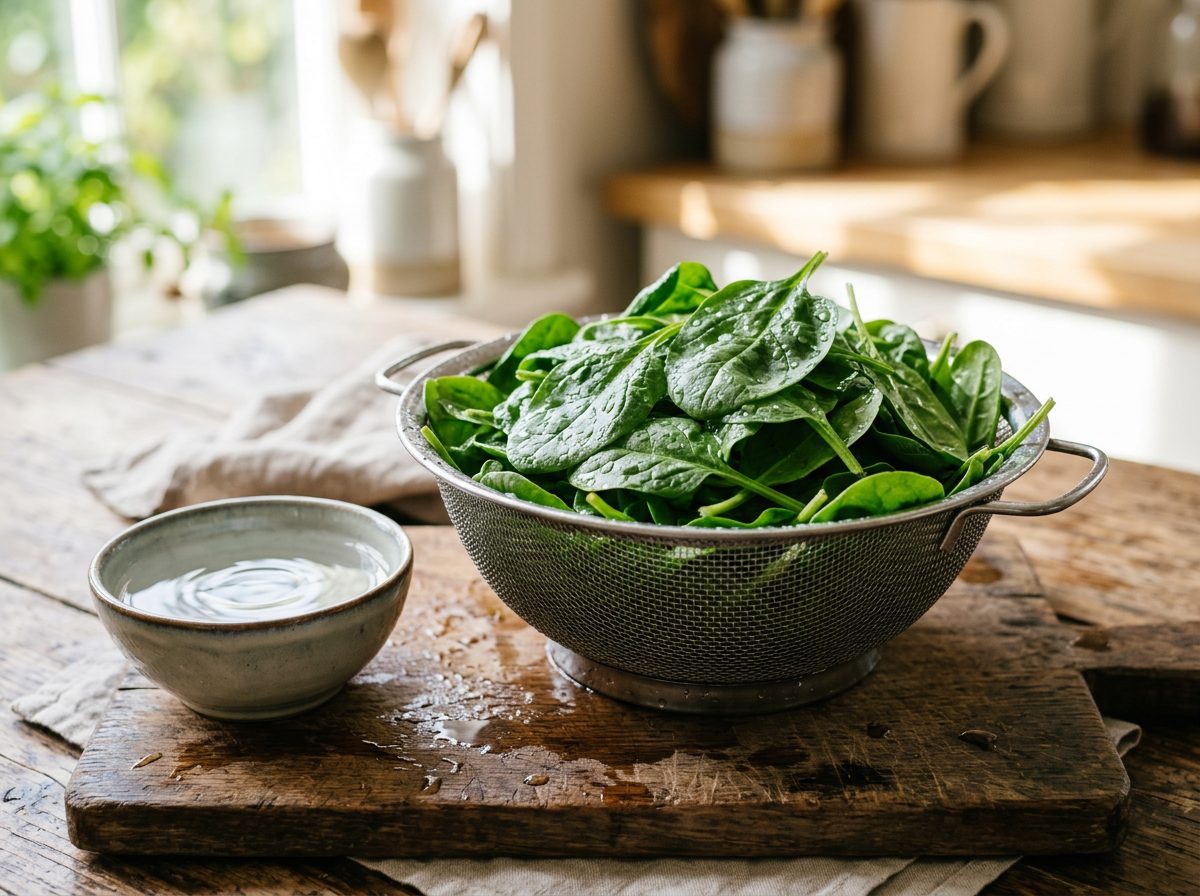
Rinse under cool running water and rub the leaf surfaces, following FDA guidance for fresh produce. Bunched spinach often hides grit near the stems, so dunk it in a bowl of water, lift the leaves out and leave the sand behind. Repeat until the water stays clear.
- 3.
Dry the leaves before they hit the pan
Spinach is mostly water, and clinging rinse water is what turns a saute into a puddle. Spin the leaves in a salad spinner or roll them in a clean towel. Dry leaves brown lightly at the edges instead of boiling in their own liquid.
- 4.
Trim the stems only if they are thick
Baby spinach stems are fine to eat and need nothing. On mature bunches, pinch off any stem thicker than a matchstick, since those stay stringy after the leaf has collapsed. Chop the leaves roughly if you want them to fold evenly into eggs or pasta.
- 5.
Cook hot, fast, and in one layer of pan
Heat a wide skillet over medium high, add a tablespoon of olive oil, then a couple of thin garlic slices for 20 seconds. Add the spinach in two or three handfuls, letting each batch shrink before the next goes in. Toss with tongs and pull the pan off the heat while a few leaves still look barely wilted.
- 6.
Drain, then season at the end
Tip the cooked spinach into a sieve and press gently, or tilt the pan and spoon the liquid away. Season with salt, pepper, a squeeze of lemon and a grating of nutmeg or parmesan. Salt added at the start pulls out even more water, so it goes on last.
Times by type and prep
| Type | Fast method | Other method | Notes |
|---|---|---|---|
| Baby spinach, raw | Saute 2 minutes | Wilt into pasta 1 min | Ten ounces cooks down to about one cup |
| Mature spinach, stems trimmed | Saute 3–4 minutes | Blanch 45–60 sec | Stronger flavour, better for creamed spinach |
| Chopped leaves | Saute 2 minutes | Fold into eggs 1 min | Chop after washing, not before |
| Frozen chopped, thawed | Saute 4–5 minutes | Stir into dip | Squeeze hard in a towel or the dish goes soupy |
| Blanched and squeezed | Creamed 8–10 minutes | Ready for fillings | The route to spinach that is not watery |
| Raw in salad | No cooking | Dress just before serving | Baby leaves only, dressing wilts them fast |
Four habits that improve every batch
- Add the leaves in batches. A packed pan steams itself and the bottom layer overcooks before the top wilts.
- Pull the pan off the heat a few seconds early. Residual heat finishes spinach faster than you expect.
- Squeeze blanched or thawed spinach until it feels almost dry before it goes into a dip, quiche or stuffed pasta.
- Lemon or vinegar at the finish lifts the mineral edge that spinach leaves on the palate.
Fixing spinach that went wrong
Watery puddle in the pan
Wet leaves or a crowded pan. Dry the spinach and cook in batches over medium high heat.
Slimy texture
Overcooked. Two to three minutes is enough for a saute, and one minute for baby leaves in sauce.
Gritty bite
Sand near the stems. Dunk bunched spinach in a bowl of water and lift the leaves out, twice if needed.
Stringy stems
Mature spinach cooked whole. Pinch off any stem thicker than a matchstick before cooking.
Bland and flat
Season at the end with salt, pepper, lemon and a little nutmeg, garlic or parmesan.
Runny dip or quiche
The spinach was not squeezed. Blanch, cool, then wring it out in a clean towel.
Nutrition notes
Spinach is low in calories for the volume it fills, and the exact figures differ between raw, boiled and frozen leaves, so check the record that matches what you are cooking in USDA FoodData Central. Oil, butter and cream added in the pan change the totals more than the cooking method does.
Storing spinach
Keep spinach dry and unwashed in the refrigerator crisper, in its bag or a vented container lined with a paper towel. Wash it only when you are ready to cook, because damp leaves break down within a day or two. Sort out any slimy leaves as soon as you spot them, since they spread.
Cooked spinach keeps three to four days in a covered container. Reheat it briefly in a hot pan rather than the microwave so it does not turn to paste. For the freezer, blanch the leaves for 30 to 60 seconds, cool them in ice water, squeeze them dry and pack them in portions.
What to serve with it
A pan of garlic spinach fits beside almost anything. Serve it with baked salmon or a seared chicken breast, fold it into eggs or a bowl of lentils, or spoon it over steamed rice. It plays the same quick-cooking role as bok choy, and our weekly meal plans build the rest of the week around it.
Spinach FAQs
How long does spinach take to cook?
Baby spinach sauteed over medium high heat takes about 2 minutes, mature spinach takes 3 to 4 minutes, steaming takes 2 to 3 minutes, and a blanch in boiling water takes 30 to 60 seconds. Stirred into a hot soup or sauce it wilts in about a minute.
Do you need to wash bagged spinach?
Rinsing is still the safer habit, and FDA guidance for fresh produce is to rinse under cool running water and rub the surfaces before eating or cooking. Dry the leaves afterwards, because surface water is what turns a saute watery.
How much raw spinach do you need per person?
Spinach shrinks dramatically, so plan on a large handful or roughly 3 to 4 ounces of raw leaves per person as a side. A 10 ounce bag cooks down to about one cup, which serves two.
Why is my cooked spinach watery?
Two causes. The leaves went into the pan wet, or the pan was too full and the spinach steamed instead of searing. Dry the leaves, cook in batches, then drain the finished spinach in a sieve before seasoning.
Should you trim spinach stems?
Baby spinach stems are tender and can stay. On mature bunched spinach, pinch off any stem thicker than a matchstick, since those stay chewy long after the leaves have wilted.
How do you store spinach?
Keep it dry and unwashed in the refrigerator crisper in its bag or a vented container, and wash only when you are ready to cook, since damp leaves break down fast. Cooked spinach keeps three to four days in a covered container in the refrigerator.
Sources and further reading
Keep cooking
Pair a pan of spinach with any of these guides and recipe collections.