Cooking Guide
How to Boil Eggs
The one method that works for soft, jammy, medium, and hard boiled eggs. Exact minute-by-minute timings, easy-peel tips, and safe storage guidance for every kind of egg you want to cook.
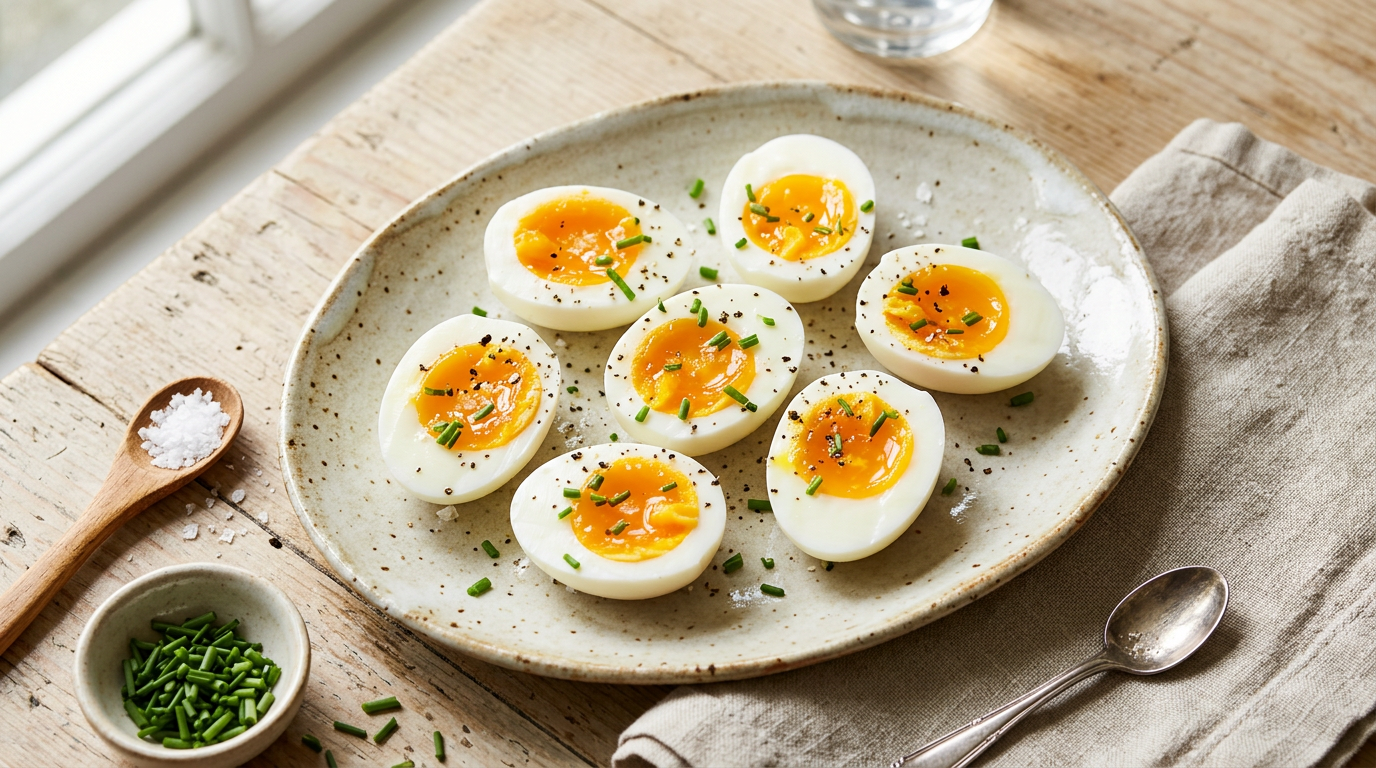
Boiling an egg looks simple until you cut into one and find a chalky gray yolk, a rubbery white, or a shell that refuses to come off in one piece. The fix is not a gadget. It is one repeatable method with a timer, an ice bath, and a pot of water at a real, rolling boil.
This guide sticks with the boiling-water start because it is the most consistent way to hit a specific doneness. You will get a minute-by-minute chart, five clear steps, and answers to the questions that come up when a batch does not turn out. Everything here works for large chicken eggs from cold, straight out of the fridge.
Boiled egg times at a glance
Times for large eggs cooked straight from the fridge, lowered into already-boiling water. Add 30 seconds for extra-large eggs.
| Style | Time | Yolk |
|---|---|---|
| Soft boiled | 6 minutes | Runny, warm |
| Jammy | 7 minutes | Custardy, bright orange |
| Medium boiled | 8 minutes | Fudgy, just set |
| Firm medium | 9 minutes | Tender, fully set |
| Hard boiled | 10–12 minutes | Fully cooked, pale yellow |
The 5-step method
- 1.
Bring a pot of water to a rolling boil
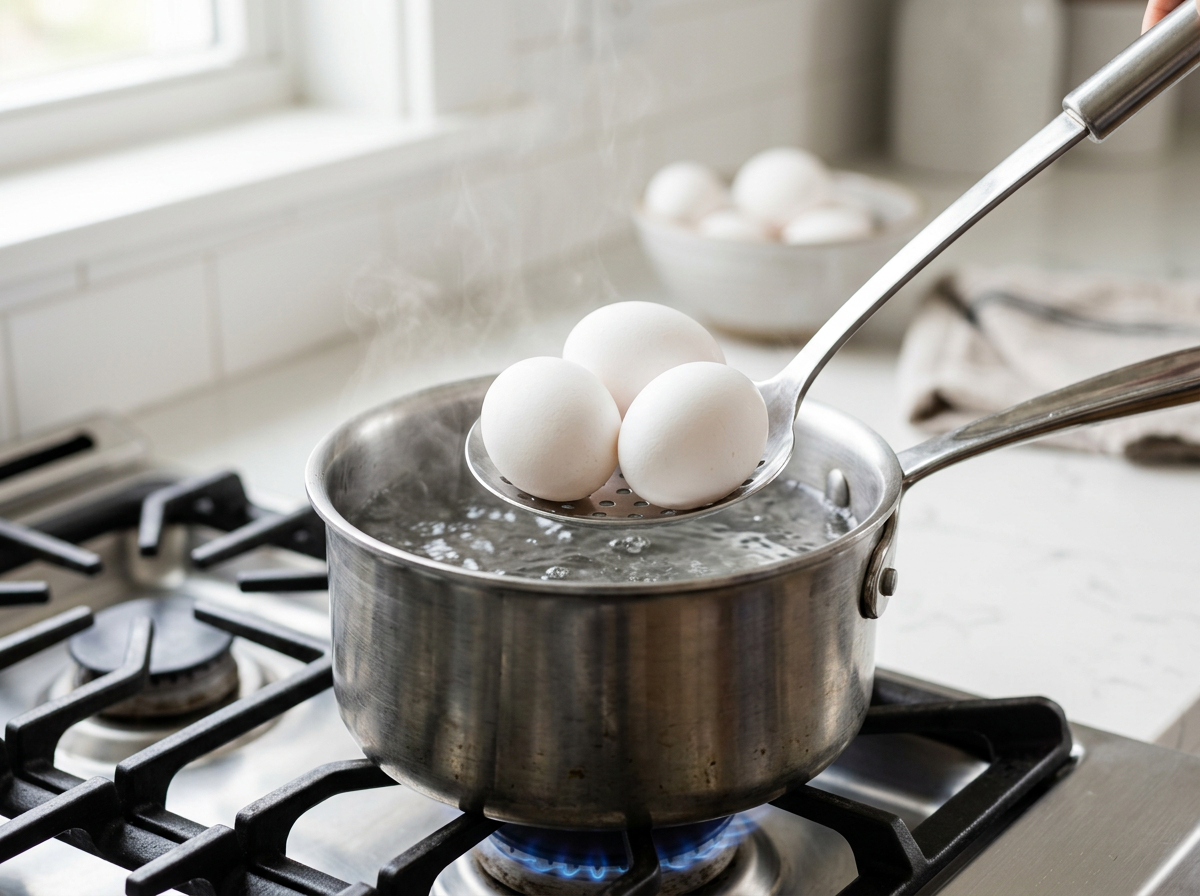
Fill a saucepan with enough water to cover the eggs by about an inch. Bring it to a full, rolling boil over high heat before the eggs go in. Starting with boiling water gives you a precise, repeatable cook time.
- 2.
Lower the eggs in gently
Use a slotted spoon or spider to lower cold eggs one at a time into the boiling water. Straight from the fridge is fine. Reduce the heat slightly so the water stays at a steady, gentle boil, not a violent bubble that can crack the shells.
- 3.
Set a timer for your target doneness
Start timing the moment the last egg is in the pot. Use 6 minutes for soft, 7 for jammy, 9 for firm medium, and 10 to 12 for classic hard boiled. Large eggs at room temperature will cook about 30 seconds faster.
- 4.
Shock the eggs in ice water
As soon as the timer goes off, transfer the eggs to a bowl of ice water and leave them for at least 5 minutes. The cold stop halts the cooking, cools the eggs enough to handle, and helps the membrane pull away from the shell for easier peeling.
- 5.
Crack, peel, and serve
Tap each egg on the counter to crack it all over, then roll gently to loosen the shell. Peel under a thin stream of running water starting from the wide, air pocket end. Serve warm with salt and pepper, or refrigerate whole in the shell for up to a week.
Four habits that make every batch better
- Use eggs that are 7 to 10 days old for the easiest peeling. Very fresh eggs cling to the shell.
- Skip the vinegar or baking soda. Boiling water, exact timing, and an ice bath do the real work.
- Cook eggs in a single layer so heat reaches each one evenly. Boil in batches for large amounts.
- Store peeled hard boiled eggs in a covered container in the fridge for up to a week, per the FDA.
Six ways to use boiled eggs
Once you can hit any doneness on demand, boiled eggs turn into a weeknight staple. Match the style to the meal.
Ramen and noodle bowls
Jammy 7-minute eggs, halved, add richness and protein.
Chopped salads
Firm hard boiled eggs slice cleanly for cobb, niçoise, and grain bowls.
Deviled eggs
10 to 12 minutes gives a fully set yolk that mashes smooth.
Avocado toast
A soft or jammy egg on toast turns snack into meal.
Egg salad sandwiches
Firm hard boiled eggs chop clean without turning gluey.
Meal-prep snacks
Boil a batch on Sunday, keep in the shell, peel as needed.
Storing and reheating boiled eggs
Keep boiled eggs refrigerated at 40 F or below and use them within one week, whether or not they are peeled. Store peeled eggs in a covered container to keep them from drying out. To warm a chilled hard boiled egg, sit it in a bowl of hot tap water for 5 to 10 minutes rather than reheating in the microwave, which can cause the yolk to pop.
Boiled Egg FAQs
How long do you boil eggs for hard boiled?
Lower cold large eggs into rolling boiling water and cook 10 to 12 minutes for fully set, pale yellow yolks. Move straight to an ice bath for at least 5 minutes before peeling.
How long do you boil eggs for soft boiled?
Cook 6 minutes in rolling boiling water for a runny yolk with a just-set white, or 7 minutes for a jammy, custardy yolk that still spreads.
Should you boil eggs from cold water or boiling water?
Start with boiling water. Timing from the moment the egg hits a rolling boil is far more precise than the cold-start method, and the shock helps the shell separate from the white cleanly.
Why are my hard boiled eggs hard to peel?
Very fresh eggs cling to their shells. Use eggs that are at least a week old, cook them straight from the fridge into boiling water, and cool them fully in an ice bath before peeling.
How do you know when a boiled egg is done?
Trust the timer, not appearance. Cold large eggs into rolling boiling water hit soft at 6, jammy at 7, medium at 8 to 9, and hard boiled at 10 to 12 minutes. Spin a cooled egg on the counter: a hard boiled egg spins smoothly, a raw one wobbles.
How long do boiled eggs keep in the fridge?
Hard boiled eggs stay safe in the refrigerator for up to one week, in or out of the shell, according to FDA guidance. Store them in a covered container to prevent them from picking up other fridge odors.
Sources and further reading
Keep cooking
Take a batch of boiled eggs into any of these guides and recipe collections next.