Cooking Guide
How to Cook Bok Choy
Six methods with real times, from a three minute stir fry to golden seared halves, plus how to clean it, when to add the leaves, and how to keep the stalks crisp.
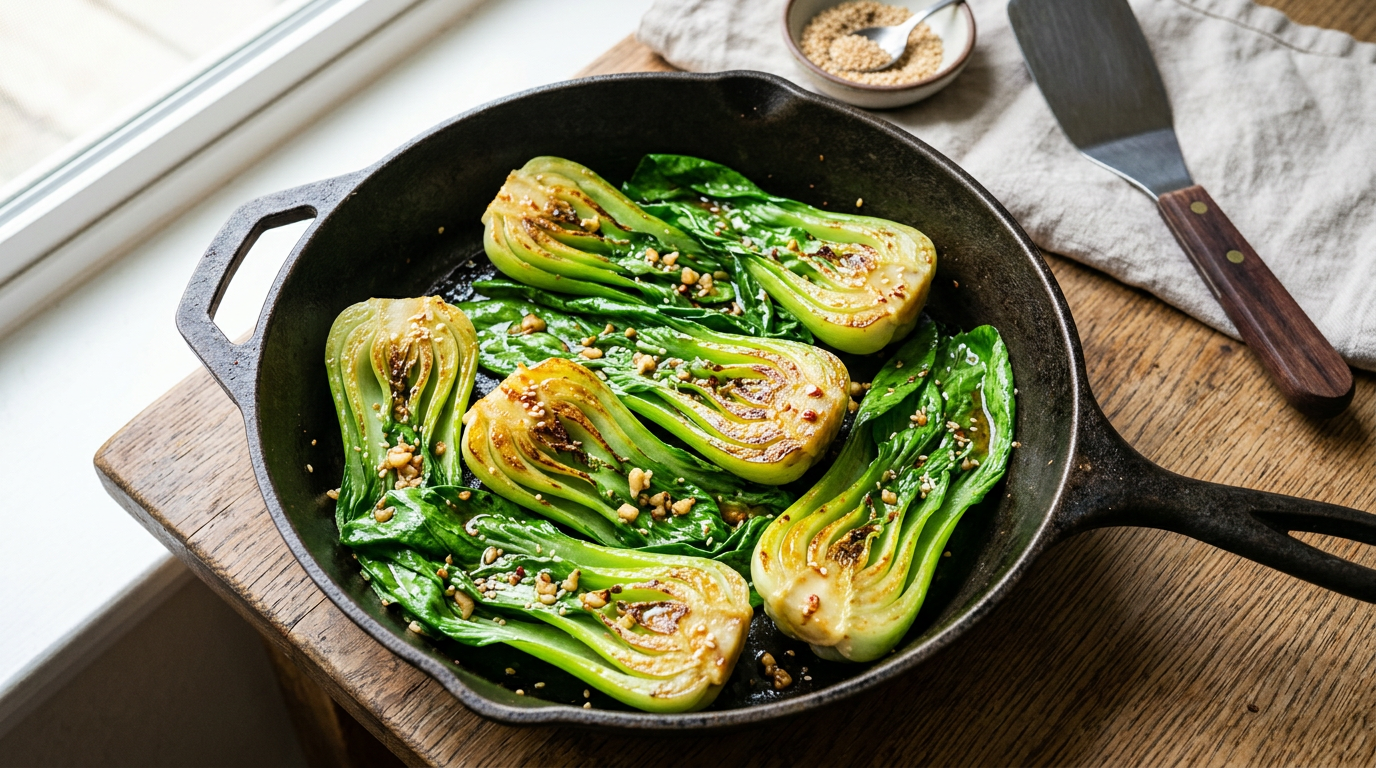
Bok choy is two vegetables in one head. The white stalks behave like celery and want a few minutes of real heat, while the dark leaves collapse in under a minute.
Cook them together at the same pace and you get scorched leaves over squeaky raw stalks, which is why so much homemade bok choy disappoints. Give the stalks a head start, add the leaves at the end, and the whole head lands tender and crisp at the same moment.
It is also one of the most nutrient dense things you can put in a pan for the calories. USDA data lists 100 grams of raw pak choi at 13 calories with 45 mg of vitamin C, 105 mg of calcium and 45.5 mcg of vitamin K. The charts below cover every method, size by size, with fixes for the usual failures.
Cooking times by method
Times assume baby bok choy or half inch stalk slices from a full size head. Larger heads sit at the top of each range.
| Method | Prep | Heat | Time | Result |
|---|---|---|---|---|
| Stir fry | Stalks sliced, leaves torn | High | 3–5 minutes | Crisp stalks, wilted leaves, the classic |
| Sear (skillet) | Baby heads halved lengthwise | Medium high | 5–7 minutes | Golden cut face, tender core |
| Steam | Halved or quartered heads | Simmering water below | 4–6 minutes | Clean and plain, ready for sauce |
| Roast | Halved, oiled, cut side down | 425°F | 12–15 minutes | Sweet browned edges, frilly crisp leaves |
| Braise | Halved heads in shallow broth | Medium low, covered | 8–10 minutes | Silky stalks that soak up the liquid |
| Blanch | Whole baby heads | Boiling salted water | 60–90 seconds | Bright green, for ramen and noodle bowls |
The 6-step method
- 1.
Choose firm heads with perky leaves
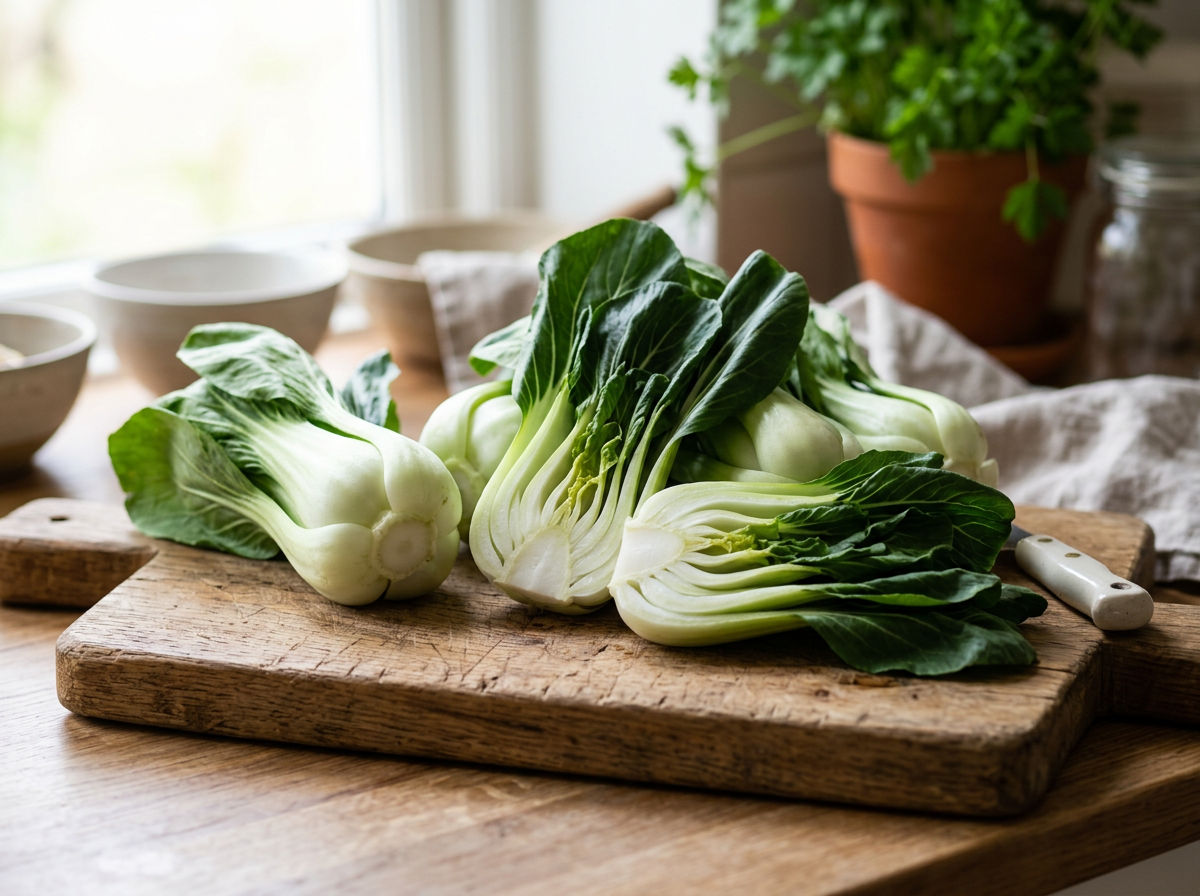
Good bok choy has crisp white or pale green stalks and dark leaves that stand up rather than flop. Skip heads with brown stalk bases or yellowing tips. Baby bok choy is smaller and more tender, so it suits searing and steaming whole, while full size heads are better sliced.
- 2.
Wash the grit out of the base
Soil collects where the stalks meet, so rinse under cool running water and rub the surface, following FDA guidance for fresh produce. For sandy heads, halve them first and swish the cut side in a bowl of water. Dry well, because wet leaves steam instead of searing.
- 3.
Separate stalks from leaves
The white stalks are dense and need a few minutes, while the leaves collapse in seconds. Slice the stalks on a diagonal about half an inch thick and keep the torn leaves in a separate pile. For baby heads you can skip this and just halve them lengthwise instead.
- 4.
Get the pan properly hot
Heat a wok or wide skillet over high heat until a drop of water skitters, then add a tablespoon of neutral oil. Bok choy holds a lot of water, so a lukewarm pan turns it grey and limp. High heat and a single layer keep the stalks snappy.
- 5.
Cook the stalks first, leaves last
Add the stalks and let them sit undisturbed for a minute to pick up colour, then toss for another two. Add the leaves and stir just until they wilt, about 30 to 60 seconds. For seared halves, place them cut side down and leave them alone until golden.
- 6.
Season at the finish
Add garlic, ginger, soy sauce, sesame oil, oyster sauce, or a splash of rice vinegar in the last 30 seconds. Aromatics burn if they go in early, and salty sauces added at the start pull out water. A spoonful of liquid in a hot pan also lifts the browned bits.
Times by cut and size
| Cut | Fast method | Other method | Notes |
|---|---|---|---|
| Baby bok choy, whole | Blanch 60–90 sec | Steam 4–5 minutes | Best for ramen, hot pot and noodle bowls |
| Baby bok choy, halved | Sear 5–7 minutes | Roast 12–15 minutes | The most attractive way to serve it |
| Full head, quartered | Braise 8–10 minutes | Steam 6 minutes | Quarter through the root so it holds together |
| Stalks, 1/2 inch diagonal | Stir fry 3 minutes | Add to soup 3–4 min | Diagonal cuts give more surface for sauce |
| Leaves, torn | Stir fry 30–60 sec | Stir into soup at the end | Add last or they overcook |
| Shredded raw | No cooking | Dress just before serving | Crunchy slaw base, similar to napa cabbage |
Four habits that improve every batch
- Dry the cut halves with a towel before searing. Surface water is the difference between golden and grey.
- Cook in two batches rather than crowding one pan. Bok choy releases water fast and a full pan steams itself.
- A tablespoon of water or broth added at the end and covered for 30 seconds finishes thick stalks without overcooking the leaves.
- Keep the sauce simple: soy, garlic, ginger, sesame oil. The vegetable is mild and sweet, so heavy sauces bury it.
Fixing bok choy that went wrong
Limp and watery
Pan too cool or too full. Use high heat, dry the leaves, and cook in batches.
Gritty texture
Sand trapped at the stalk base. Halve the heads and swish the cut sides in a bowl of water.
Burnt leaves, raw stalks
Everything went in together. Give the stalks a two to three minute head start.
Bitter edge
Overcooked or older heads. Keep total cooking under about eight minutes and buy heads with firm bases.
Bland
Season at the end with soy, sesame oil and a splash of vinegar, and salt the blanching water.
Falls apart
Cut through the leaves instead of the root. Halve or quarter through the base so each piece stays attached.
Nutrition per 100 g raw
Values from USDA FoodData Central, cabbage, chinese (pak-choi), raw (FDC ID 170390). Oil and sauce added during cooking change the totals.
Calories
13 kcal
Protein
1.5 g
Total fat
0.2 g
Carbohydrate
2.18 g
Fiber
1 g
Vitamin C
45 mg
Vitamin K
45.5 mcg
Calcium
105 mg
Storing bok choy
Keep whole heads unwashed in the refrigerator crisper, loose or in a vented bag, and use them within three to five days. Washing before storage leaves water trapped at the base and the stalks turn slimy. Trim the very bottom only when you are ready to cook.
Cooked bok choy keeps three to four days in a covered container. Reheat it briefly in a hot pan rather than the microwave so the stalks keep some bite. It does not freeze well raw, since the high water content collapses the stalks on thawing.
What to serve with it
Bok choy belongs next to almost anything from a hot pan. Pile it over a pot of steamed rice, serve it beside quick cooked shrimp or baked salmon, or add it to a tray with browned mushrooms. It plays the same role as cabbage in a stir fry, and our weekly meal plans put the whole week together for you.
Bok Choy FAQs
How long does bok choy take to cook?
Stir fried bok choy takes 3 to 5 minutes, seared halves take 5 to 7 minutes, steaming takes 4 to 6 minutes, roasting at 425°F takes 12 to 15 minutes, and a quick blanch in boiling water takes 60 to 90 seconds.
Do you eat the white part of bok choy?
Yes. The white stalks are the crunchy part and the best bit of the vegetable. They just take longer than the leaves, so slice them about half an inch thick and give them a two to three minute head start in the pan.
How do you cook bok choy for ramen?
Drop whole baby heads or halves into the boiling noodle water for 60 to 90 seconds until bright green and just tender, then lift them out and set them on top of the finished bowl. They keep their colour and do not water down the broth.
Should you wash bok choy before cooking?
Yes. Grit collects where the stalks meet at the base. Rinse under cool running water and rub the surface, and for sandy heads halve them and swish the cut sides in a bowl of water. Dry well before cooking.
Can you eat bok choy raw?
Yes. Shredded raw bok choy works as a crunchy slaw base, much like napa cabbage. Slice the stalks thin, keep the leaves in wider ribbons, and dress it right before serving so it stays crisp.
How do you store bok choy?
Keep whole unwashed heads loose or in a vented bag in the refrigerator crisper and use them within three to five days. Wash only when you are ready to cook, since damp leaves rot quickly. Cooked bok choy keeps three to four days covered in the refrigerator.
Sources and further reading
Keep cooking
Pair a pan of bok choy with any of these guides and recipe collections.