Cooking Guide
How to Cook Eggplant
Six methods with real times, from a hot skillet of cubes to whole charred eggplant for dips, plus the salting step that keeps it from drinking a bottle of olive oil.
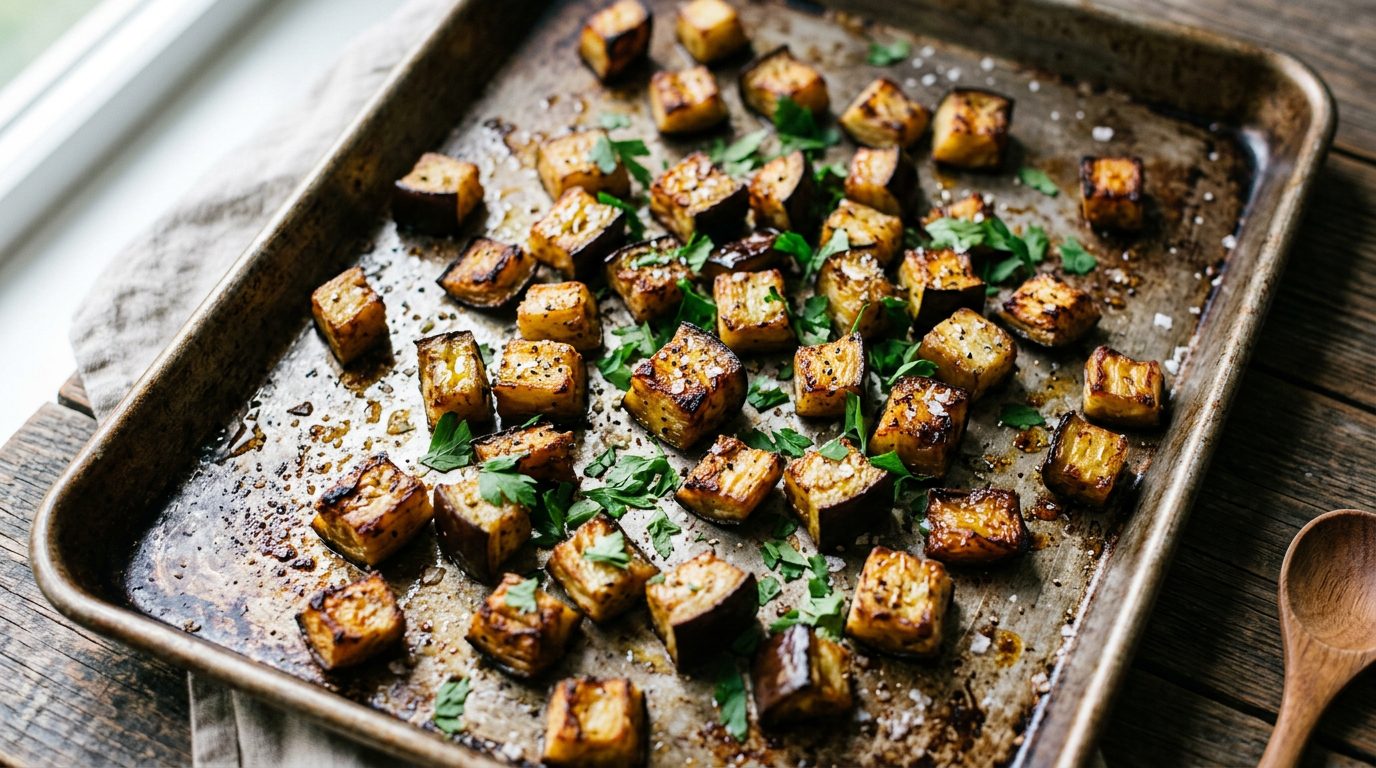
Eggplant has two failure modes and everyone has met both: an oily slick in the pan, or pale cubes that squeak against your teeth. The cause is the same structure in both cases.
Raw eggplant flesh is full of air pockets that behave like a sponge. Salt the cut pieces, wait half an hour, and those pockets collapse, so the flesh takes on far less oil and browns rather than stewing. After that it just needs enough heat and enough time to turn fully creamy inside.
It is also a light thing to build a meal on. USDA data lists 100 grams of raw eggplant at 25 calories with 3 grams of fiber, so a generous portion adds bulk and texture without much else. The tables below give times for each method and each cut, with fixes for the usual problems.
Cooking times by method
Times assume a medium globe eggplant, salted and dried, cut as listed. Slender Japanese varieties run a few minutes faster.
| Method | Prep | Heat | Time | Result |
|---|---|---|---|---|
| Roast (oven) | 3/4 inch cubes, well oiled | 425°F | 25–30 minutes | Creamy centres, deeply caramelised edges |
| Sauté (skillet) | 1/2 inch cubes | Medium high | 8–12 minutes | Fast side dish, add oil in stages |
| Air fry | 3/4 inch cubes, lightly oiled | 400°F | 12–15 minutes | Crisp outside with much less oil |
| Grill | 1/2 inch lengthwise planks | Medium direct | 8–10 minutes | Smoky char, best for salads and sandwiches |
| Broil | 1/2 inch rounds | High, 6 inches away | 6–8 minutes | Quick browning for parmigiana layers |
| Char whole | Pierced, left whole | Direct flame or 450°F oven | 25–40 minutes | Collapsed smoky flesh for dips |
The 6-step method
- 1.
Choose a heavy, glossy eggplant
Pick one that feels heavy for its size with tight, shiny skin and a fresh green cap. Press gently: the flesh should spring back. Dull skin, soft dents, or a shrivelled stem means it has been sitting around and the seeds will be bitter.
- 2.
Rinse and trim, skin on
Rinse under cool running water and rub the skin, following FDA guidance for fresh produce, then dry it. Trim the cap and the base. The skin on a standard globe eggplant is edible and helps the pieces hold their shape, so only peel if the specimen is very large and tough.
- 3.
Cut it thick
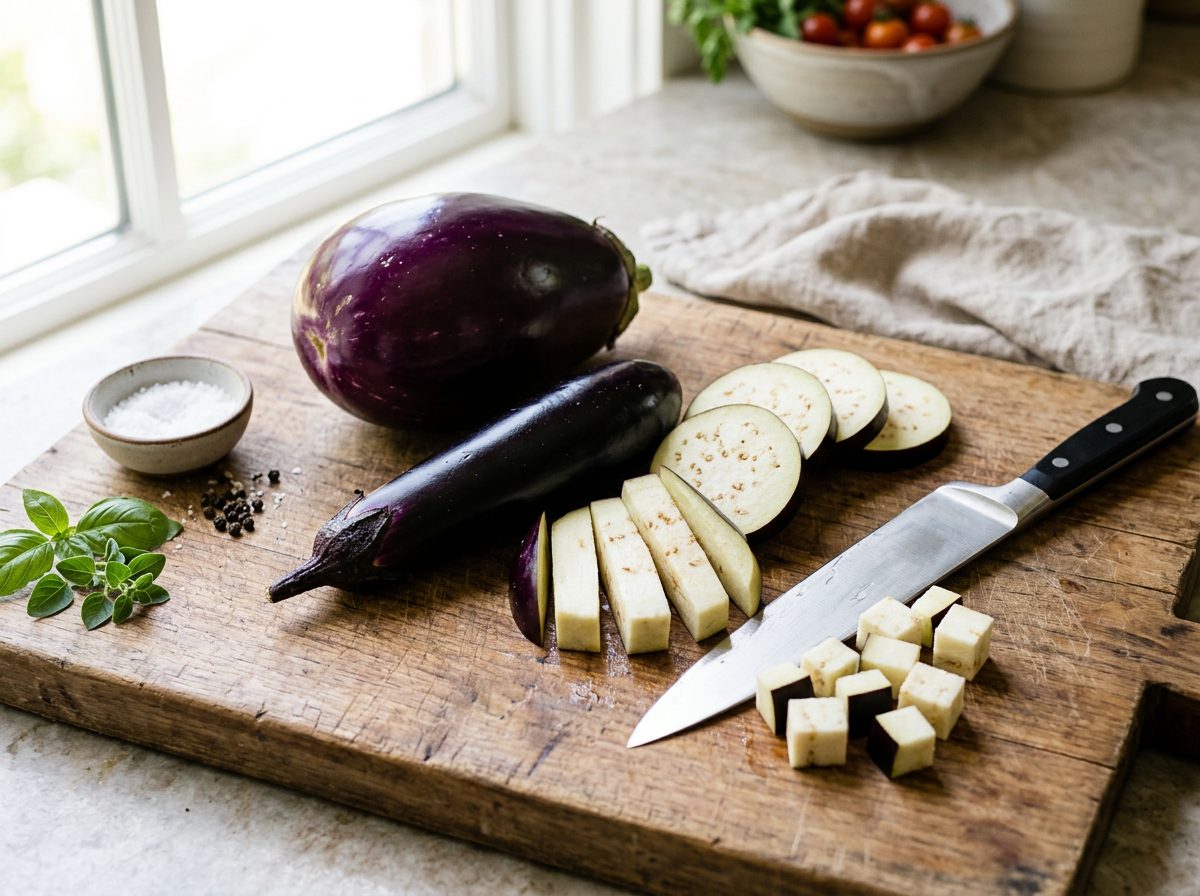
Three quarter inch cubes for roasting, half inch rounds for broiling and frying, half inch planks for the grill. Thin pieces lose their structure and turn to paste. Keep the size even so everything finishes at the same moment.
- 4.
Salt it for 30 minutes
Toss the cut pieces with a generous pinch of salt in a colander and leave them to drain for 30 minutes, then pat dry. This collapses the spongy air pockets, so the eggplant soaks up far less oil and browns instead of stewing. It also softens any bitterness in older fruit.
- 5.
Be generous with oil, once
Toss the dried pieces with olive oil until every surface is coated, then stop. Eggplant drinks the first oil it meets and releases it back as the cells collapse, so adding more mid cook leaves a greasy pan. In a skillet, wait for the pan to look dry then keep going, it will come back.
- 6.
Cook until fully soft
Undercooked eggplant is squeaky and unpleasant. Go until the flesh is completely creamy and a knife meets no resistance, with browned edges. Finish with salt, lemon, garlic, tahini, herbs, or a splash of vinegar while the pieces are still hot.
Times by cut
| Cut | Roast at 425°F | Other method | Notes |
|---|---|---|---|
| 1/2 inch cubes | 20–25 minutes | Sauté 8–10 minutes | Good for pasta sauces and curries |
| 3/4 inch cubes | 25–30 minutes | Air fry 12–15 minutes | The all purpose roasting cut |
| 1/2 inch rounds | 22–26 minutes | Broil 6–8 minutes | Best for parmigiana and stacks |
| Lengthwise planks | 22–25 minutes | Grill 8–10 minutes | Rolls, sandwiches, and grilled salads |
| Halved lengthwise | 35–45 minutes | Score the flesh first | Stuffed eggplant, roast cut side down then flip |
| Whole, pierced | 40 minutes at 450°F | Direct flame 25–30 minutes | For baba ganoush and smoky dips |
Four habits that improve every batch
- Score the cut face of halves in a diamond pattern before oiling. The oil reaches deeper and the flesh cooks evenly.
- Slender Japanese and Chinese eggplants have thinner skin and fewer seeds, so they need no salting and cook a few minutes faster.
- Line the sheet pan with parchment. Eggplant sugars caramelise hard and stick to bare metal.
- Finish with acid. Lemon juice, sherry vinegar, or pomegranate molasses cuts the richness that oil leaves behind.
Fixing eggplant that went wrong
Greasy and heavy
Oil added in stages. Salt and dry the pieces first, then coat once and leave it alone.
Squeaky and spongy
Undercooked. Keep going until the flesh is fully creamy with no resistance at the knife.
Bitter
Common in older, seedy fruit. Choose heavy, glossy eggplants and salt them for 30 minutes.
Steamed, not browned
Pan too full or oven too cool. Roast at 425°F in a single layer with space between pieces.
Pale skin, mushy inside
Cut too thin. Move up to three quarter inch pieces.
Watery on the plate
Salt, drain, and pat dry before cooking, and serve straight from the pan.
Nutrition per 100 g raw
Values from USDA FoodData Central, eggplant, raw (FDC ID 169228). Oil absorbed during cooking changes the totals considerably.
Calories
25 kcal
Protein
0.98 g
Total fat
0.18 g
Carbohydrate
5.88 g
Fiber
3 g
Storing eggplant
Whole raw eggplant does not love the cold. Keep it in a cool spot on the counter and use it within a couple of days, or refrigerate it loosely in the crisper if your kitchen runs warm. Once cut, the flesh browns quickly, so cook it the same day.
Cooked eggplant keeps three to four days in a covered container in the refrigerator and reheats well in a hot oven or air fryer. Roasted cubes and grilled planks freeze better than raw slices, which turn watery once the cell walls break down.
What to serve with it
Roasted eggplant fits almost any Mediterranean plate. Pile it beside roasted zucchini and browned mushrooms for a vegetable tray, spoon it over a pot of rice, or stir it through cooked lentils. It also stands up next to a seared steak or baked chicken thighs, and our weekly meal plans slot it into a full week of cooking.
Eggplant FAQs
How long does eggplant take to cook?
Three quarter inch cubes roast in 25 to 30 minutes at 425°F, air fry in 12 to 15 minutes at 400°F, and sauté in 8 to 12 minutes over medium high heat. Half inch planks grill in 8 to 10 minutes and rounds broil in 6 to 8 minutes.
Do you have to salt eggplant before cooking?
It is not required, but 30 minutes of salting improves the result. Salt collapses the sponge like structure so the pieces absorb less oil, brown better, and lose any bitterness. Slender Japanese and Chinese eggplants can skip it.
Should you peel eggplant?
Usually no. The skin on a standard globe eggplant is edible and holds the pieces together while they cook. Peel only very large specimens where the skin has turned tough, or peel in stripes for a softer texture in stews.
Why is my eggplant greasy?
Eggplant absorbs the first oil it meets, then releases it as the cells collapse. Salting and drying the pieces first, coating them once with oil, and giving them high heat lets that oil return to the pan instead of the plate.
How do you know when eggplant is done?
The flesh should be completely creamy with no squeak and no resistance when a knife goes in, and the outside should be browned. Eggplant that is only just soft in the middle still tastes spongy, so give it the extra few minutes.
How do you store cooked eggplant?
Refrigerate cooked eggplant in a covered container and eat it within three to four days. Reheat it in a hot skillet, oven, or air fryer rather than the microwave so the edges firm up again. Whole raw eggplant keeps best in a cool spot and should be used within a few days.
Sources and further reading
Keep cooking
Pair a tray of eggplant with any of these guides and recipe collections.