Cooking Guide
How to Cook Zucchini
Six methods with real times, from a five minute skillet of half moons to golden roasted coins, plus the salting trick that keeps summer squash from going watery.
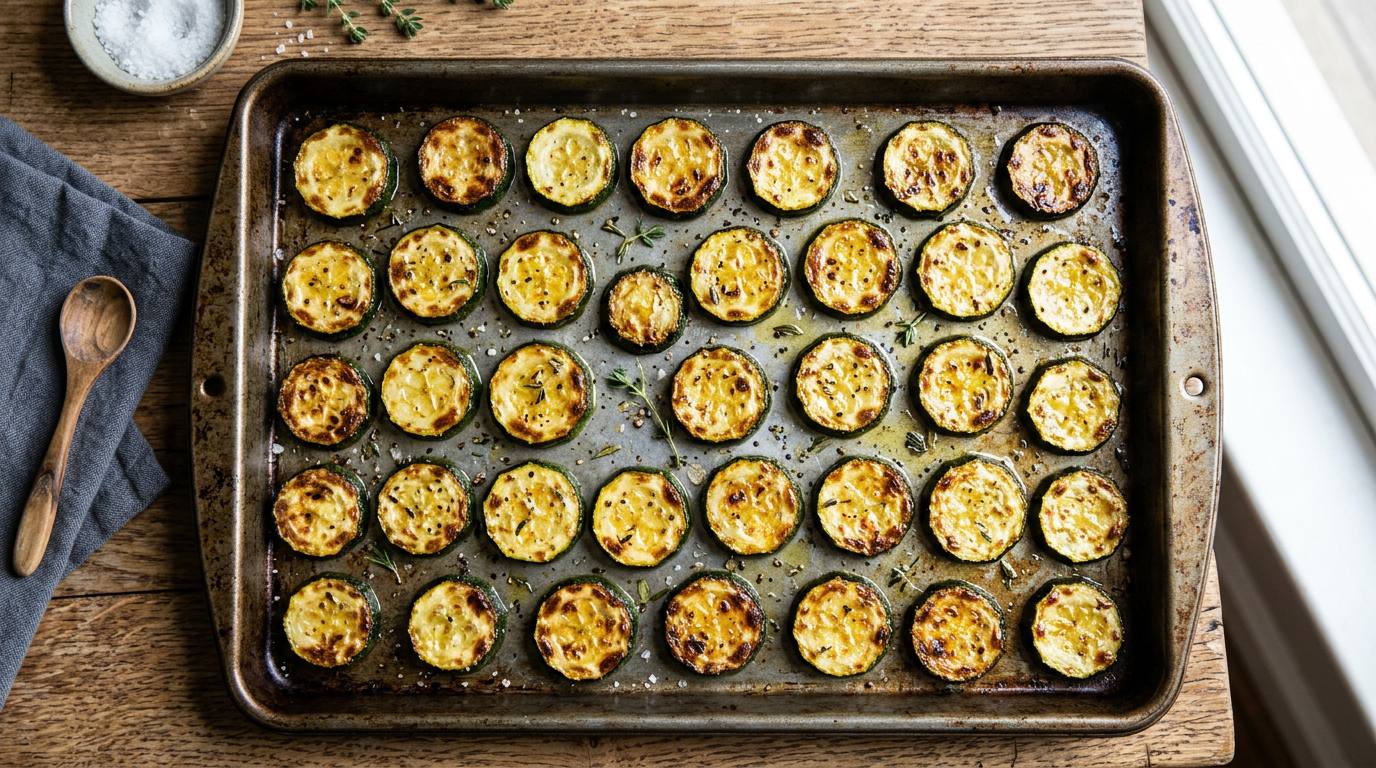
Zucchini gets a bad reputation because most of it arrives at the table pale and limp. That is a cooking problem, not a vegetable problem.
Summer squash is roughly 94 percent water, so every method comes down to the same question: does that water leave the pan or sit in it? High heat, a half inch cut, and space between the pieces get the water out and the sugars browning. A crowded lukewarm pan does the opposite.
It also earns its place on a plate nutritionally. USDA data puts 100 grams of raw zucchini at 17 calories with 261 mg of potassium and 17.9 mg of vitamin C, so a generous portion costs you almost nothing while adding real volume to a meal. The charts below cover each method, cut by cut, with fixes for the usual failures.
Cooking times by method
Times assume medium zucchini cut into half inch pieces. Thinner cuts and yellow summer squash behave the same way.
| Method | Prep | Heat | Time | Result |
|---|---|---|---|---|
| Roast (oven) | 1/2 inch coins or planks, oiled | 425°F | 18–22 minutes | Browned edges, sweet and concentrated |
| Sauté (skillet) | 1/4 inch coins or half moons | Medium high | 5–7 minutes | Fastest weeknight side, still has bite |
| Air fry | 1/2 inch coins, lightly oiled | 400°F | 10–12 minutes | Crisp outside, very little oil |
| Grill | Lengthwise planks, 1/2 inch thick | Medium direct | 6–8 minutes | Char marks and smoke, best in summer |
| Steam | Coins or spears | Simmering water below | 4–6 minutes | Soft and plain, good for babies and purees |
| Spiralize (zoodles) | Long noodle strands | Medium high, dry pan first | 2–3 minutes | Pasta swap, cook briefly so it stays firm |
The 6-step method
- 1.
Pick small, firm zucchini
Look for zucchini around six to eight inches long with glossy, taut skin and no soft spots. Small ones have fewer seeds, less water, and more flavor. The giant ones from a garden glut are watery and spongy, so save those for bread and fritters where you grate and squeeze them.
- 2.
Rinse and dry, do not peel
Rinse under cool running water and rub the skin with your hands, in line with FDA guidance for fresh produce, then dry well. The skin holds most of the color and fiber, so leave it on. Trim both ends and discard the stem end.
- 3.
Cut thick, not thin
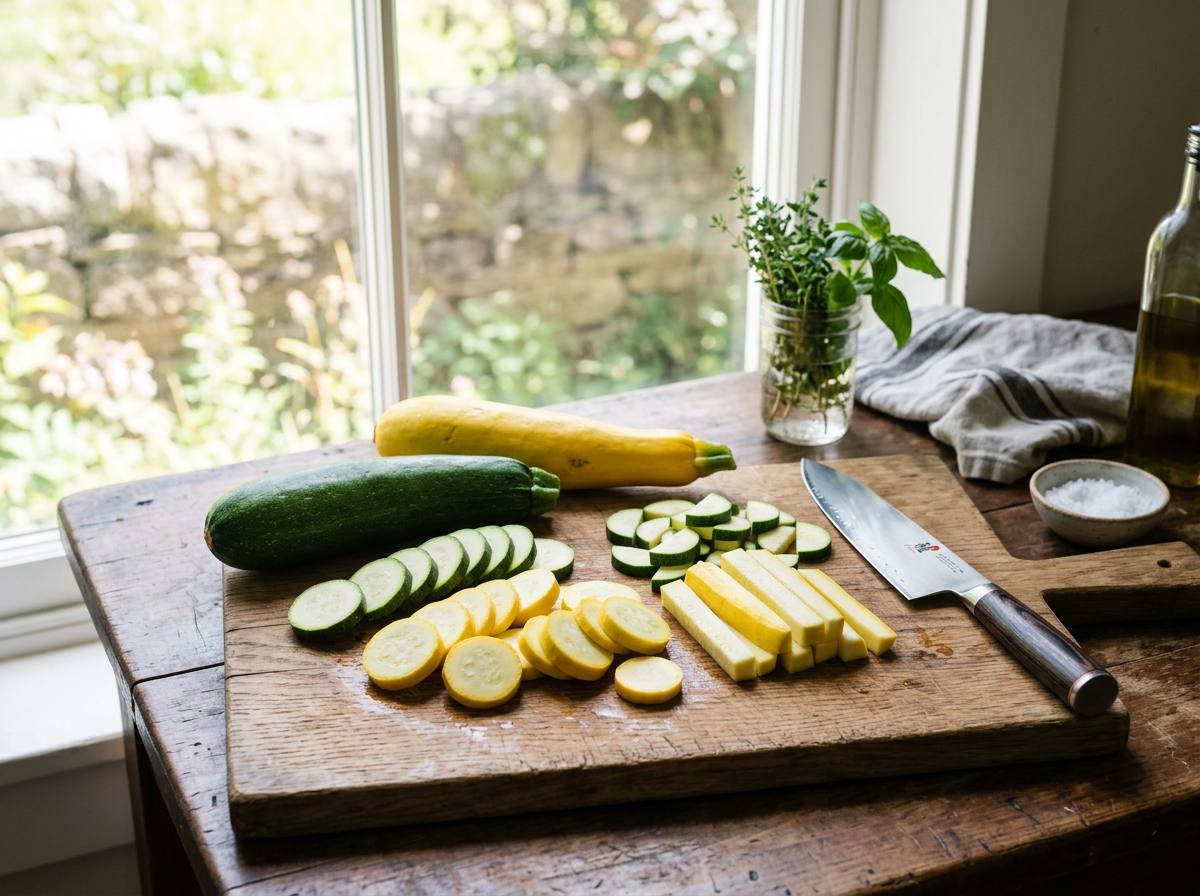
Half inch coins or planks hold their shape. Thin slices collapse into mush before the outside colors. For a skillet, half moons give you more flat surface to brown, and for the grill, long lengthwise planks stay put on the grates.
- 4.
Salt first only if you have time
Zucchini is about 94 percent water. Tossing the cut pieces with salt in a colander for 15 to 20 minutes pulls a surprising amount of liquid out, and patting them dry after gives you far better browning. Skip this step for the skillet and just keep the heat high instead.
- 5.
Use high heat and space
Spread the pieces in one layer on a hot sheet pan or a wide skillet with a tablespoon of olive oil. Crowding traps steam and steamed zucchini goes limp. Two pans is better than one packed pan every single time.
- 6.
Season at the end
Cook until the edges are golden and a knife slides in with slight resistance, then add salt, pepper, garlic, lemon zest, parmesan, or fresh basil. Acid and salt at the finish keep the pieces firm and make the flavor pop rather than washing it out.
Times by cut
| Cut | Roast at 425°F | Other method | Notes |
|---|---|---|---|
| 1/4 inch coins | 14–16 minutes | Sauté 5–6 minutes | Fast, softer, good in pasta and stir fries |
| 1/2 inch coins | 18–22 minutes | Air fry 10–12 minutes | The all purpose cut for roasting |
| Half moons | 16–20 minutes | Sauté 6–7 minutes | More flat surface, browns faster than coins |
| Lengthwise planks | 20–22 minutes | Grill 6–8 minutes | Best for grilling and layering in bakes |
| Halved and stuffed | 25–30 minutes | Scoop first, then fill | Roast cut side up so the filling sets |
| Spiralized noodles | Not suited | Sauté 2–3 minutes | Salt, drain, then a quick hot pan |
Four habits that improve every batch
- Preheat the sheet pan in the oven while it comes to temperature. The pieces start sizzling on contact instead of slowly weeping.
- Cut zucchini and yellow summer squash the same thickness if you cook them together. They behave almost identically.
- Grate the oversized zucchini, salt it, and wring it out in a towel for fritters, bread, or a pasta sauce base.
- A squeeze of lemon and a shower of parmesan at the end covers up the mild flavor that puts people off zucchini.
Fixing zucchini that went wrong
Soggy and limp
Oven too cool or pan too full. Roast at 425°F in a single layer with room between pieces.
Watery on the plate
Salt the cut pieces for 15 minutes, drain, and pat dry before cooking.
Browned but still raw inside
Cut too thick or heat too high in the skillet. Drop to medium and cover for a minute.
Falls apart
Sliced too thin or a very large zucchini. Use small squash and a half inch cut.
Bitter taste
Occasional in older or stressed squash. Taste a raw slice and discard if it is sharply bitter.
Bland
Under seasoned. Season after cooking with salt, lemon, garlic, parmesan, or chilli flakes.
Nutrition per 100 g raw
Values from USDA FoodData Central, squash, summer, zucchini, includes skin, raw (FDC ID 169291). Oil added during cooking changes the totals.
Calories
17 kcal
Protein
1.21 g
Total fat
0.32 g
Carbohydrate
3.11 g
Fiber
1 g
Potassium
261 mg
Vitamin C
17.9 mg
Vitamin K
4.3 mcg
Storing and freezing zucchini
Keep whole raw zucchini in the refrigerator crisper, unwashed and loose or in a vented bag, for four to five days. Sealed plastic traps condensation and the skin turns slippery. Cut pieces last two to three days in a covered container.
Zucchini freezes poorly in slices because the cells collapse and thaw into water. Grate it instead, squeeze out the liquid, and freeze it flat in measured portions for bread, fritters, and sauces for up to three months. Cooked zucchini keeps three to four days in the refrigerator.
What to serve with it
Roasted zucchini fits almost any summer plate. Serve it beside a seared steak, add it to a tray with roasted asparagus and browned mushrooms, or pile it over a pot of rice. It also works next to baked chicken thighs, and our weekly meal plans put the whole week together for you.
Zucchini FAQs
How long does zucchini take to cook?
Half inch coins roast in 18 to 22 minutes at 425°F, sauté in 5 to 7 minutes over medium high heat, air fry in 10 to 12 minutes at 400°F, and grill in 6 to 8 minutes. Spiralized zucchini needs only 2 to 3 minutes.
How do you cook zucchini so it is not soggy?
Cut it at least half an inch thick, salt it for 15 minutes and pat it dry, then cook it hot in a single layer. High heat and space let the surface water evaporate so the edges brown. A crowded pan traps steam and the pieces turn limp.
Should you peel zucchini before cooking?
No. The skin is thin, edible, and holds much of the color and fiber. Rinse it under running water and rub it clean, then trim both ends. Peeling only makes sense for very large squash with tough skin.
How do you cook zucchini in the oven?
Heat the oven to 425°F, toss half inch coins or planks with olive oil, salt, and pepper, and spread them on a sheet pan in one layer. Roast 18 to 22 minutes, flipping once, until the edges are golden and a knife slides in easily.
Can you cook zucchini and yellow squash together?
Yes. They have almost identical water content and cook at the same rate. Cut them to the same thickness and use one pan, adding any faster ingredients such as garlic or tomatoes near the end.
How do you store cooked zucchini?
Refrigerate it in a covered container and use it within three to four days. Reheat in a hot skillet or the air fryer to firm it up again rather than the microwave. Raw whole zucchini keeps four to five days in the refrigerator crisper.
Sources and further reading
Keep cooking
Pair a tray of zucchini with any of these guides and recipe collections.