Cooking Guide
How to Cook Cauliflower
Six methods with real times, from a five minute skillet of riced florets to deeply golden roasted wedges, plus the cutting and oiling habits that decide whether it browns or steams.
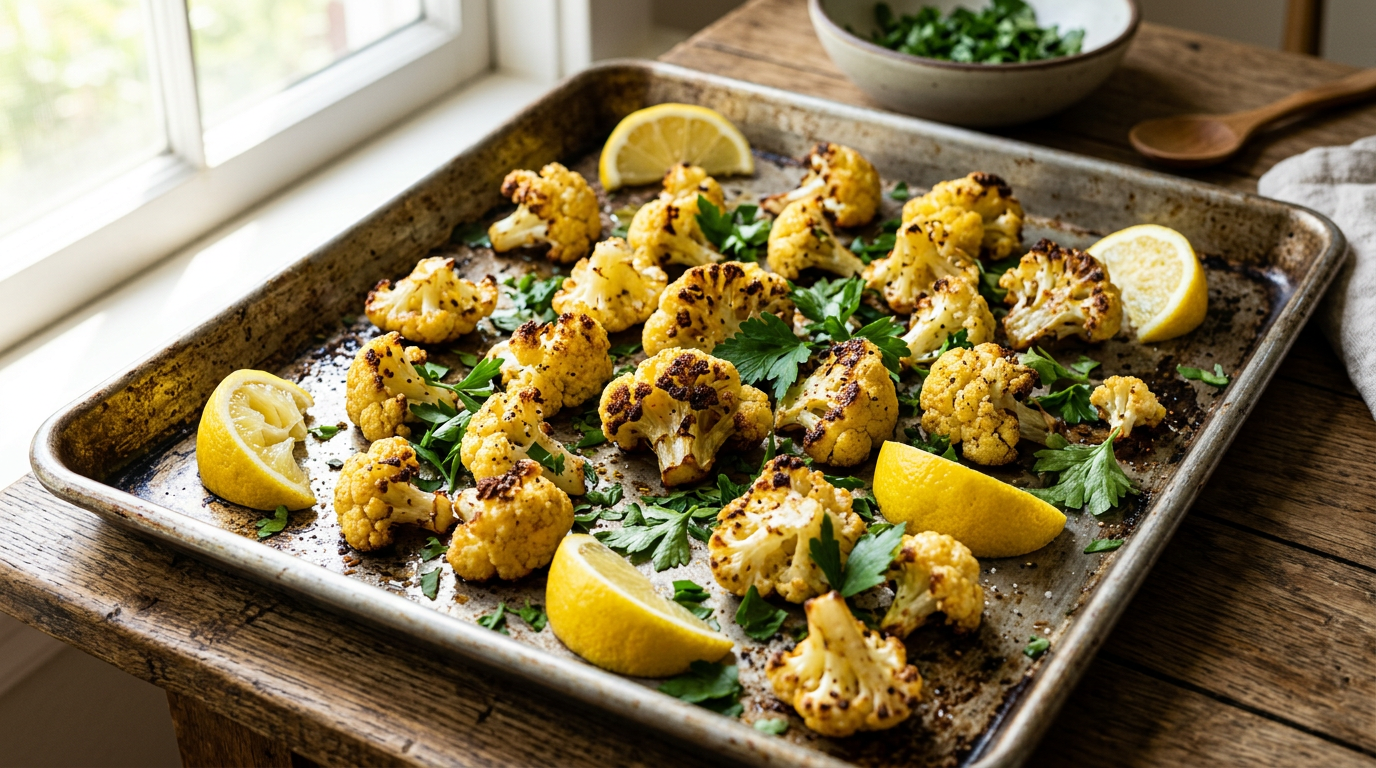
Cauliflower has two completely different personalities. Cooked in water for too long it turns grey, sulfurous, and the reason people say they dislike it. Cooked hot and dry it browns into something nutty and sweet that disappears off the pan before dinner starts.
The head is roughly 92 percent water according to USDA data, so every method comes down to whether that water escapes or pools. Flat cut faces, enough oil, real heat, and space between the pieces get it out. A crowded pan and a lukewarm oven keep it in.
It is also one of the cheapest ways to add volume to a plate. USDA lists 100 grams of raw cauliflower at 25 calories with 2 grams of fiber and 299 mg of potassium, which is why it works as a side, a rice swap, a mash, and a main course steak. The charts below give times for each method and each cut, along with fixes for the usual failures.
Cooking times by method
Times assume a medium head cut into one and a half inch florets. Romanesco and orange or purple varieties behave the same way.
| Method | Prep | Heat | Time | Result |
|---|---|---|---|---|
| Roast (oven) | Bite size florets, flat sides down, oiled | 425°F | 22–28 minutes | Deep browning, nutty and sweet |
| Air fry | Small florets, lightly oiled | 400°F | 12–15 minutes | Crisp edges, tender centers, little oil |
| Sauté (skillet) | Thin florets or riced | Medium high | 6–9 minutes | Quick weeknight side with browned spots |
| Steam | Even florets over simmering water | Covered, gentle simmer | 5–7 minutes | Soft and plain, best for mash and purees |
| Boil | Florets in well salted water | Rolling boil | 4–6 minutes | Fast and tender, drain very well |
| Grill (steaks) | 1 inch slabs cut through the core | Medium direct | 5–7 minutes per side | Smoky char, holds together as a main |
The 6-step method
- 1.
Choose a heavy, tight head
Pick a head that feels heavy for its size with creamy white curds packed tightly together. Loose, grainy curds and brown speckles mean it has been sitting too long. Green leaves that still look fresh are the best sign of a recently harvested head.
- 2.
Rinse and dry thoroughly
Rinse the head under cool running water and rub the surface with your hands, in line with FDA guidance for fresh produce, then shake and pat it dry. Water trapped between the curds turns to steam in the oven. Dry cauliflower browns, wet cauliflower goes pale.
- 3.
Cut florets with flat faces
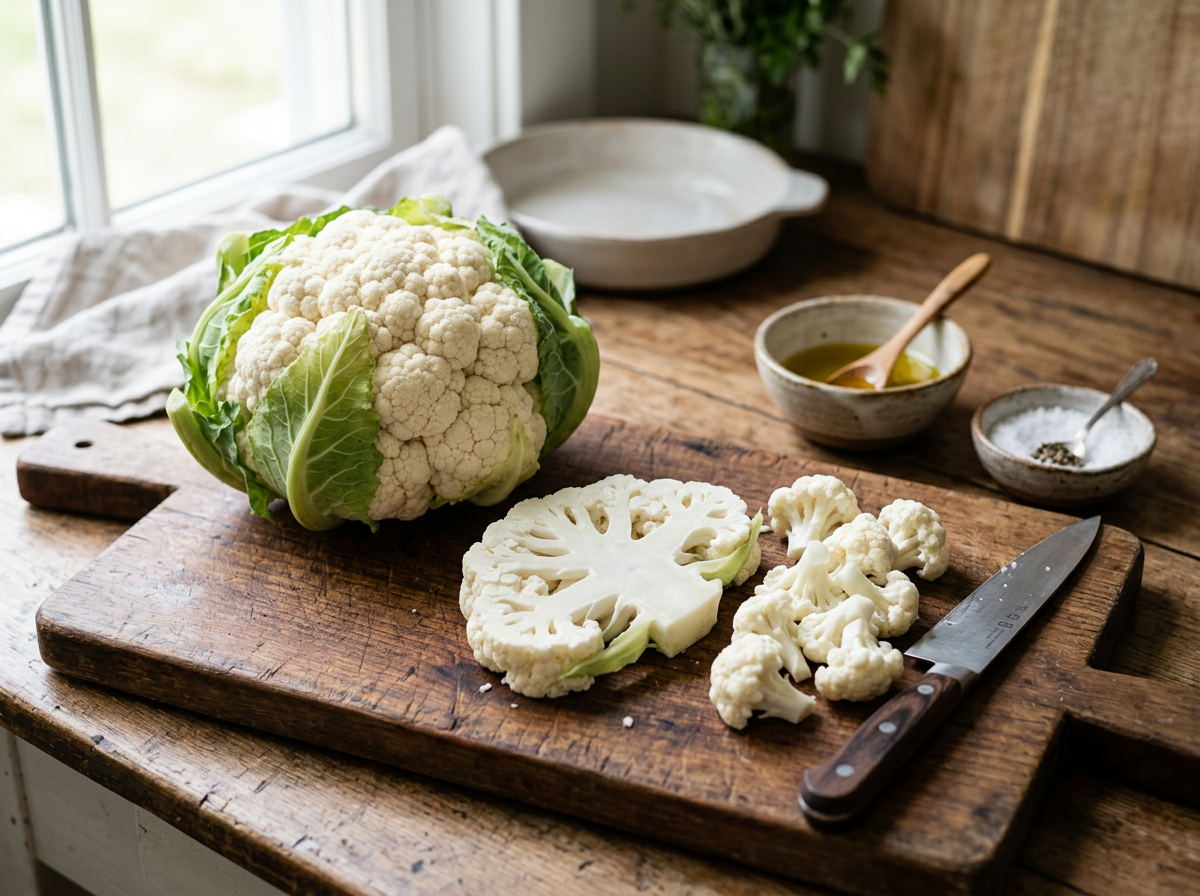
Quarter the head through the core, then slice each quarter so every floret has one broad flat side. That flat face is where all the browning happens. Keep pieces roughly the same size, about one and a half inches, so nothing burns while other pieces stay raw. The stem and core are edible, so trim and slice them too.
- 4.
Oil generously and season
Toss the florets in a bowl with two to three tablespoons of olive oil, salt, and pepper until every surface is coated. Cauliflower is porous and drinks up oil, and skimping is the most common reason it comes out dry and chalky rather than golden.
- 5.
Roast hot on a preheated pan, cut side down
Heat the oven to 425°F with the sheet pan inside. Lay the florets flat side down in a single layer with space between them. Leave them alone for the first 15 minutes so a proper crust forms, then flip once.
- 6.
Finish with acid and something salty
Pull the pan when the edges are deeply browned and a knife slides into the stem with no resistance. Finish with lemon juice, then any of grated parmesan, toasted almonds, capers, tahini, or a sprinkle of smoked paprika. Cauliflower is mild, so the finish is where the flavor lands.
Times by cut
| Cut | Roast at 425°F | Other method | Notes |
|---|---|---|---|
| Small florets (1 inch) | 20–24 minutes | Air fry 12–14 minutes | Most surface area, browns fastest |
| Medium florets (1.5 inch) | 22–28 minutes | Steam 5–7 minutes | The all purpose cut for roasting |
| Large florets (2 inch) | 28–32 minutes | Boil 6 minutes first | Par cook or they stay firm in the center |
| 1 inch steaks | 25–30 minutes | Grill 5–7 minutes per side | Cut through the core so slices hold |
| Riced | Not suited | Sauté 5–7 minutes | Dry pan first, then oil, to avoid mush |
| Whole head | 60–75 minutes at 400°F | Steam 15 minutes first | Par steam, then roast for a centerpiece |
Four habits that improve every batch
- Preheat the sheet pan. Florets that hit hot metal start browning immediately instead of slowly releasing water.
- Use one pan per head. Crowding is the difference between roasted cauliflower and steamed cauliflower.
- Save the leaves. Toss them in oil and roast alongside the florets for crisp, chip like edges.
- Cook riced cauliflower in a dry hot pan for two minutes before adding oil so the moisture cooks off first.
Fixing cauliflower that went wrong
Pale and soft
Oven too cool or pan overloaded. Roast at 425°F in a single layer with space between florets.
Dry and chalky
Not enough oil. Use two to three tablespoons per head and toss until every surface glistens.
Burnt outside, raw inside
Florets cut too large. Trim to about one and a half inches, or par boil big pieces for four minutes first.
Strong sulfur smell
Overcooked in water. Boil no longer than six minutes, or switch to roasting and air frying.
Watery riced cauliflower
Dry the pan out first, cook in batches, and season only after the moisture is gone.
Bland
Under seasoned and under finished. Salt before cooking, then add lemon, parmesan, or toasted nuts at the end.
Nutrition per 100 g raw
Values from USDA FoodData Central, cauliflower, raw (FDC ID 169986). Oil added during cooking changes the totals.
Calories
25 kcal
Protein
1.92 g
Total fat
0.28 g
Carbohydrate
4.97 g
Fiber
2 g
Total sugars
1.91 g
Potassium
299 mg
Water
92.1 g
Storing and freezing cauliflower
Keep a whole raw head in the refrigerator crisper, unwashed, stem side up so condensation does not settle in the curds. It holds up to a week that way. Cut florets last three to four days in a covered container.
For the freezer, blanch florets in boiling water for three minutes, chill them in ice water, drain completely, then freeze them flat before bagging. Frozen florets go soft when thawed, so roast or air fry them straight from frozen at 425°F. Cooked cauliflower keeps three to four days in the refrigerator.
What to serve with it
Roasted cauliflower fits almost any plate. Serve it beside a seared steak, add it to a tray with roasted broccoli and browned mushrooms, or spoon it over a bowl of quinoa. It also works next to baked chicken thighs, and our weekly meal plans build the rest of the week around sides like this one.
Cauliflower FAQs
How long does cauliflower take to cook?
Medium florets roast in 22 to 28 minutes at 425°F, air fry in 12 to 15 minutes at 400°F, steam in 5 to 7 minutes, and boil in 4 to 6 minutes. One inch cauliflower steaks need 5 to 7 minutes per side on a medium grill.
How do you cook cauliflower so it browns instead of steaming?
Dry the florets well, cut a flat face on each one, coat them generously in oil, and roast at 425°F on a preheated pan in a single layer. Leave them undisturbed for the first 15 minutes so a crust can form before you flip.
Should you boil cauliflower before roasting it?
Only for very large florets or a whole head. Four to six minutes in salted water, then a thorough drain and dry, gets the center tender so the oven can focus on browning. Standard bite size florets do not need it.
Can you eat the cauliflower stem and leaves?
Yes. The core and stem are edible and taste like the florets once trimmed and sliced. The leaves roast into crisp, slightly bitter chips, so toss them with oil and add them to the same pan.
Why does cauliflower smell strong when cooked?
Long cooking in water releases sulfur compounds. Keep boiling under six minutes, or use dry heat methods such as roasting and air frying, which brown the sugars instead and give a nutty flavor.
How do you store cooked cauliflower?
Refrigerate it in a covered container and use it within three to four days. Reheat in a hot oven or air fryer to bring the edges back rather than the microwave. A whole raw head keeps up to a week in the crisper.
Sources and further reading
Keep cooking
Pair a tray of cauliflower with any of these guides and recipe collections.