Cooking Guide
How to Grill Chicken Thighs
Grilling times for bone-in and boneless thighs, the two zone fire that stops them burning, and the temperature to cook to for juicy meat with crisp skin.
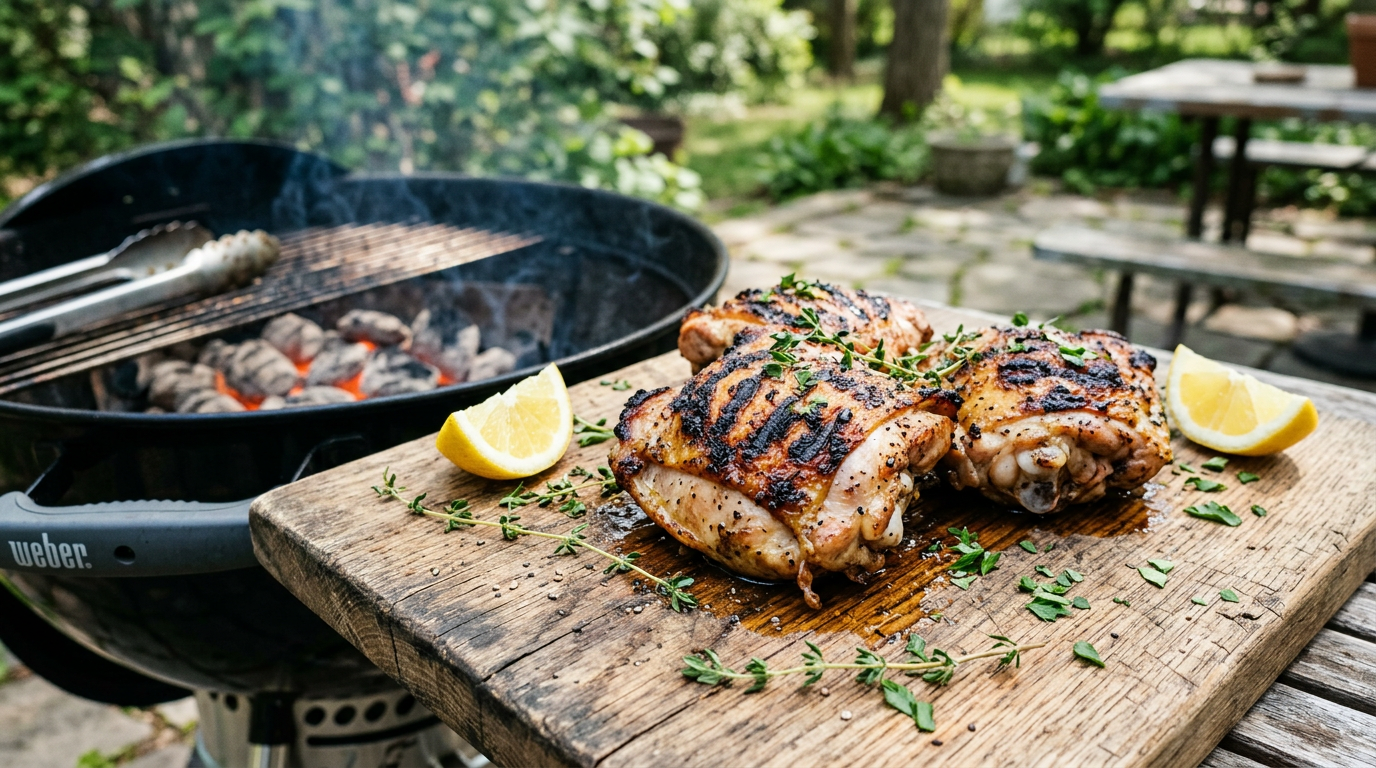
Chicken thighs are the easiest piece of chicken to grill well. They carry more fat and connective tissue than breast meat, so they stay juicy even if the fire runs a little hot or you leave them on a minute longer than planned. That forgiveness is why they are worth reaching for when friends are standing around the grill.
The one thing that trips people up is heat management. Fat renders out of the skin, drips onto the coals, and the resulting flames char the outside while the middle is still cool. Splitting the grill into a hot side and a cooler side solves that in one move, and it works on charcoal and gas alike.
Below are grilling times by cut, a seven step method for bone-in thighs, a troubleshooting table for the usual failures, and the safety numbers worth memorising. Cook to 165°F, rest for five minutes, and thighs off the grill beat almost anything you can do with chicken indoors.
Grilling times by cut
Times assume a medium fire of roughly 350°F to 400°F in the grill and average supermarket thighs. Every cut finishes at the same 165°F internal temperature.
| Cut or setup | Heat | Time | Best for |
|---|---|---|---|
| Bone-in, skin-on | Two zone, medium indirect then direct sear | 25 to 35 minutes | The juiciest result and crisp skin |
| Boneless, skin-on | Medium direct, skin side first | 12 to 16 minutes | Crisp skin without the long cook |
| Boneless, skinless | Medium-high direct | 8 to 12 minutes | Fast weeknight grilling and salads |
| Thigh skewers, 1-inch pieces | Medium-high direct | 8 to 10 minutes | Kebabs, rice bowls, and feeding a crowd |
| Gas grill, lid down | One burner off for the safe zone | Same as above by cut | Steady heat with less flare-up risk |
Large bone-in thighs can run past 35 minutes, and thin boneless pieces can be done in under 10, so treat these as starting points and check the temperature.
The 7-step method for bone-in thighs
This is the version to learn. Boneless thighs follow the same order on a shorter clock.
- 1.
Trim and dry the thighs
Pull off loose flaps of fat that drip and cause flare-ups, but leave the skin intact if it is on. Pat every surface dry with paper towel. Dry skin browns and crisps, while wet skin steams and stays flabby.
- 2.
Season or marinate ahead
Salt and pepper alone work well, and 30 minutes to a few hours in the fridge lets the salt reach past the surface. If you marinate, keep the sugar low or save sweet sauces for the last few minutes, since sugar burns fast over live fire.
- 3.
Build two heat zones
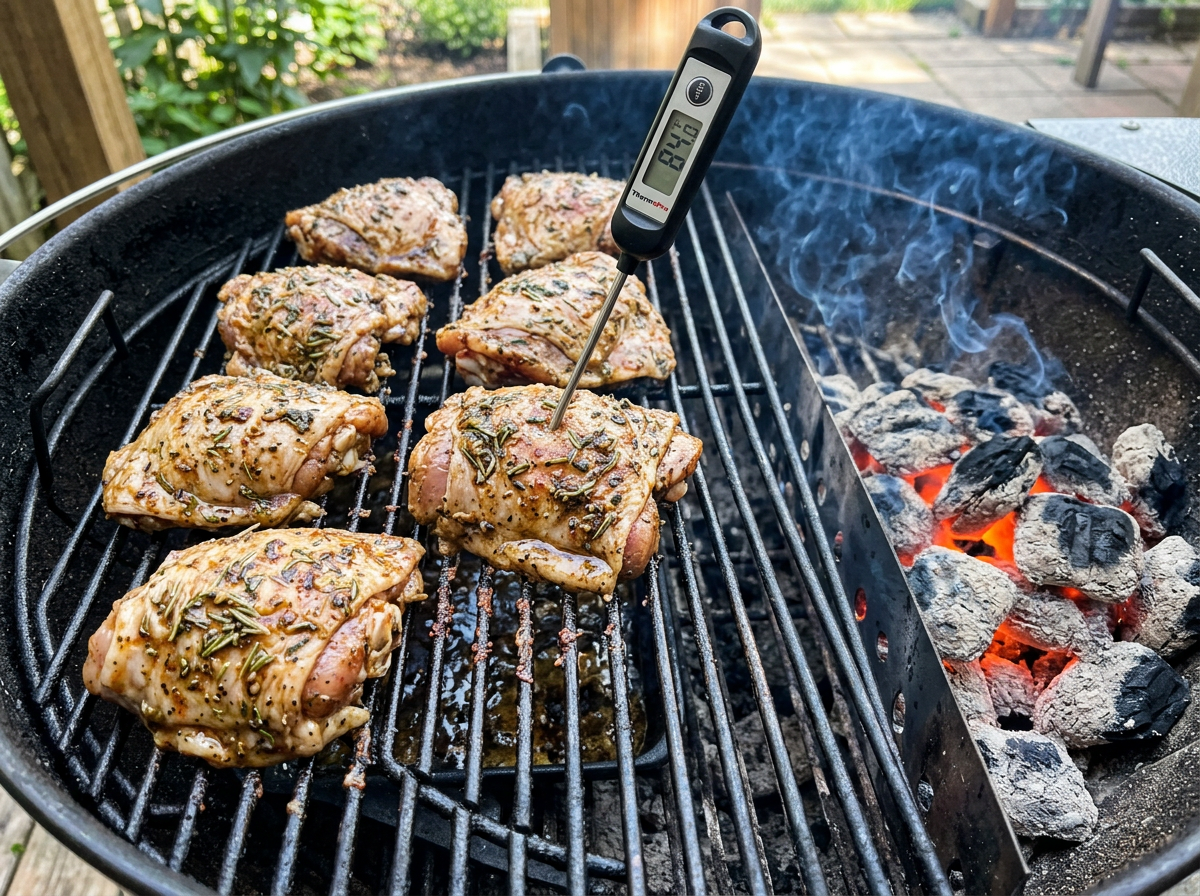
Bank the coals to one side of a charcoal grill, or turn off one or two burners on a gas grill. You now have a hot side for colour and a cooler side where thighs can finish without burning. This one setup change fixes most grilled chicken problems.
- 4.
Start skin side down on the cooler side
Lay bone-in thighs skin side down over the cooler zone with the lid closed. The fat renders slowly and the skin tightens without scorching. Boneless skinless thighs can go straight over medium-high heat instead.
- 5.
Flip once, then move to direct heat
Turn the thighs after roughly 15 minutes for bone-in pieces, or halfway through for boneless. Once the meat is nearly done, move them over the hot zone skin side down for two to four minutes to crisp and mark.
- 6.
Check 165°F away from the bone
USDA guidance is to cook all poultry, thighs included, to an internal temperature of 165°F (74°C). Slide an instant-read thermometer into the thickest part without touching the bone, since bone reads hotter than the meat around it.
- 7.
Glaze late, then rest five minutes
Brush on barbecue sauce or a honey glaze only in the last two or three minutes so it sets rather than blackens. Rest the thighs five minutes on a board before serving so the juices settle back into the meat.
Leaner cuts need the opposite approach, with less time and more attention. The chicken breast guide covers how to keep white meat from drying out.
Five habits for better grilled chicken
- Thighs are forgiving. Their extra fat and connective tissue mean a few minutes past 165°F tastes better than the same overshoot on breast meat.
- Keep a clear patch of grate with no coals under it. Any flare-up becomes harmless once you can slide the chicken out of the flames.
- Grill with the lid down between flips so the chicken cooks with surrounding heat instead of only from below.
- Use separate plates and tongs for raw and cooked chicken, which USDA FSIS calls out as a common outdoor cooking mistake.
- Bring the thighs out of the fridge about 15 minutes ahead so the centre is not ice cold when the skin is already browning.
Fixing thighs that went wrong
Match the symptom to the cause and the next round comes off the grill right.
Burnt outside, raw inside
Everything sat over direct heat. Start on the cooler zone with the lid down and finish over the flames.
Constant flare-ups
Untrimmed fat dripping on coals. Trim loose fat and keep an empty zone to move thighs to.
Rubbery, flabby skin
The skin was wet or the heat too low. Dry it well and give it a final direct-heat sear.
Sauce turned black
Sugary glaze went on too early. Brush it on only in the last two to three minutes.
Sticking to the grate
Dirty or cold grates. Preheat, scrape clean, and oil the grate before the chicken goes on.
Bland after grilling
Salt only landed seconds before cooking. Season at least 30 minutes ahead, ideally in the fridge.
What to serve with grilled thighs
Thighs are rich, so the sides that work best are bright, charred, or both.
- Piled onto rice with grilled lemon and herby yogurt
- Sliced into tortillas with charred onion and salsa
- Over a chopped salad with feta and cucumber
- With grilled corn and a slaw for a summer plate
- Shredded into wraps and grain bowls for lunches
- Cut off the bone into pasta with garlic and greens
While the grill is hot, add a tray of grilled vegetables or a few ears of grilled corn. For something to spoon the juices over, the rice guide has the ratios, and our high protein meal plans lean on batch grilled chicken all week.
Storing, freezing, and reheating
Raw chicken keeps one to two days in a refrigerator at 40°F (4°C) or below, or indefinitely at 0°F (-18°C) in the freezer, according to the FoodSafety.gov cold storage chart. Cooked chicken should be refrigerated promptly in shallow covered containers and eaten within three to four days, reheated to 165°F. USDA FSIS also warns against leaving grilled food out in the heat, so get leftovers into the fridge rather than letting them sit on the table. Pull the meat off the bone before chilling and it slots straight into fast lunches.
Grilled Chicken Thigh FAQs
How long do you grill chicken thighs?
Bone-in, skin-on thighs take about 25 to 35 minutes with a two zone setup, boneless skin-on run 12 to 16 minutes, and boneless skinless thighs are done in 8 to 12 minutes over medium-high heat. Confirm with a thermometer rather than the clock, since size varies a lot.
What temperature should grilled chicken thighs reach?
USDA guidance is 165°F (74°C) for all poultry, measured in the thickest part away from the bone. Thighs stay juicy a little past that number because of their higher fat and connective tissue, so there is no need to panic if they read 170°F.
Do you grill chicken thighs skin side down first?
Yes, start skin side down over the cooler zone so the fat renders and the skin tightens gently. Finish skin side down over direct heat for the last two to four minutes to crisp it up.
Should the grill lid be open or closed for chicken thighs?
Keep it closed for most of the cook so heat surrounds the meat and the inside comes up evenly. Open it for the short direct-heat sear at the end, where you need to watch for flare-ups.
How do you stop grilled chicken thighs from burning?
Trim loose fat, cook over indirect heat for the bulk of the time, and keep an empty patch of grate to move thighs onto when flames rise. Add sweet sauces only in the final few minutes.
How long does grilled chicken keep in the fridge?
Refrigerate it promptly in shallow covered containers at 40°F (4°C) or below and eat it within three to four days, reheating to 165°F. Raw chicken should be used within one to two days of purchase or frozen at 0°F (-18°C).
Sources and further reading
Keep cooking
More guides and collections to build the rest of the meal around.