Cooking Guide
Broasted Chicken with a Spicy Syrup Injection
What broasting actually is, how to get close to it in a home kitchen, and how a thin spiced honey syrup injected into the meat fixes the usual complaint that only the crust tastes of anything.
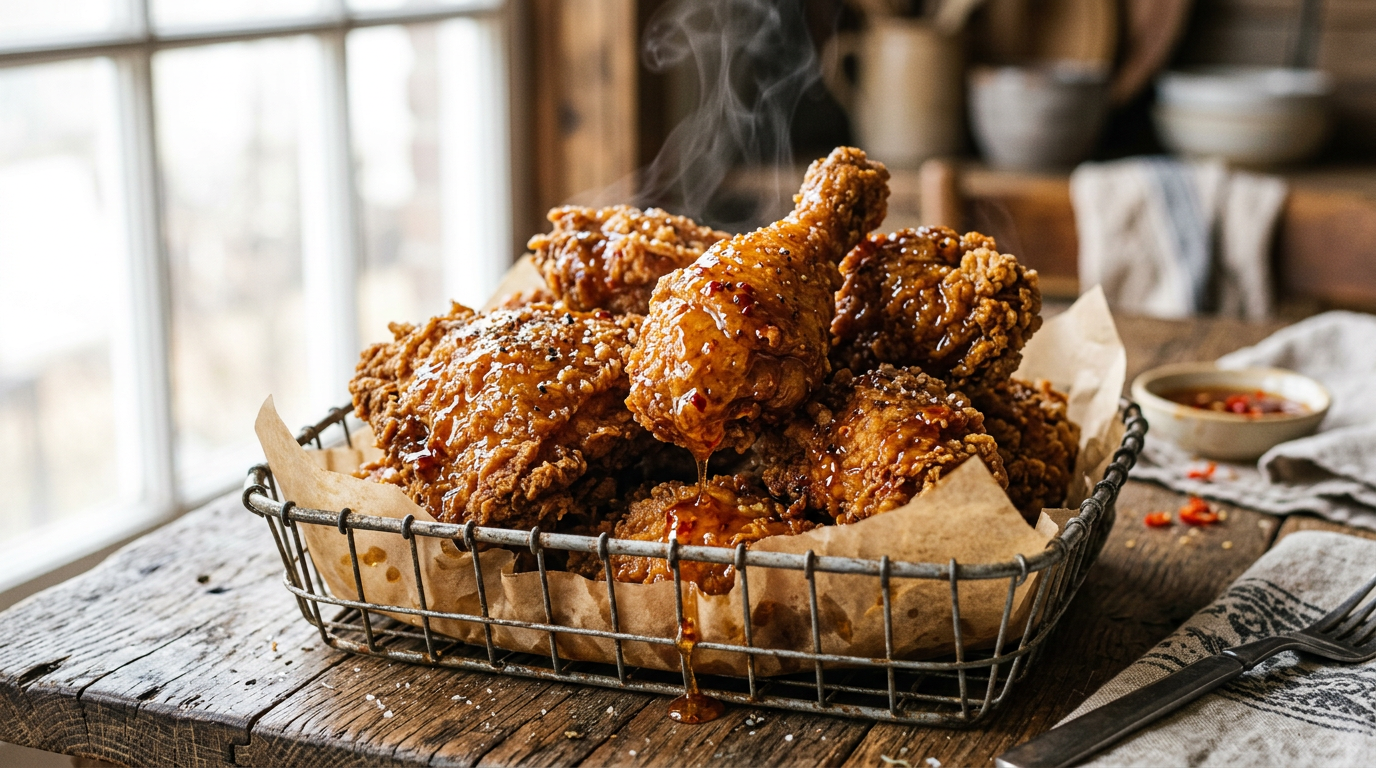
Broasting is not a marketing word for extra crispy frying. L.A.M. Phelan patented the first commercial pressure fryer in 1954 and founded the Broaster Company, which still holds the trademarks on broaster and broasted food. Only their licensed program can sell Genuine Broaster Chicken, which is why every other restaurant calls the same idea pressure-fried.
The method matters more than the name. Battered chicken cooked in oil under pressure sets a crust quickly while steam drives the heat inward, so bone-in pieces finish faster and hold on to more of their juice. That is the texture people chase when they order a broast plate.
The one thing pressure frying does not solve is flavour depth. A brine and a spiced dredge season the outside, and the middle of a thick thigh stays plain. Injecting a thin, strained honey and chilli syrup into the muscle carries salt, sweetness and heat all the way in, and it takes about four minutes of work. The steps, the ratios and the safety limits are below.
Recipe at a glance
| Prep time | 25 minutes, plus 4 hours brining |
|---|---|
| Cook time | 12 to 15 minutes per batch |
| Total time | About 5 hours, mostly unattended |
| Servings | 4 to 6 |
| Difficulty | Intermediate |
| Cuisine | American, with South Asian spicing |
| Course | Main |
Nutrition figures are not listed here because frying absorption varies too much between oils, batches and cuts to state honestly.
Ingredients
Chicken, brine and coating
- 1.4 kg (3 lb) bone-in chicken pieces, thighs and drumsticks
- 1 litre (4 cups) cold water with 3 tbsp fine salt, for the brine
- 250 ml (1 cup) buttermilk
- 1 egg
- 250 g (2 cups) plain flour
- 3 tbsp cornflour (cornstarch)
- 2 tsp black pepper, 2 tsp paprika, 1 tsp garlic powder, 1 tsp onion powder
- Neutral frying oil with a high smoke point
Spicy injection syrup
- 80 ml (1/3 cup) honey
- 60 ml (1/4 cup) chicken stock or water
- 2 tsp Kashmiri chilli powder or mild paprika
- 1 tsp cayenne, adjusted to taste
- 1 tsp garlic powder
- 1 tsp fine salt
- 1 tbsp rice vinegar or lemon juice
Step-by-step method
Work in this order. The brine, the injection and the rest all happen before any oil gets hot.
- 1.
Brine the pieces first
Dissolve the salt in cold water and submerge the chicken for two to four hours in the refrigerator. Brining seasons the meat past the surface and keeps bone-in pieces juicy through frying. Drain and pat every piece completely dry before anything else touches it.
- 2.
Cook the spicy syrup
Warm the honey, stock, chilli powder, cayenne, garlic powder and salt in a small pan for two to three minutes until it turns glossy and thin enough to pour. Stir in the vinegar off the heat. Let it cool to room temperature, because warm syrup starts cooking the meat you are about to inject.
- 3.
Strain, then load the injector
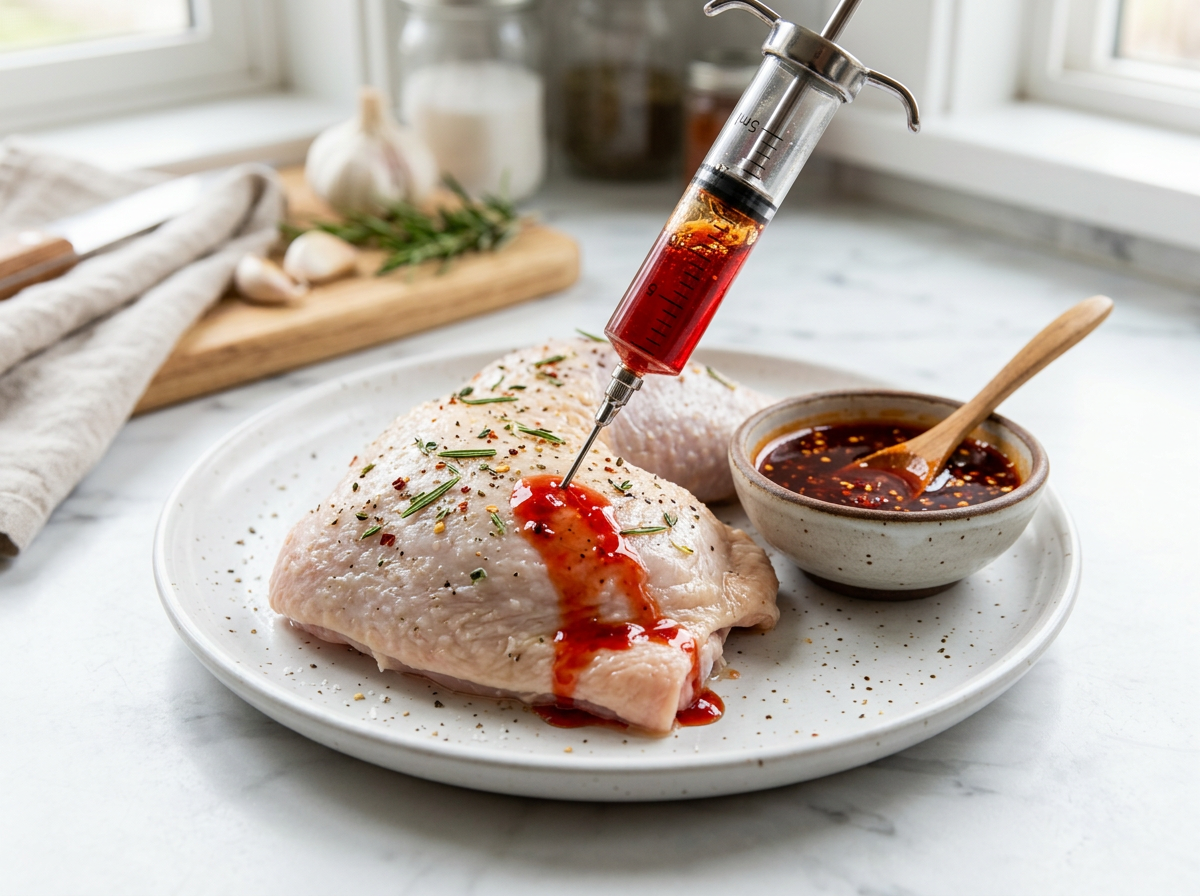
Pour the cooled syrup through a fine sieve so no flake of spice can block the needle. Fill a marinade injector and clear the air from the barrel. A blocked needle is the single most common frustration with injecting, and straining removes it.
- 4.
Inject in a grid, not one deep shot
Slide the needle deep into the thickest part of each piece, then push the plunger slowly while drawing the needle back out. Repeat in two or three spots per thigh and two per drumstick, about 1 tsp of syrup at each point. Small amounts spread through the muscle instead of pooling in one pocket that bursts in the oil.
- 5.
Rest the injected chicken
Cover the pieces and refrigerate 30 to 60 minutes so the syrup settles and the surface dries again. Blot away any liquid that beads on the skin. Wash the injector in hot soapy water straight away, and keep the raw chicken board and utensils separate from anything ready to eat.
- 6.
Dredge in buttermilk, then seasoned flour
Whisk the buttermilk with the egg. Combine the flour, cornflour and dry spices, then splash two tablespoons of the buttermilk mix into the flour and rub it in so it turns shaggy. Dip each piece in buttermilk, press it firmly into the flour, and leave it on a rack for ten minutes so the coating hydrates and grips.
- 7.
Pressure fry, or fry then finish covered
With a countertop pressure fryer rated for oil, follow the manufacturer instructions exactly. Without one, heat 4 cm of oil to 165°C (330°F), fry in batches for 12 to 15 minutes turning once, then move the pieces to a covered pan off the heat for three minutes so the trapped steam finishes them. Never lock a standard pressure cooker over hot oil.
- 8.
Check 74°C (165°F) and rest
USDA guidance is to cook all poultry to an internal temperature of 165°F (74°C), measured in the thickest part away from the bone. Drain the pieces on a rack rather than paper so the crust stays crisp, brush with a little reserved syrup, and rest five minutes before serving.
The 165°F target is the same one used for every cut of poultry. If you want the leaner version of the same rule, the chicken breast guide covers stovetop and oven timings.
Six rules for injecting syrup
Strain the syrup
Any solid spice flake blocks the needle. A fine sieve takes ten seconds and saves the whole batch.
Keep it thin
Syrup thicker than pouring cream will not pass through the needle. Loosen it with a spoon of stock.
Cool before injecting
Hot syrup partly cooks the meat around it and leaves a grey ring under the skin.
Go slow on the plunger
Fast pressure splits muscle fibres and the syrup runs straight back out of the hole.
Spread the points
Two or three shallow grid points beat one deep pocket that spits in hot oil.
Dry the surface
Wet skin steams instead of crisping. Blot every piece after its rest in the fridge.
Variations
- Swap honey for maple syrup and add a teaspoon of smoked paprika for a smokier finish.
- Add a tablespoon of gochujang to the syrup for a Korean style heat that clings well.
- Use lemon juice and black pepper in place of cayenne for a milder, brighter version for children.
- Stir a teaspoon of garam masala into the flour dredge for a desi broast flavour.
- Keep the syrup unspiced and serve chilli oil alongside so everyone sets their own heat level.
Serve it with plain rice from the rice guide and a tray of grilled vegetables to balance the richness, or pull leftovers into fast lunches the next day.
Fixing a batch that went wrong
Syrup leaked out
The needle came out too fast or the injection point was too shallow. Withdraw slowly while pressing the plunger.
Coating slid off
The surface was wet when it was dredged, or the pieces went into the oil immediately. Blot dry and rest the dredged pieces ten minutes.
Dark crust, raw centre
The oil ran too hot. Hold 165°C (330°F) and check with a thermometer rather than the colour.
Greasy crust
The oil dropped below temperature because the pan was crowded. Fry in smaller batches and let the oil recover between them.
Sweet but not spicy
Honey mutes heat. Increase the cayenne and add the vinegar, which sharpens the spice on the palate.
Blocked injector
Unstrained syrup, or spice powder that settled while you worked. Sieve it and stir the syrup between pieces.
Storing, freezing, and reheating
Raw chicken keeps one to two days in a refrigerator at 40°F or below, and freezes at 0°F. USDA FSIS advises thawing only in the refrigerator, in cold water changed every 30 minutes, or in the microwave, never on the counter. Refrigerate cooked pieces promptly in shallow covered containers and eat them within three to four days, reheating to 165°F. Freeze cooked broasted chicken up to three months, then reheat from frozen uncovered at 190°C (375°F) for 20 to 25 minutes so the crust recovers instead of going soft.
Broasted Chicken FAQs
What is broasted chicken?
Broasted chicken is marinated chicken that is battered and then fried under pressure, which cooks it faster and keeps more moisture in the meat than open frying. The process was invented by L.A.M. Phelan in 1954, and Broaster and Broasted are trademarks of the Broaster Company, so only their licensed program can be sold as Genuine Broaster Chicken.
Can I make broasted chicken at home?
You can make a very close pressure-fried style at home with a countertop pressure fryer rated for oil, or approximate it by frying in a deep pan and finishing the pieces in a covered pan off the heat. Do not lock a standard pressure cooker over hot oil, because domestic pressure cookers are not designed for frying.
Why inject spicy syrup into the chicken?
A brine and a batter only season the outer layer. Injecting a thin spiced syrup carries sweetness, salt and heat into the middle of a bone-in thigh, so the flavour is there in the first bite rather than only on the crust.
What temperature should broasted chicken reach?
Cook it to an internal temperature of 165°F (74°C) in the thickest part, away from the bone, following USDA poultry guidance. Sugar in the syrup browns the crust early, so judge doneness with a thermometer rather than colour.
How is broasted chicken different from fried chicken?
Both are battered and cooked in oil, but broasting fries under pressure so the surrounding steam cooks the meat quickly while the crust sets. Open frying takes longer at the same oil temperature and loses more moisture from the meat.
How do I store and reheat it?
Refrigerate the pieces promptly in a shallow covered container at 40°F or below and use them within three to four days, reheating to 165°F. Reheat uncovered at 190°C (375°F) for eight to ten minutes so the crust crisps again, and freeze cooked pieces at 0°F for up to three months.
Sources and further reading
Keep cooking
More guides and collections built around the same techniques.