Cooking Guide
How to Grill Salmon
Grilling times for fillets, planks, foil, and skewers, the temperature to cook to, and the simple grate routine that stops salmon sticking.
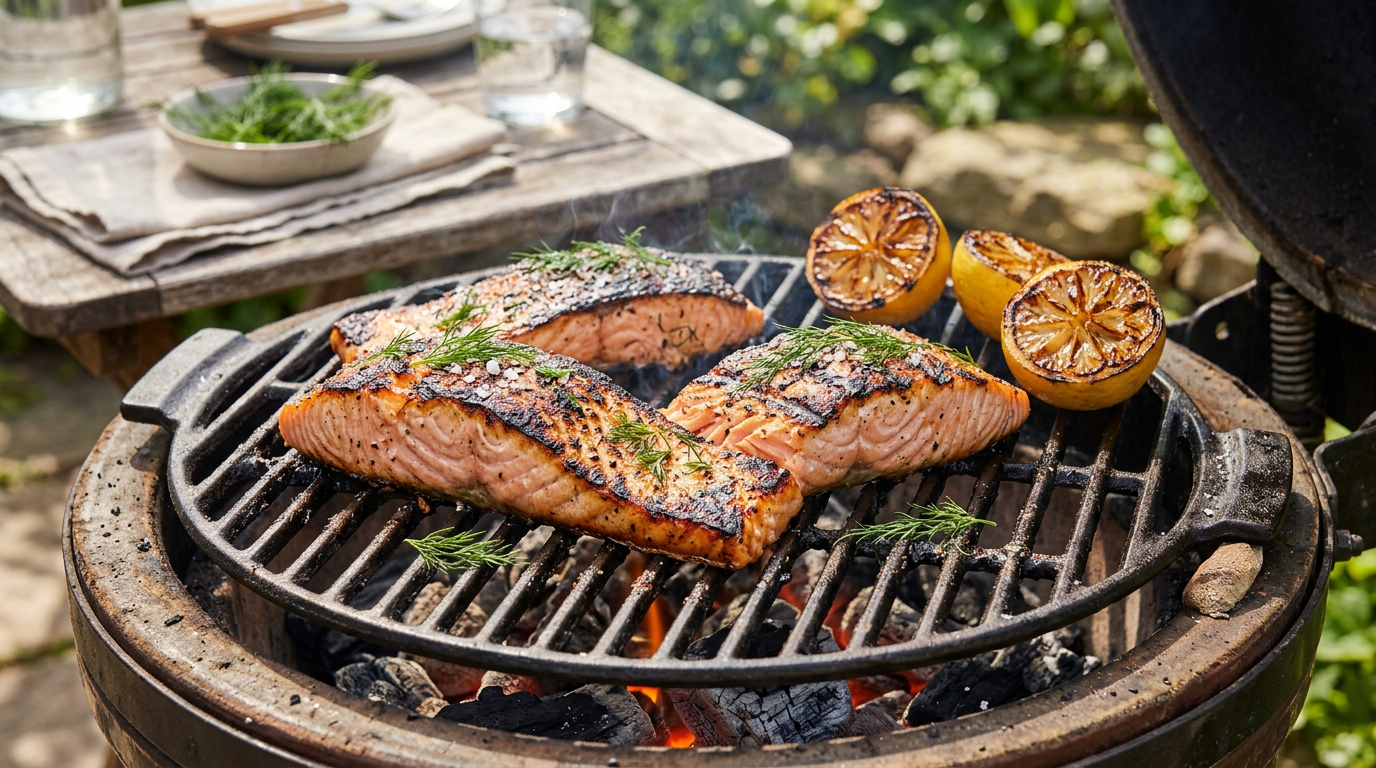
Grilled salmon takes about ten minutes and tastes better than almost anything you can do with the same fillet indoors. Smoke and direct heat give the edges a savoury crust while the middle stays soft, and the skin turns into the crispest part of dinner.
Two things put people off. The fish sticks to the bars and tears when they try to turn it, or it ends up dry because they cooked it like chicken. Both come down to a hot clean grate, a little oil in the right places, and pulling the fillets at the right temperature.
Below are times by cut and method, a seven step routine for skin-on fillets, a troubleshooting table for the usual failures, and the safety numbers worth knowing. If the weather turns, the oven method gets you to the same place with less smoke.
Grilling times by cut and method
Times assume a preheated grill and fridge-cold fillets. Every method finishes at the same 145°F internal temperature.
| Cut or method | Heat | Time | Best for |
|---|---|---|---|
| Skin-on fillet, 1 inch thick | Medium-high direct, roughly 400°F to 450°F | 10 to 12 minutes total | The default. Skin protects the flesh and lifts cleanly |
| Skinless fillet, 1 inch thick | Medium-high direct on a well oiled grate | 8 to 10 minutes total | Marinated fillets, but handle gently when turning |
| Thick centre-cut piece, 1.5 inches | Two zone, direct sear then indirect finish | 14 to 18 minutes | Even cooking without a dry outer layer |
| Foil packet with lemon and herbs | Medium direct, lid closed | 12 to 15 minutes | No sticking, no flipping, gentle steamed texture |
| Cedar plank, whole side or fillets | Medium indirect, lid closed | 20 to 30 minutes | Smoky flavour and no risk of the fish falling apart |
| Salmon skewers, 1-inch cubes | High direct, turning every 2 minutes | 6 to 8 minutes | Fast cooking and feeding a crowd |
Thickness matters far more than weight, so measure the deepest part of the fillet and treat these times as starting points.
The 7-step method for skin-on fillets
This is the version to learn. Foil packets and planks follow the same seasoning and temperature rules on a longer clock.
- 1.
Start with a clean, hot, oiled grate
Preheat with the lid down until the grate is properly hot, then scrape it clean and wipe it with an oil-soaked paper towel held in tongs. Salmon sticks to cold or dirty bars more than any other reason people give up on grilling it.
- 2.
Dry the fillets and oil the fish too
Blot both sides with paper towel, then brush the fish itself with a thin coat of neutral oil. Dry surfaces brown instead of steaming, and oil on both the fish and the grate is what gives you a clean release.
- 3.
Season simply, and hold sweet glazes back
Salt and pepper just before the fish goes on is enough, since salting far ahead draws out moisture. Honey, maple, teriyaki, and barbecue glazes burn over live fire, so brush them on only in the final two minutes.
- 4.
Lay it skin side down and leave it alone
Place the fillets skin side down over direct heat, angled across the bars, and close the lid. Do not move them for the first four to six minutes. The fish releases on its own once the skin has crisped and contracted.
- 5.
Flip once, or not at all
Slide a thin metal spatula under the skin and turn each fillet once, giving the flesh side two to four minutes. Thick pieces can also finish over the cooler zone with the lid closed instead of taking more direct heat.
- 6.
Check 145°F in the thickest part
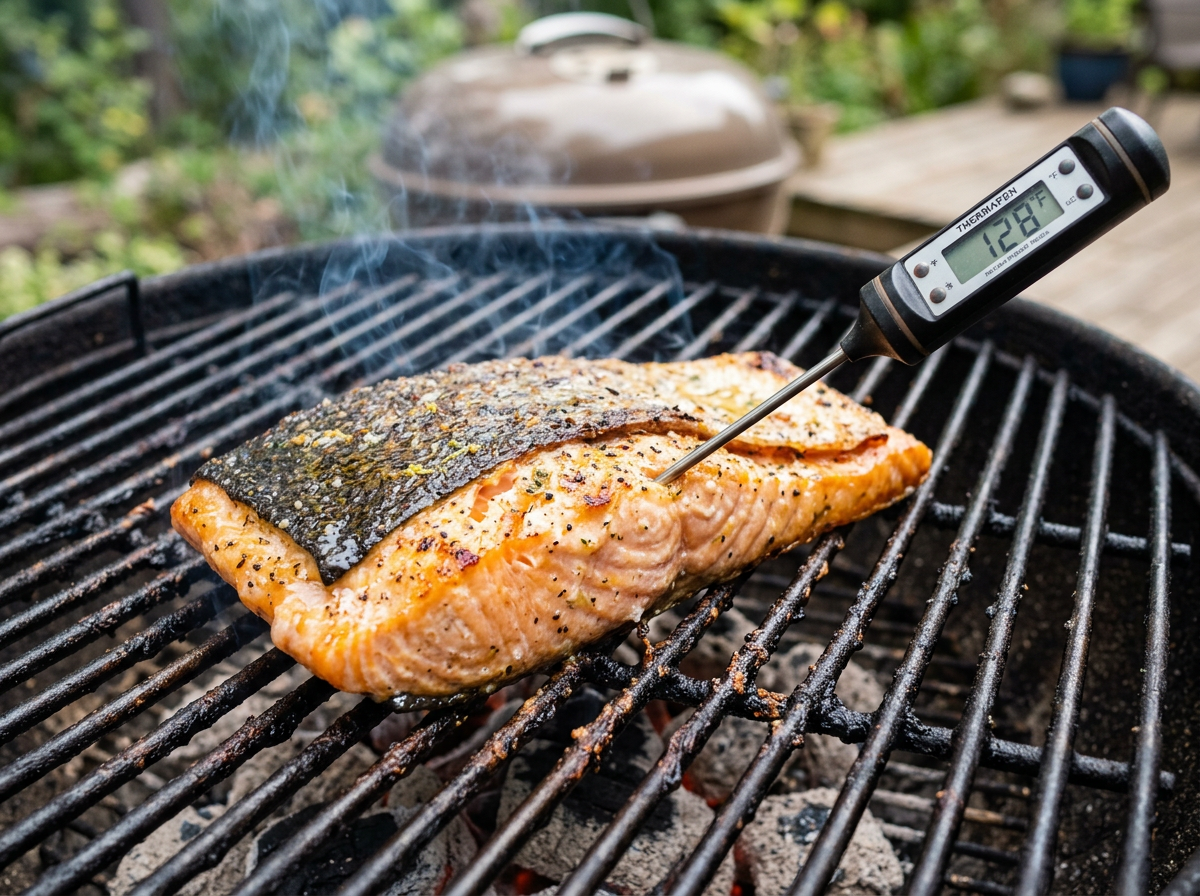
FoodSafety.gov lists 145°F (63°C) as the safe minimum internal temperature for fish. Push an instant-read thermometer into the thickest part from the side. The flesh should also flake when pressed with a fork.
- 7.
Rest three minutes, then serve
Move the fillets to a warm plate and leave them three minutes before serving. Carryover heat keeps working, and the fish firms up just enough to lift off the skin in one piece if you want it that way.
Cooking for a crowd and juggling the grill? Put the chicken thighs on first, since they need the long indirect stretch, and slide the salmon on for the last ten minutes.
Six habits for better grilled salmon
- Buy fillets of even thickness rather than one tapering piece, so the thin tail is not overcooked by the time the middle is done.
- Angle the fillets across the bars rather than along them, which gives you defined grill marks and more contact for a clean release.
- Grill with the lid closed between turns so the heat surrounds the fish instead of only hitting the underside.
- Keep one burner off or one side of the coals empty, so a flare-up or a thick piece has somewhere safe to go.
- If you are nervous about sticking, cook the salmon in a foil packet or on a soaked cedar plank the first few times.
- The FDA advises keeping raw fish cold and separate from cooked food, so carry it out in a chilled dish and use a fresh plate coming back in.
Fixing salmon that went wrong
Match the symptom to the cause and the next fillet comes off the grill in one piece.
Fish glued to the grate
The grate was cold, dirty, or dry. Preheat fully, scrape it, oil the bars and the fish, and wait for the natural release.
Falling apart when flipped
It was turned too early or with the wrong tool. Give the skin four to six minutes and use a thin metal spatula, not tongs.
Dry, chalky flesh
It went past temperature. Pull the fish at 145°F in the thickest part and let carryover heat finish the job.
White stuff on the surface
That is albumin, protein squeezed out by heat. It means the fire was very hot, so lower the heat slightly next time.
Glaze burnt to soot
Sugar went on too early. Grill the fish plain and brush sweet sauces on in the last two minutes.
Skin flabby, not crisp
The skin was damp or the heat too low. Dry it well and give it direct heat first with the lid down.
What to serve with grilled salmon
Salmon is rich, so acid, char, and crunch are what round out the plate.
- With grilled lemon halves and a spoon of herby yogurt
- Flaked over a chopped cucumber and feta salad
- Alongside grilled corn and a sharp slaw
- On rice with charred spring onion and soy
- Folded into tortillas with cabbage and lime crema
- Cold the next day in wraps and grain bowls
While the fire is going, add a tray of grilled vegetables or a few ears of grilled corn. For a base, the quinoa guide has the ratios, and our high protein meal plans build several dinners around a single side of salmon.
Storing, freezing, and reheating
Raw fish keeps one to two days in a refrigerator at 40°F (4°C) or below, and stays safe indefinitely at 0°F (-18°C) in the freezer, according to the FoodSafety.gov cold storage chart. Cooked salmon should be refrigerated promptly in shallow covered containers and eaten within three to four days, reheated to 165°F. Reheat gently, since a second blast of high heat is what makes leftovers chalky. Cold flaked salmon is better anyway, straight into fast lunches.
Grilled Salmon FAQs
How long do you grill salmon?
A one inch thick fillet takes about 10 to 12 minutes over medium-high direct heat, roughly six minutes skin side down and four to five minutes on the flesh side. Thicker centre-cut pieces run 14 to 18 minutes, and skewers are done in 6 to 8 minutes. Check the temperature rather than trusting the clock.
What temperature should grilled salmon reach?
FoodSafety.gov lists 145°F (63°C) as the safe minimum internal temperature for fish, measured in the thickest part. The flesh should also flake easily when tested with a fork.
Do you grill salmon skin side down first?
Yes. The skin acts as a shield between the flesh and the bars, crisps up, and gives the fillet structure so it holds together when you turn it. Give it four to six minutes before attempting to move it.
How do you stop salmon sticking to the grill?
Preheat the grill fully, scrape the grate clean, and wipe it with oil, then brush the fish with oil too. Lay the fillets down and leave them alone until the skin releases on its own. A foil packet or cedar plank removes the risk completely.
Should the grill lid be open or closed for salmon?
Closed for most of the cook so the heat surrounds the fish and the centre comes up evenly. Open it briefly when you turn the fillets or brush on a glaze at the end.
How long does cooked salmon keep in the fridge?
Refrigerate it promptly in shallow covered containers at 40°F (4°C) or below and eat it within three to four days, reheating to 165°F. Raw fish keeps one to two days in the fridge according to the FoodSafety.gov cold storage chart, or months at 0°F (-18°C) in the freezer.
Sources and further reading
Keep cooking
More guides and collections to build the rest of the meal around.