Variation
Add crispy pancetta crumbles on top for a salty crunch.
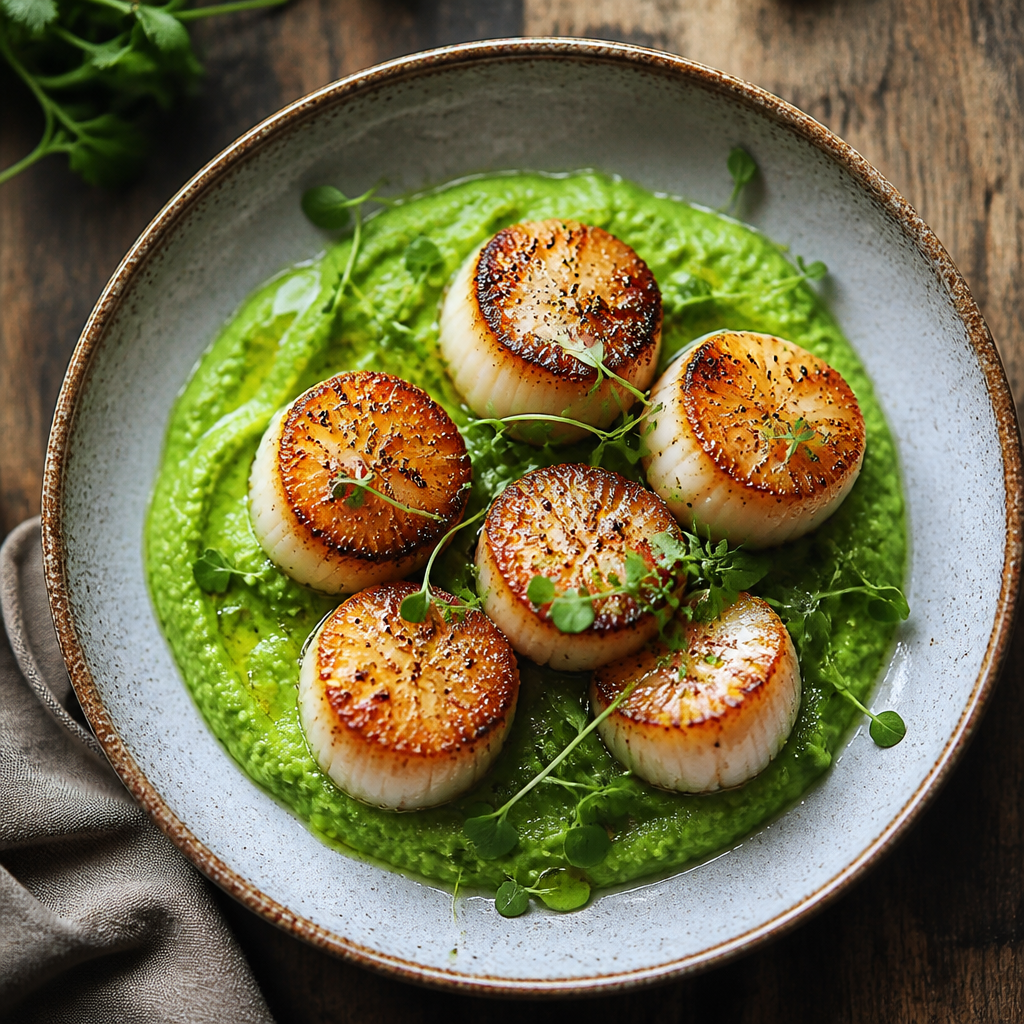
Master restaurant-quality pan seared scallops at home with this foolproof guide to achieving a golden-brown crust and a delicate, buttery interior.
Get these tasks done before you start cooking.
Bring a small pot of salted water to a boil. Add peas for 2 minutes, then drain and immediately transfer to a blender with cream, butter, mint, and lemon juice.
Tip: Passing the puree through a fine-mesh sieve ensures a restaurant-style silky texture.
Remove the small side muscle from each scallop. Pat every scallop extremely dry using paper towels on both sides.
Tip: Moisture is the enemy of a good sear. If they are wet, they will steam instead of brown.
Total time: 25 min · Yields 2 servings
Place a large stainless steel or cast iron skillet over high heat. Add the oil and wait until it begins to shimmer and just starts to smoke.
Season the scallops with salt and pepper right before cooking. Place them in the pan in a clockwise pattern, leaving space between each. Press down lightly with a spatula to ensure contact.
Sear undisturbed for 2 minutes until a deep golden-brown crust forms on the bottom. Do not move them early or they will tear.
Flip the scallops. Add the butter and thyme to the pan. Once the butter melts and foams, spoon it over the scallops for 1 minute.
Remove the scallops from the pan immediately once the sides feel firm but the center remains slightly translucent. Let rest for 1 minute before serving.
The garlic butter sauce is the star — pick sides that soak it up or balance the richness.
Once you've mastered the base recipe, try these popular twists.
Add crispy pancetta crumbles on top for a salty crunch.
Swap the mint in the puree for fresh tarragon for a more herbal, anise-forward flavor.
Brown the butter in the puree step for a deeper, nutty profile.
Scallops are best enjoyed immediately. If you have leftovers, store in an airtight container for up to 24 hours and reheat gently in a pan with a splash of water.
The most common reason is moisture. If the scallops aren't patted dry with paper towels, or if the pan isn't hot enough, they will boil in their own juices rather than searing.
Yes, but they must be fully thawed in the refrigerator and then dried thoroughly. Frozen scallops often release more liquid, so extra drying time is essential.
They are done when the outside is golden brown and the sides look opaque. The center should still be slightly translucent and feel springy, not rubbery, to the touch.
Sea scallops are much larger and ideal for searing. Bay scallops are small and best suited for stews, pastas, or quick sautés where a crust isn't the main goal.
Yes, the rectangular tag of tissue on the side of the scallop is tough and chewy. It peels off easily by hand and should be discarded before cooking.
Looking for something different? Browse by category.