Variation
Substitute shrimp with firm tofu for a vegetarian version.
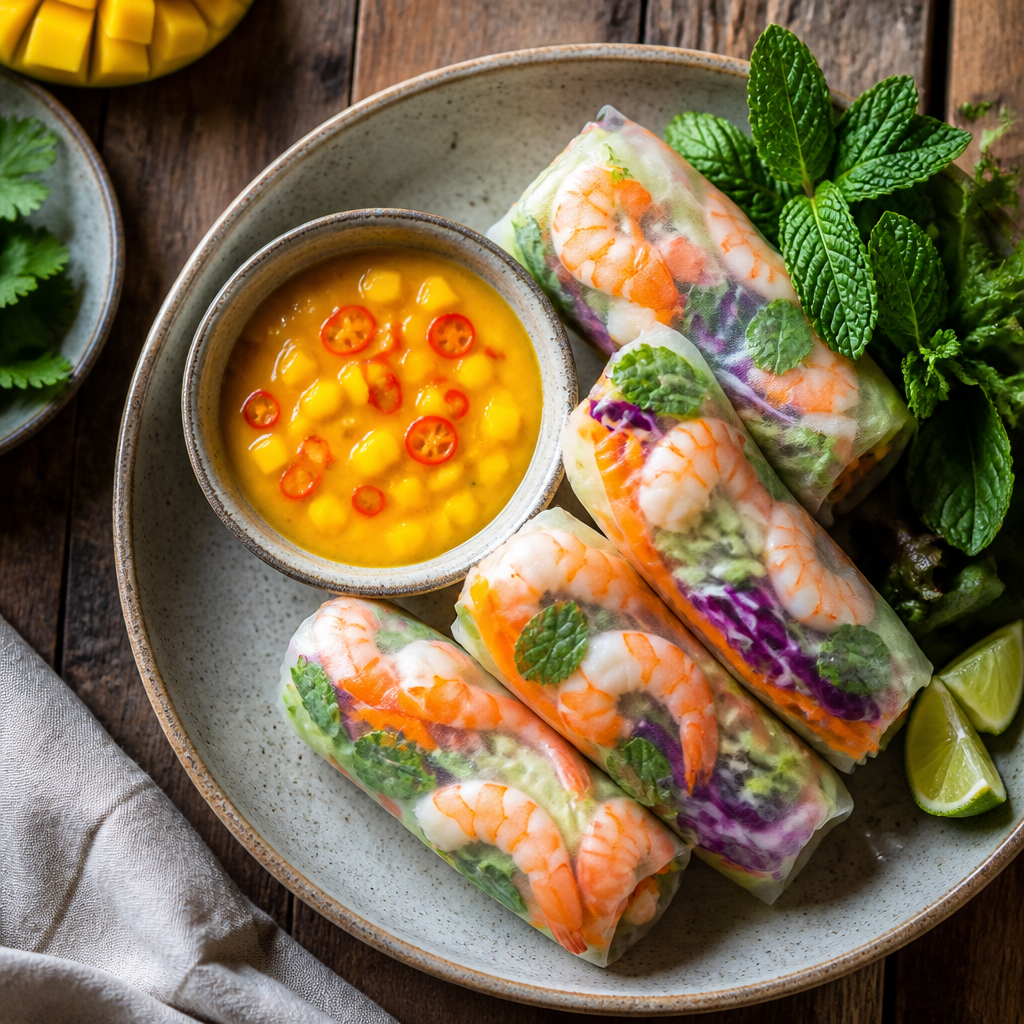
These vibrant shrimp spring rolls are packed with crisp vegetables, fresh mint, and tender poached seafood, served alongside a zesty mango dipping sauce.
Get these tasks done before you start cooking.
Bring a small pot of salted water to a simmer. Add shrimp and cook for 2 to 3 minutes until opaque and pink. Transfer to an ice bath immediately.
Tip: Slice the chilled shrimp in half lengthwise so they lie flat against the rice paper.
Place noodles in a heatproof bowl and cover with boiling water for 3 to 5 minutes. Drain and rinse with cold water.
Tip: Toss with a drop of sesame oil to prevent sticking while you prep the vegetables.
Total time: 45 min · Yields 4 servings
Place mango cubes, lime juice, sambal oelek, fish sauce, and ginger into a blender. Process until completely smooth and pour into a small serving bowl.
Fill a shallow pan with warm water. Submerge one rice paper sheet for 5 to 10 seconds until pliable but still slightly firm. Lay it flat on a clean, damp cutting board.
On the bottom third of the wrapper, place a small bundle of vermicelli, carrots, cucumber, and cabbage. Leave about 2 inches of space on each side.
Place 3 shrimp halves, cut side up, about one inch above the vegetable pile. Scatter mint and cilantro leaves between the shrimp for a decorative look.
Fold the bottom of the wrapper over the vegetables. Fold in the left and right sides tightly, then continue rolling upward over the shrimp. The rice paper will seal itself.
Place the finished roll on a plate, ensuring they do not touch each other as they may stick. Repeat with remaining ingredients and serve immediately with the mango sauce.
The garlic butter sauce is the star — pick sides that soak it up or balance the richness.
Once you've mastered the base recipe, try these popular twists.
Substitute shrimp with firm tofu for a vegetarian version.
Add sliced avocado for extra creaminess.
Swap the mango sauce for a traditional peanut dipping sauce.
These are best enjoyed within 2 hours of assembly. If necessary, wrap each roll individually in plastic wrap and keep in the fridge for up to 24 hours.
The rolls usually fall apart because the rice paper was over-soaked or the fillings were not tucked tightly enough during the first rotation. Ensure your wrapper is still slightly firm when you start rolling.
You can make them up to 4 hours ahead. Store them separated by damp paper towels in an airtight container to prevent the rice paper from hardening or sticking together.
Yes, traditional rice paper wrappers are made from rice flour, water, and salt, making them naturally gluten-free. Always check the label for cross-contamination.
Generally, 'spring rolls' can refer to fried or fresh versions, but in Vietnamese cuisine, 'summer rolls' (Goi Cuon) specifically refers to these fresh, non-fried translucent rolls.
Using a plastic or bamboo cutting board that has been lightly dampened with water will prevent the rice paper from adhering to the surface while you roll.
Looking for something different? Browse by category.