Variation
Add a pinch of red pepper flakes for a spicy kick.
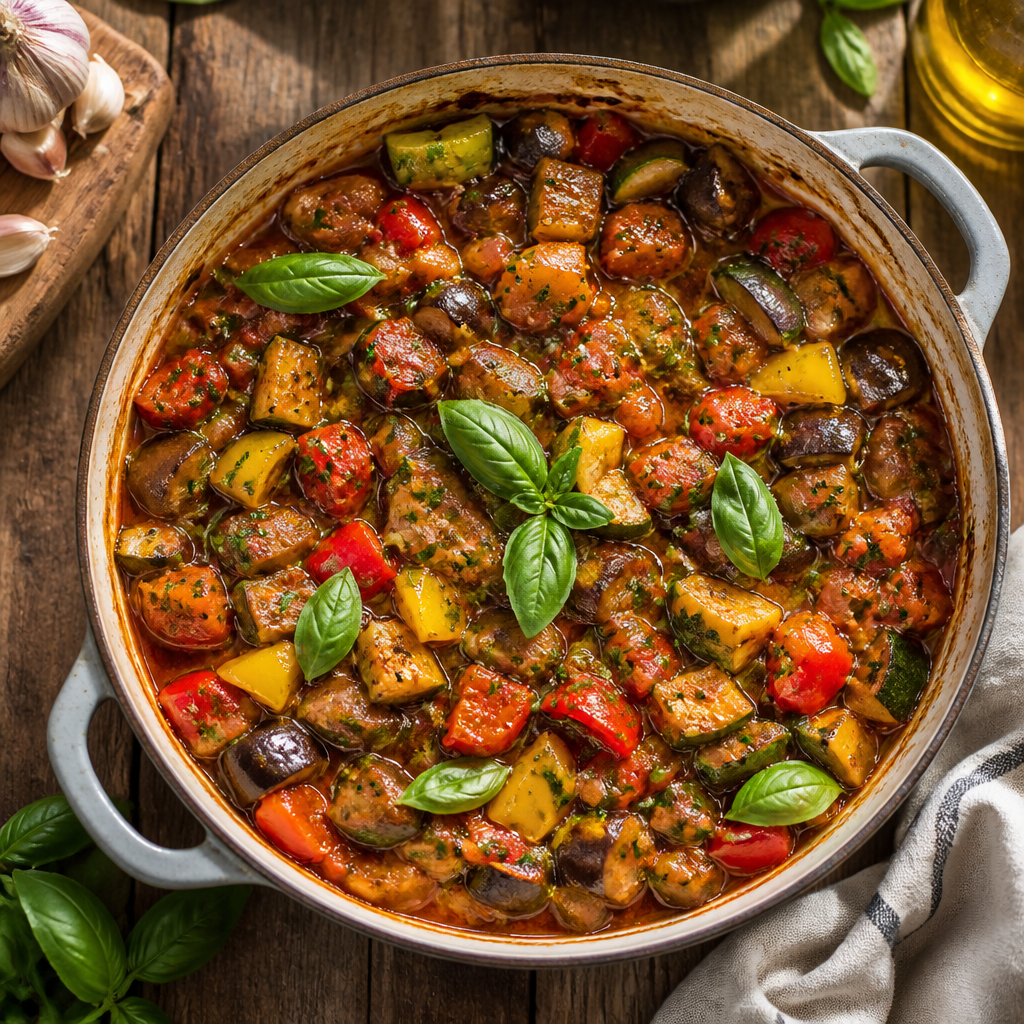
Master the art of this classic Provencal ratatouille, a slow-simmered medley of late-summer vegetables finished with a fragrant garlic-infused oil.
Get these tasks done before you start cooking.
Place eggplant cubes in a colander and sprinkle with a pinch of salt. Let sit for 15 minutes to draw out excess moisture, then pat dry.
Tip: This prevents the eggplant from becoming soggy or absorbing too much oil.
In a small saucepan, gently heat 3 tablespoons of olive oil with the minced garlic over low heat until fragrant but not browned.
Tip: Keep the heat low to avoid bitter, burnt garlic notes.
Total time: 1 h 10 min · Yields 4 servings
Heat 2 tablespoons of oil in a large Dutch oven over medium heat. Add the eggplant cubes and cook until golden brown and slightly softened, about 8 to 10 minutes. Remove and set aside.
Add another tablespoon of oil to the same pot. Sauté the onions and bell peppers for 7 minutes until the onions are translucent and the peppers have softened. Stir in the fresh thyme.
Add the zucchini to the pot. Cook for 5 minutes, stirring occasionally, until the zucchini is tender-crisp. Return the eggplant to the pot.
Stir in the chopped tomatoes, salt, and pepper. Reduce heat to low, cover, and simmer for 20 to 25 minutes. The vegetables should be very tender but not completely broken down into a mush.
Remove the lid and stir in the balsamic vinegar. Drizzle the prepared garlic oil over the top and fold in the fresh basil leaves just before serving.
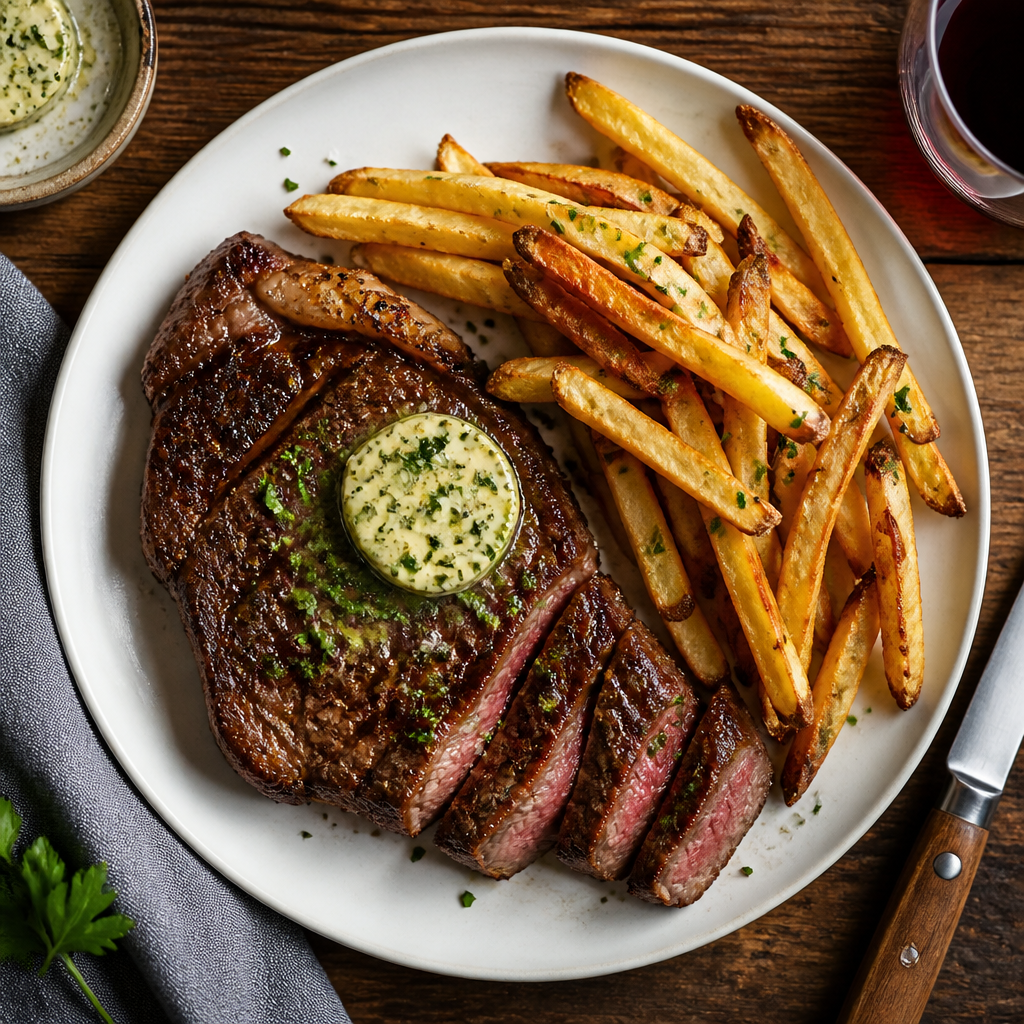
The garlic butter sauce is the star — pick sides that soak it up or balance the richness.
Once you've mastered the base recipe, try these popular twists.
Add a pinch of red pepper flakes for a spicy kick.
Top with a dollop of creamy goat cheese or vegan ricotta.
Serve over a bed of buttery polenta or fluffy couscous.
Ratatouille tastes even better the next day. Store in an airtight container in the refrigerator for up to 4 days.
Uniformity is key. Cutting all vegetables into roughly 1-inch pieces ensures they cook at a similar rate and create a cohesive texture.
Yes, it is actually recommended. The flavors meld and deepen after 24 hours in the fridge. Simply reheat gently on the stovetop.
It is not necessary. The skin of the eggplant softens beautifully during the braise and adds color and fiber to the dish.
It is incredibly versatile. You can serve it hot as a main, warm as a side, or even cold as an appetizer on toasted bread.
If it looks watery, simmer it uncovered for the last 10 minutes to allow the tomato juices to reduce and thicken into a sauce.
Authentic Provencal methods involve sautéing the vegetables separately before combining them, which preserves the individual flavor of each ingredient.
Looking for something different? Browse by category.